Why does sunscreen pill under makeup?
Sunscreen can pill when layers do not bond well, when too much product is used, when the skin is rubbed, or when makeup is applied before the sunscreen film has settled.
Sunscreen pilling is not just a bad-product problem. It often happens when films, formulas, timing, and friction collide.
“Pilling is usually solved by order, time, compatibility, and less friction.”
VELIO keeps the lesson attached to the mirror experience, then returns one face-aware Color Story and one practical route. It remains non-diagnostic.
Free first read · Non-diagnostic · Use what you own first
Tiny balls or flakes appear when you apply primer, foundation, or powder.
The base looks patchy even though skin looked smooth before makeup.
Rubbing makes the texture worse instead of blending it away.
Changing sunscreen or primer suddenly changes how makeup sits.
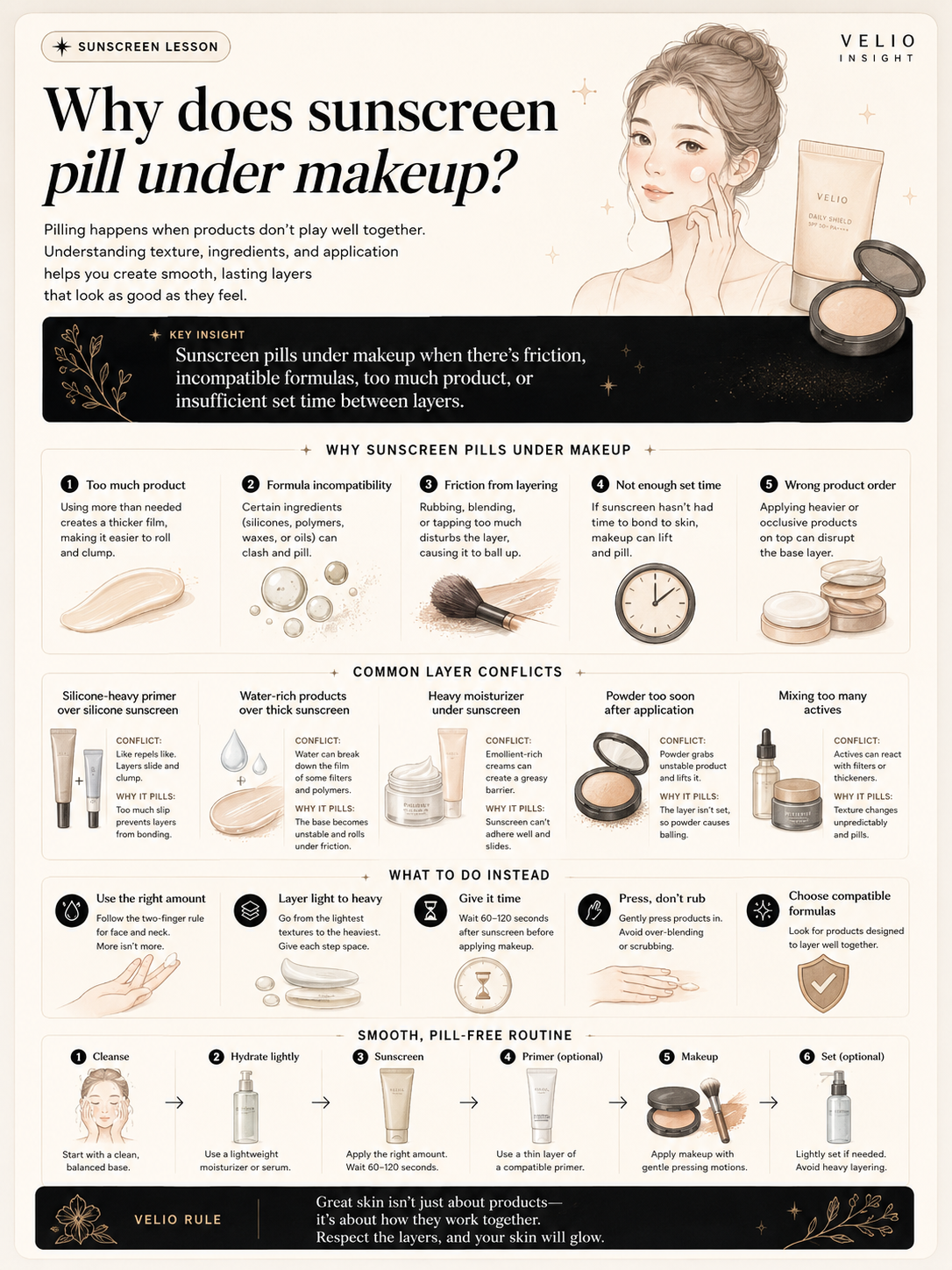
Pilling becomes easier to fix when the sunscreen film, base layer, friction, and product order are treated as separate decisions.
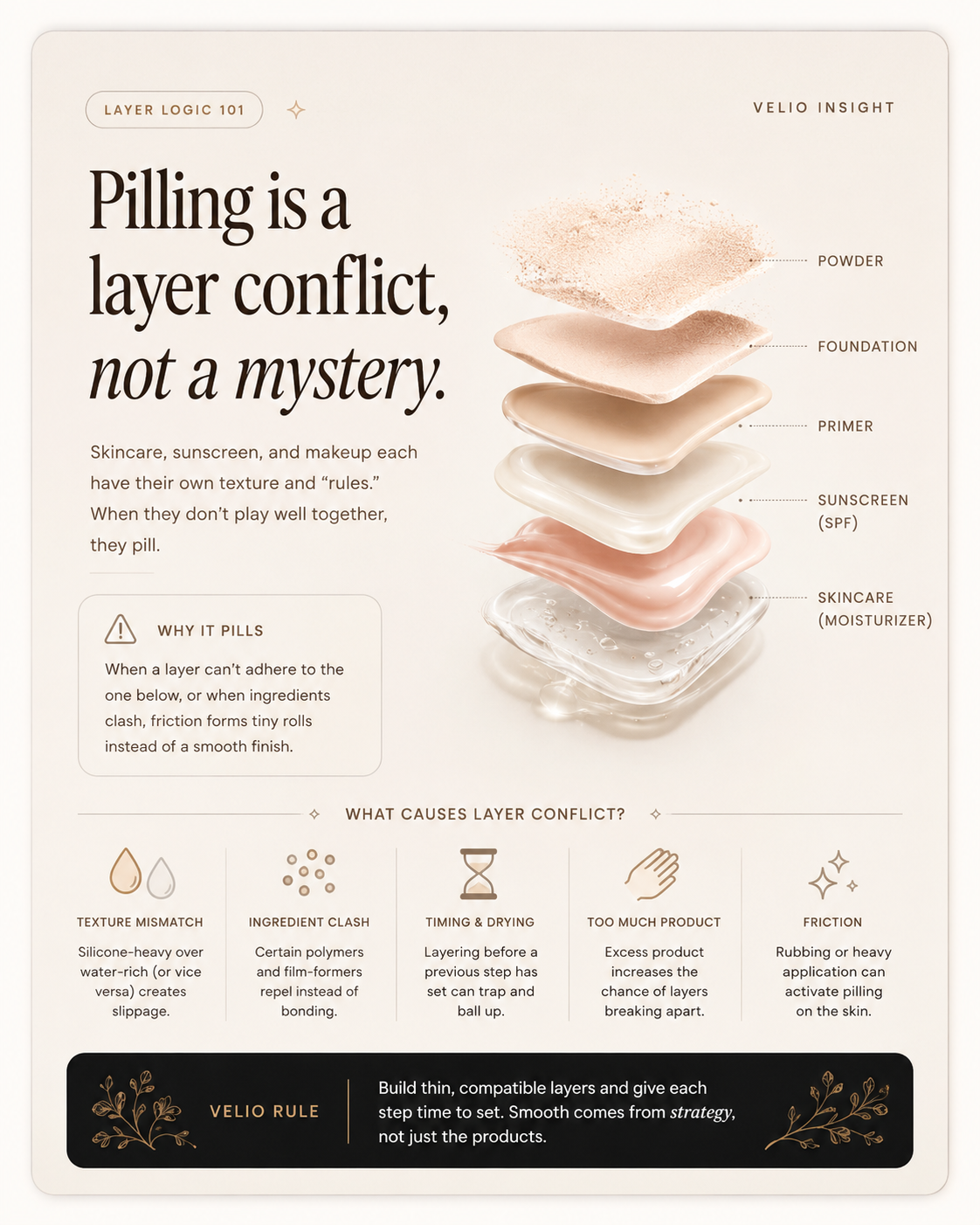
The first useful lesson is mechanical: layers roll up when they are disturbed before they cooperate.
Pilling happens when products do not settle into a smooth shared surface. Sunscreen may form a film, primer may add grip, foundation may add pigment, and powder may add friction. When those layers are rubbed together before they cooperate, they can roll into tiny balls.
That is why the same sunscreen can work beautifully alone and still pill under a particular primer or base. The problem is often the relationship between layers, not just one product.
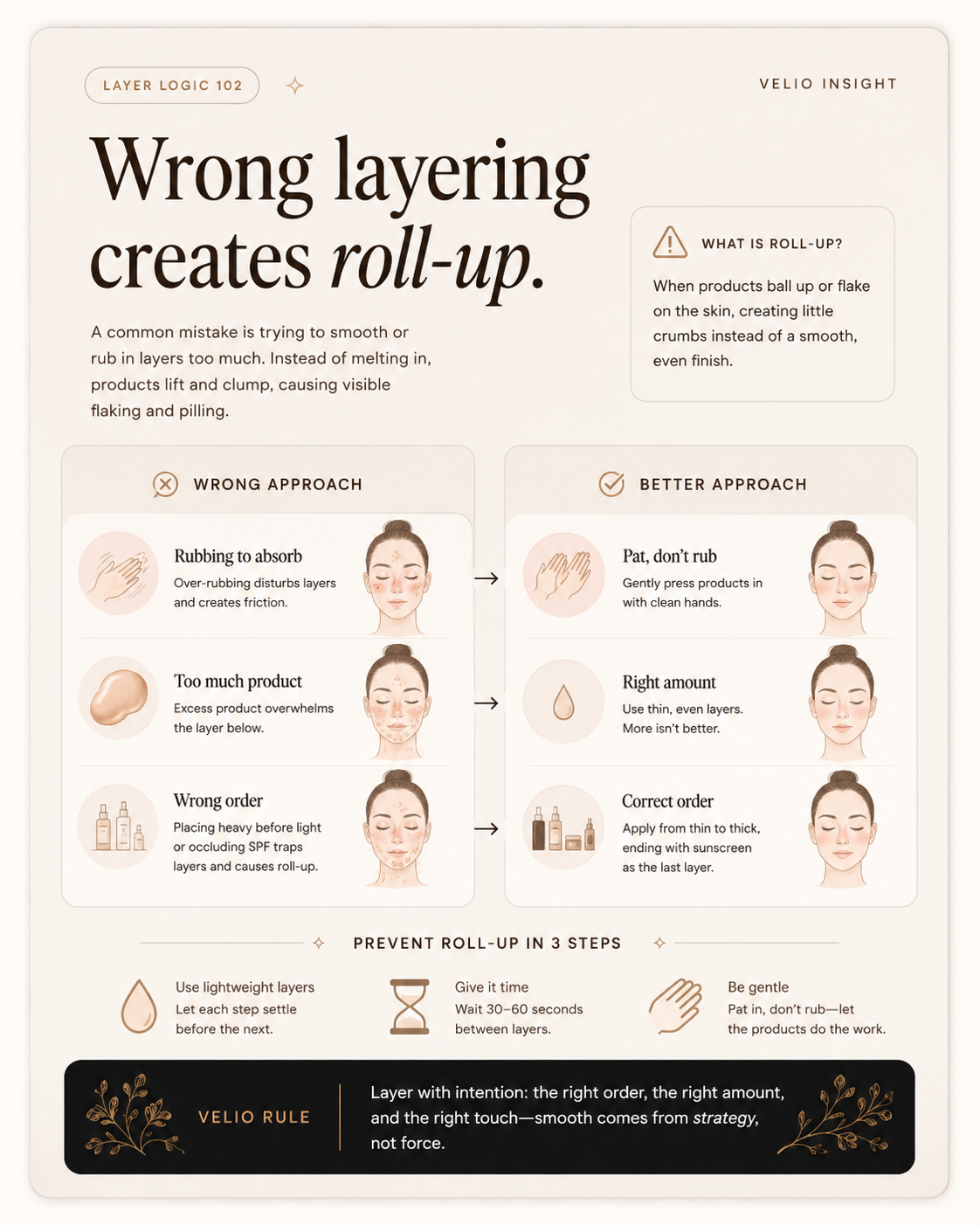
The first useful lesson is mechanical: layers roll up when they are disturbed before they cooperate.
A common mistake is trying to smooth pilling by rubbing more. Unfortunately, rubbing is often the action that turns a loose film into visible roll-up. Heavy skincare underneath SPF can also make the sunscreen layer less stable before makeup begins.
The smarter route is thinner prep, enough SPF, a short settling window, and then a pressed-on base. The goal is to disturb the sunscreen film as little as possible.
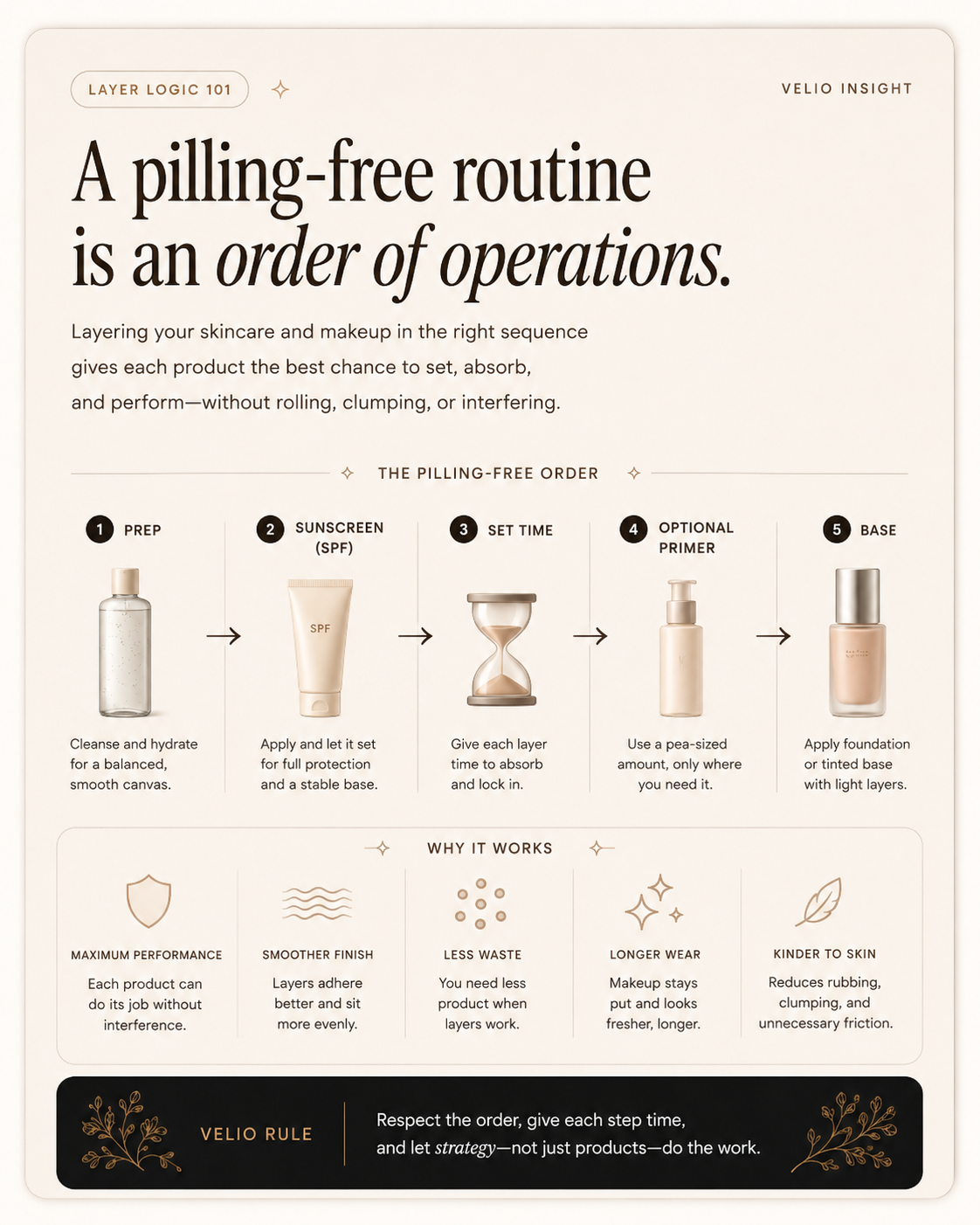
The first useful lesson is mechanical: layers roll up when they are disturbed before they cooperate.
A reliable routine is not complicated: prep lightly, apply sunscreen evenly, let it set, use primer only where needed, press base on, and set lightly. Each step reduces the chance of friction and product overload.
If pilling still happens, change one product at a time. Otherwise it becomes impossible to know whether the sunscreen, moisturizer, primer, foundation, or powder caused the conflict.
Identify the changed area, choose the smallest correction, and stop as soon as the surface looks clear again.
Rubbing harder to make the product disappear.
Stop rubbing once the layer is spread, then let it settle.
Adding primer, foundation, and powder quickly in one stack.
Use thin compatible layers and press makeup on with less friction.
Sunscreen can form a film that needs time before makeup sits on top.
Rubbing or buffing can roll unsettled layers into visible pills.
Applying the next product too fast can disturb the first layer.
Use fewer layers, wait briefly, press base on, and test one product change at a time.
Choose a lightweight texture that layers cleanly with your base.
Wait before primer or foundation so the film can stabilize.
Press base on instead of buffing in circles.
Change one product at a time to find the conflict.
“The secret is not more product. It is better order, less friction, and smarter compatibility.”
Lua, Journal of Cosmetic Dermatology, 2024
The review describes product pilling as a visible roll-up problem and notes sunscreen and foundation as common promoters because films can be disturbed by later rubbing.
Keshavarzi et al., Skin Research and Technology, 2021
Sunscreen research discusses film formers and resistance to sweat/run-off, reinforcing why settling time and layer stability matter.
Professional base-application principle
Pressing base on, using fewer layers, and changing one product at a time can make the routine easier to troubleshoot.
VELIO editorial translation
The reader action is simple: reduce friction, respect the layer order, and test compatibility one product at a time.
Sunscreen can pill when layers do not bond well, when too much product is used, when the skin is rubbed, or when makeup is applied before the sunscreen film has settled.
A short setting window helps. Let sunscreen form a stable film before primer, base, or powder goes on. The exact time depends on the formula, but the goal is to reduce friction and layer conflict.
A gripping primer can help when the formula pairing is compatible, but it cannot fix every conflict. Use fewer layers, press products on, and change one product at a time when testing.
VELIO connects sunscreen pilling to lightweight SPF logic, targeted grip, center-light base, soft tools, and minimal powder so layers cooperate instead of rolling up.
VELIO keeps the lesson attached to the mirror experience, then returns one face-aware Color Story and one practical route. It remains non-diagnostic.
Free first read · Non-diagnostic · Use what you own first
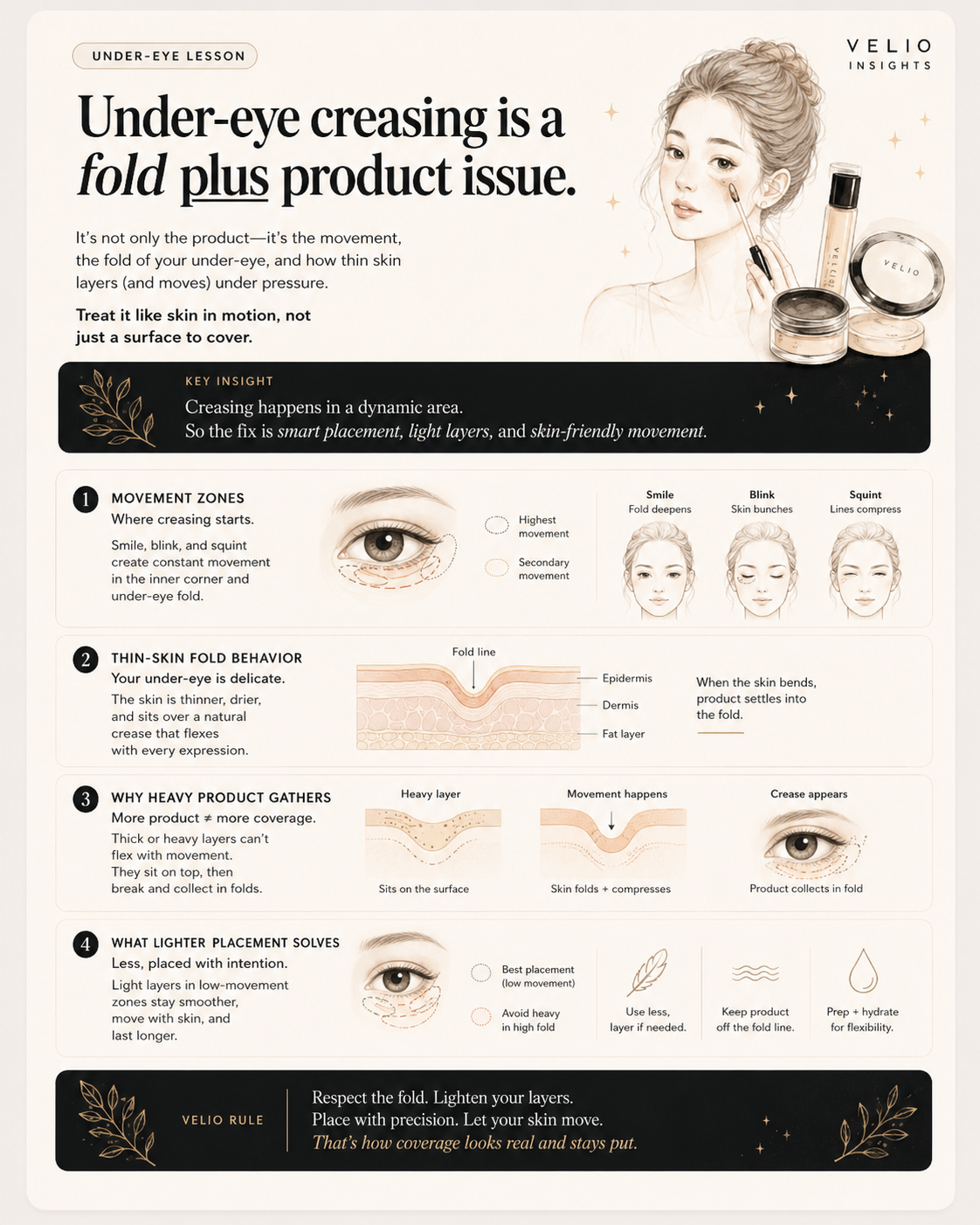
Under-eye creasing is usually a fold, movement, and product-load problem. The better fix is lighter prep, micro-correction, and setting only the fold.
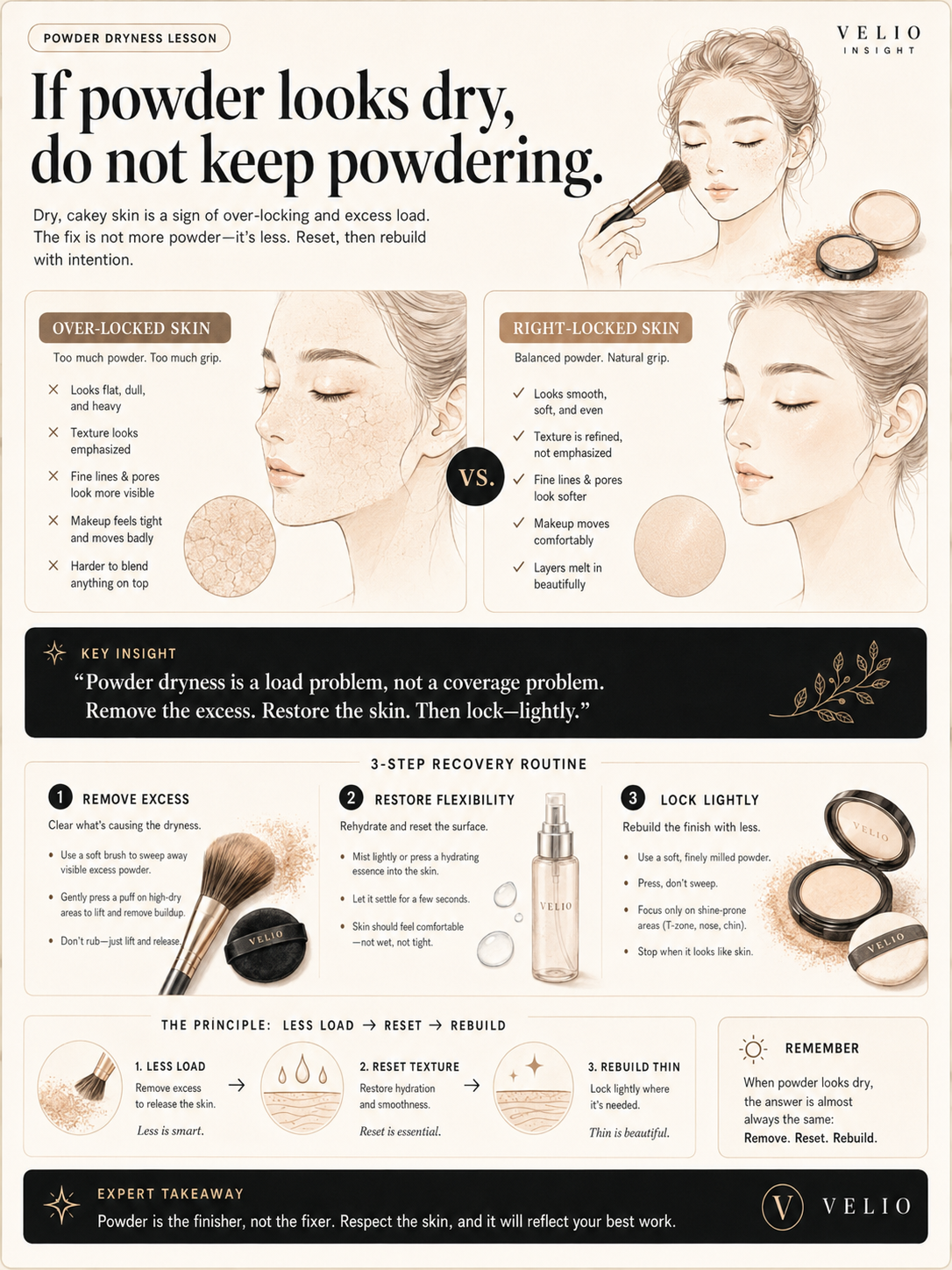
Patchy foundation is often a surface issue. Smooth the surface first, choose flexible formulas, and set only where needed.
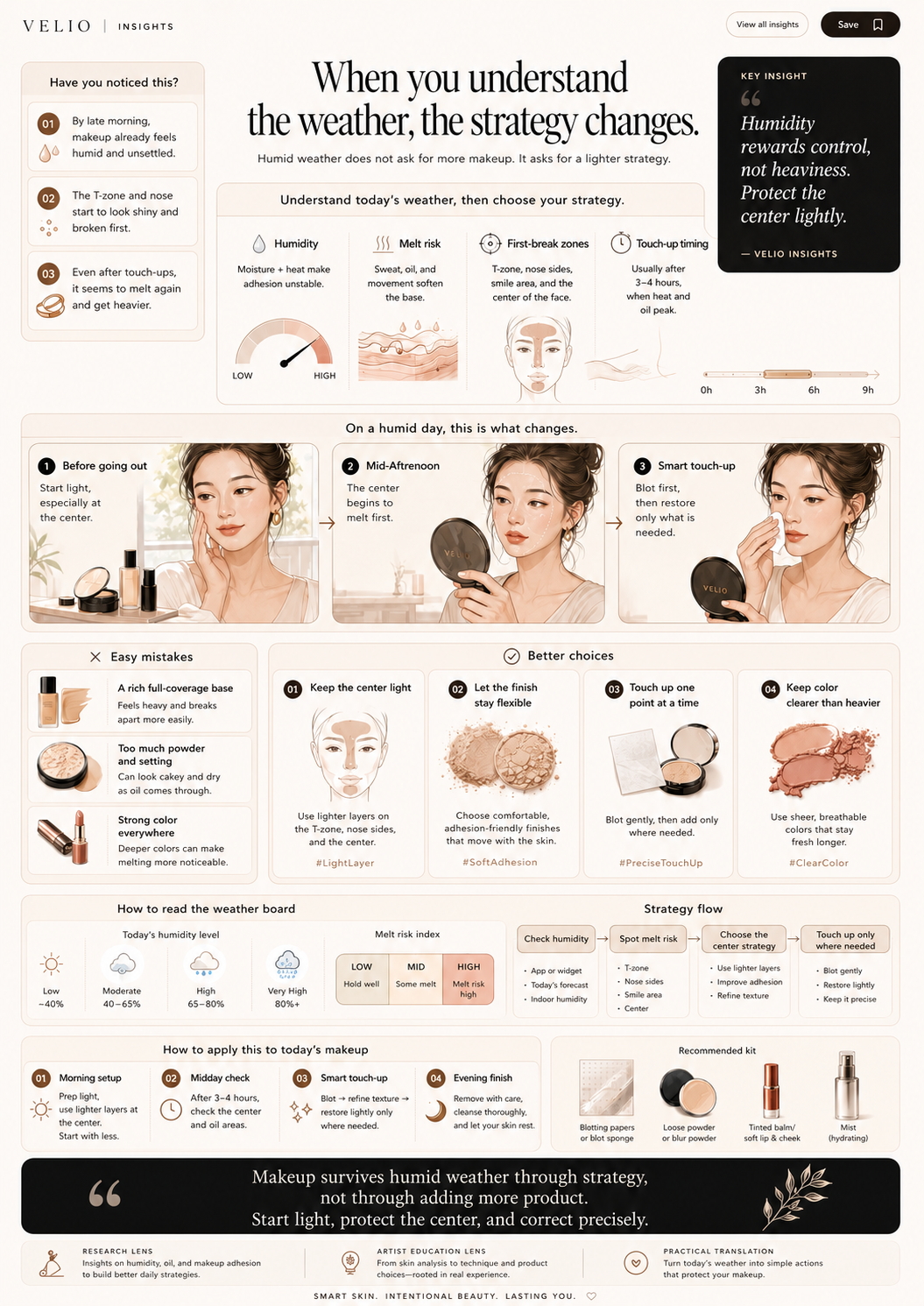
Humidity does not always mean stronger makeup. Often it means fewer layers, clearer finish control, and one planned touch-up point.