1
Center-face melt
Look for: The forehead, nose, and mouth area change before the outer cheeks.
What it means: The center needs less starting product and more selective control.
First move: Blot the center and keep the outer face untouched.
Humid weather changes the makeup map. The safest product direction is usually lighter layers and smarter touch-up, not more product everywhere.
“Humidity rewards control, not heaviness.”
VELIO combines the concern with visible makeup direction and available weather context. It returns one practical route, not a skin diagnosis or a promise of all-day wear.
Free first read · Non-diagnostic · Use what you own first
The center face gets shiny before the outer face changes.
Foundation feels like it is sliding instead of settling.
Powder becomes visible when reapplied too soon.
A touch-up makes the face look heavier rather than fresher.
Humidity changes the surface under makeup. Heavy coverage is not automatically more durable; it can create more material for sweat, oil, and movement to disturb. A lighter structure with a planned touch-up is usually easier to control.
Start light in the center, anchor only the zones that need it, and carry one blot-first correction plan.
Look for: The forehead, nose, and mouth area change before the outer cheeks.
What it means: The center needs less starting product and more selective control.
Look for: The base survives, but blush or lip definition fades into the overall warmth.
What it means: The focal point needs a better anchor, not a heavier full-face base.
Look for: The face looks dry on top but still feels warm or mobile underneath.
What it means: Powder was added before the surface was ready.
This is a cosmetic correction route, not a diagnosis. Stop after the smallest step that restores clarity.
Press away moisture and oil so the next product can touch a stable surface instead of floating on top.
Use a small amount of soft-set powder or local correction only where the face still looks uneven or overly reflective.
Refresh lip, blush, or eye definition rather than rebuilding the full face. One clear signal makes the whole look feel intentional again.
Press one tissue across the forehead, nose, and cheeks. Compare which zones transfer moisture or product before choosing where to correct.
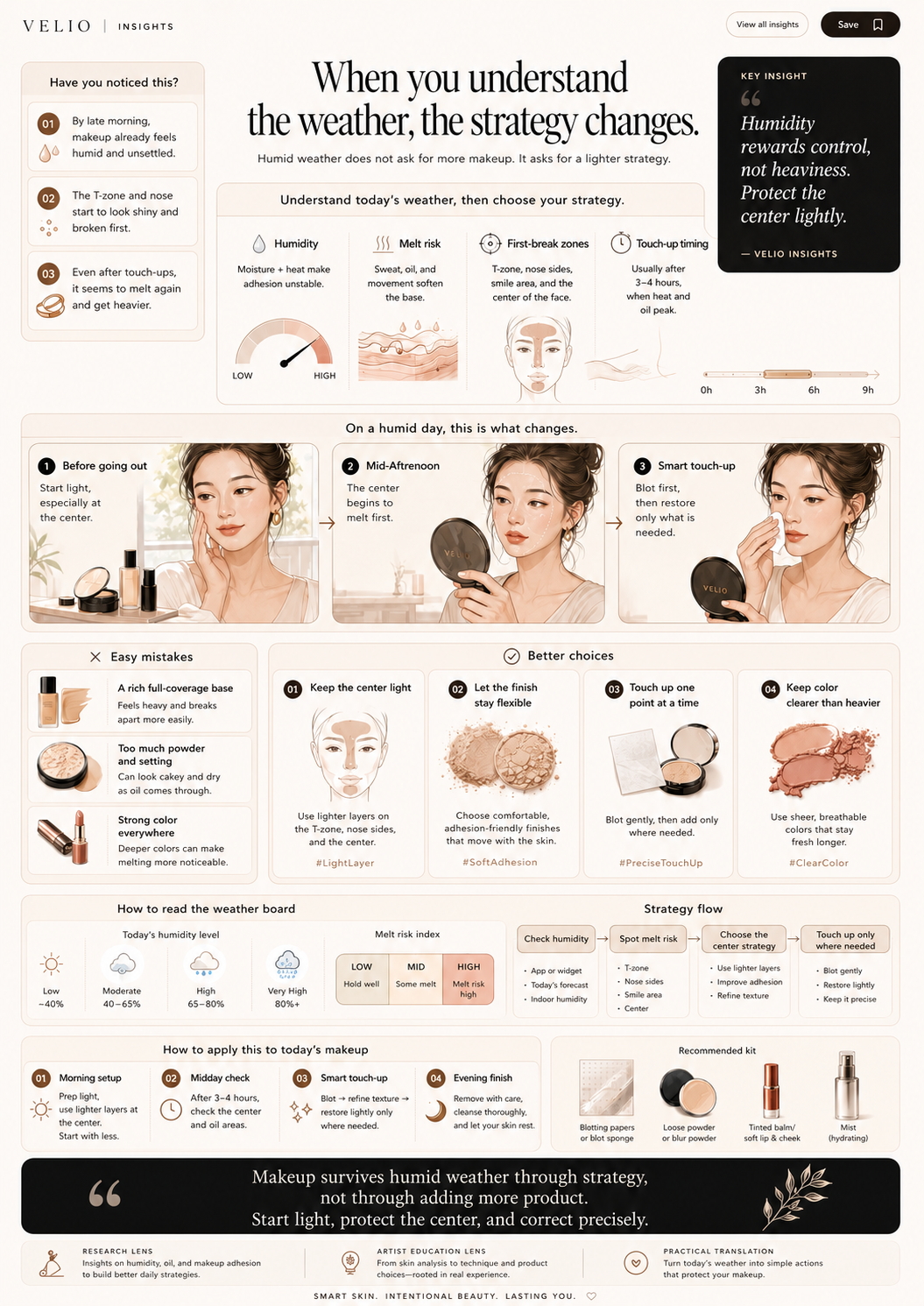
Humid weather is a product-pressure test. The goal is to decide which layer should stay light and which touch-up should happen first.

Humidity changes what the base has to survive, so the day starts with a lighter strategy rather than heavier coverage.
On a humid day, the same makeup can behave differently because warmth and moisture make layers move. The product that looked polished indoors may feel heavy outside.
That is why VELIO treats weather as a product-direction input. The answer is not always more matte, more powder, or more foundation.
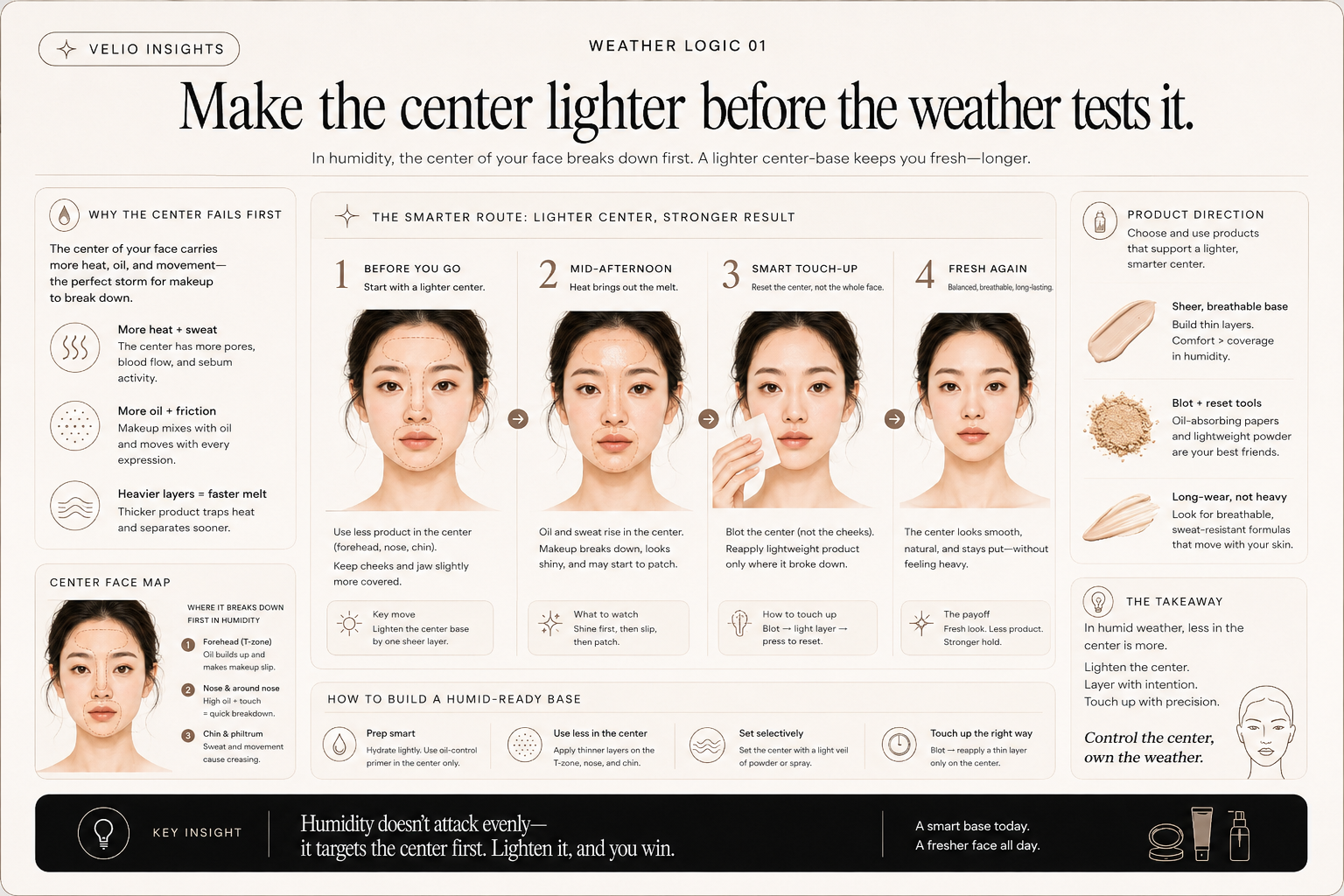
The most useful humid-day lesson is the sequence: start light, watch the center, then touch up only what changed.
The center face carries the most visible movement. If it begins the day with too much base, humidity can make the later touch-up look like a second layer.
A lighter base family lets the face keep dimension even when the finish changes. That is why Center-light base stays in the humid-weather product path.
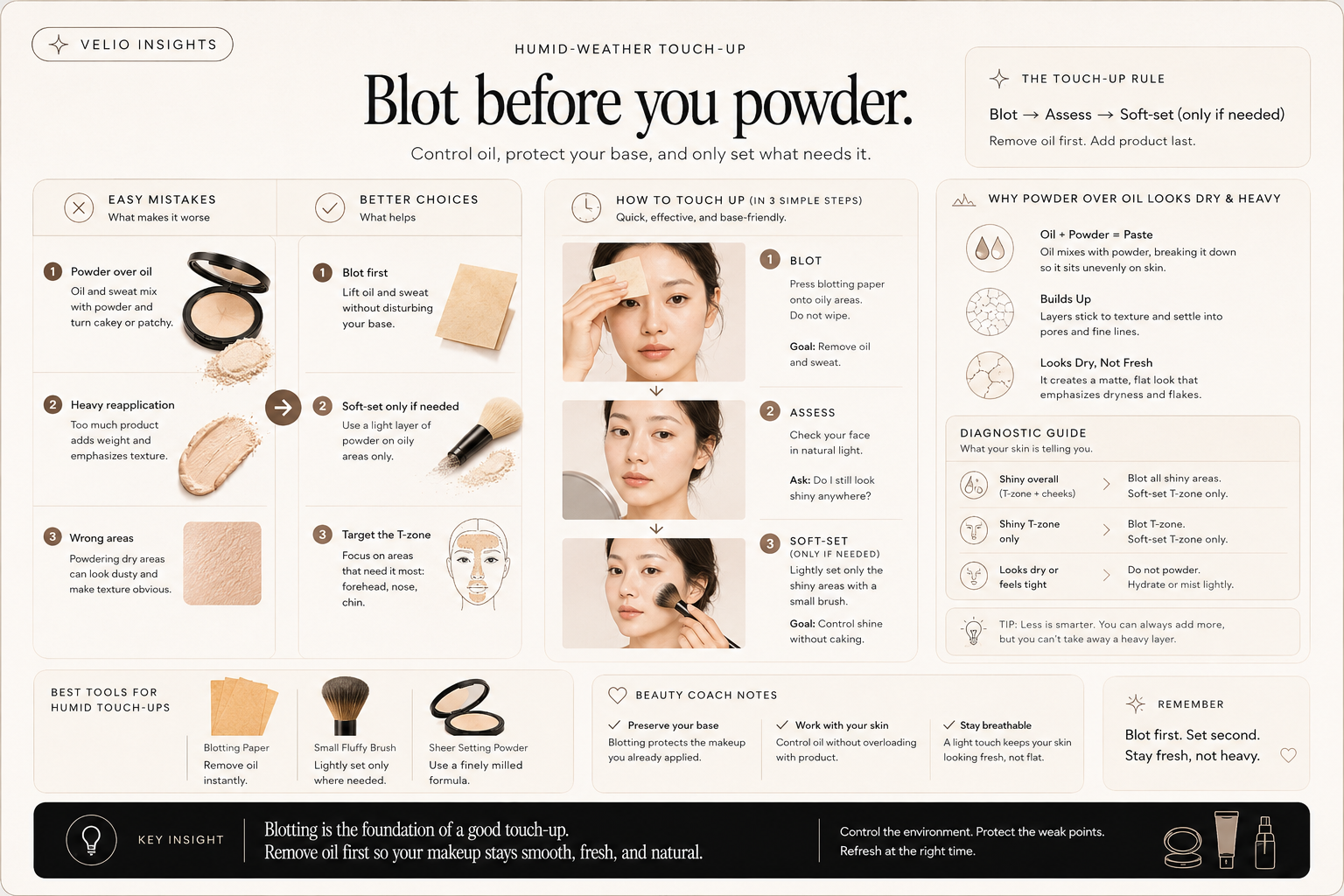
The center-light route survives humidity better than adding stronger coverage or too much powder.
Powder can help, but powder over oil and movement can make a dry-looking film. Blotting paper is often the lower-friction first step because it removes surface weight without changing the whole makeup map.
After blotting, add a soft-set powder only if the surface still needs control. This keeps the correction smaller and cleaner.
Identify the changed area, choose the smallest correction, and stop as soon as the surface looks clear again.
Use a thicker base because the weather feels risky.
Use a lighter center base so the later layer has less to fight.
Powder shine immediately without removing surface oil.
Blot first, then decide whether powder is still needed.
Humidity increases visible shine and movement in product-dense zones.
The forehead, nose, mouth area, and corrected zones often show change first.
Adding more coverage to feel secure before checking surface weight.
Start lighter, blot first, and use soft-set finish only where the face needs control.
Use thin flexible coverage through the center.
Choose soft-set powder only where shine will show first.
Carry blotting paper before any extra product.
Use small tools to avoid rebuilding the whole face.
“In humidity, stay light enough that the touch-up does not become the look.”
Jung et al., Annals of Dermatology, 2021
The T-zone is commonly discussed as a higher-sebum area than the cheeks. That supports VELIO's center-face-first humid weather strategy.
Yoon et al., Journal of Cosmetic Dermatology, 2024
Foundation worn during aerobic exercise was studied as a changed skin-surface condition, which helps explain why sweat, heat, and wear context matter for makeup strategy.
Makeup-artist application principle
Thin layers and local correction tend to look cleaner than repeated full-face touch-ups.
VELIO weather-pressure framework
A humid day changes the order of product decisions: base first, blot first, powder second.
In humid weather, start lighter in the center face, use fewer weak layers, and plan a blot-first touch-up. Humidity rewards control and flexibility more than heavy coverage.
Not everywhere. Powder works best after oil is blotted and only on zones that need control. Powdering too soon can create a dry film over oil and movement.
The center face often changes first: forehead, nose, mouth area, and zones where product was already layered. That is why the base should start lighter there.
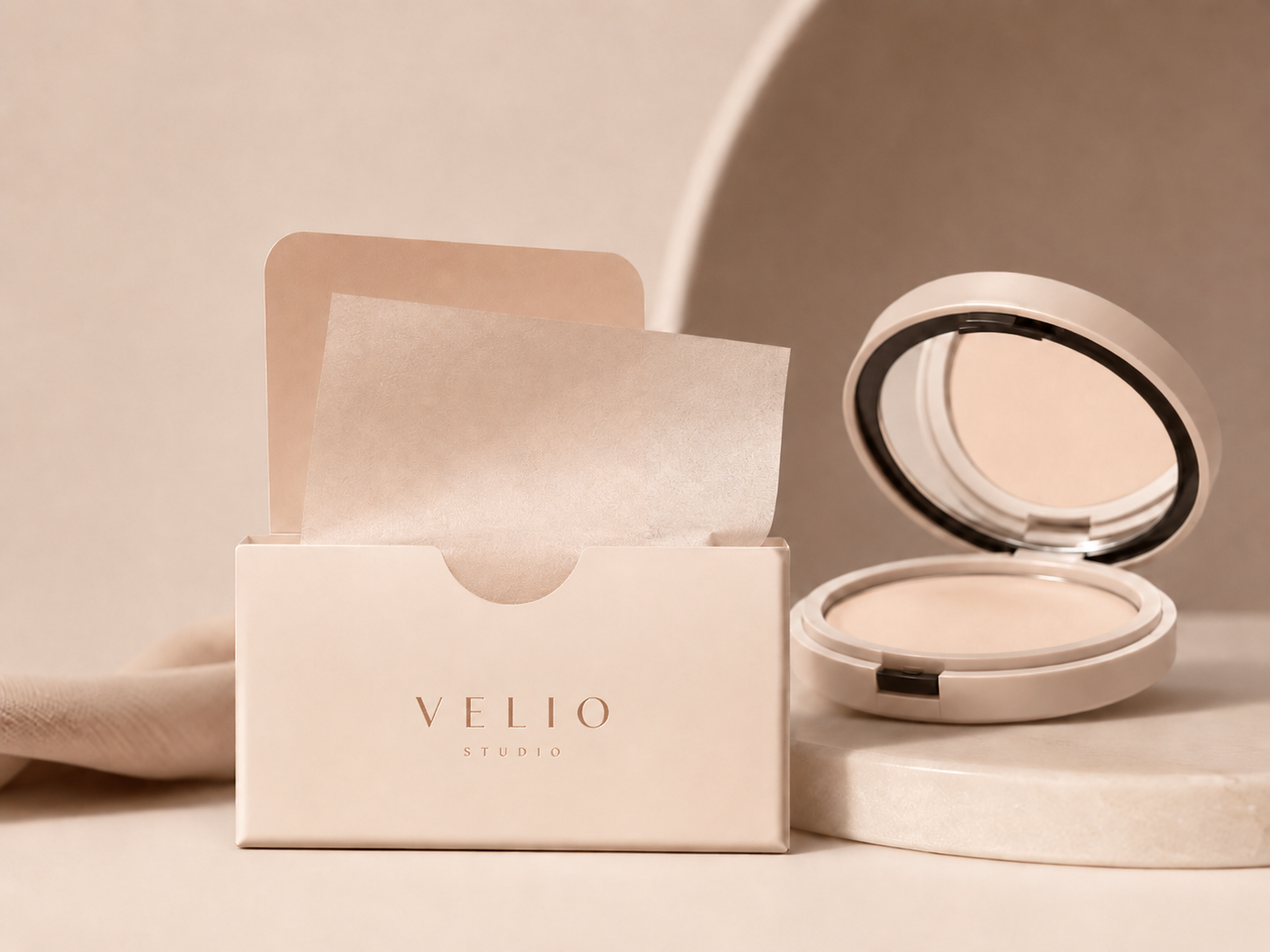
A small humid-day kit can include blotting paper, soft-set powder, a light tint or balm, a mist if needed, and a small tool for local correction.
VELIO combines the concern with visible makeup direction and available weather context. It returns one practical route, not a skin diagnosis or a promise of all-day wear.
Free first read · Non-diagnostic · Use what you own first
Start with the lesson and your mirror read. Then browse the small product roles that support the same correction without rebuilding the whole routine.
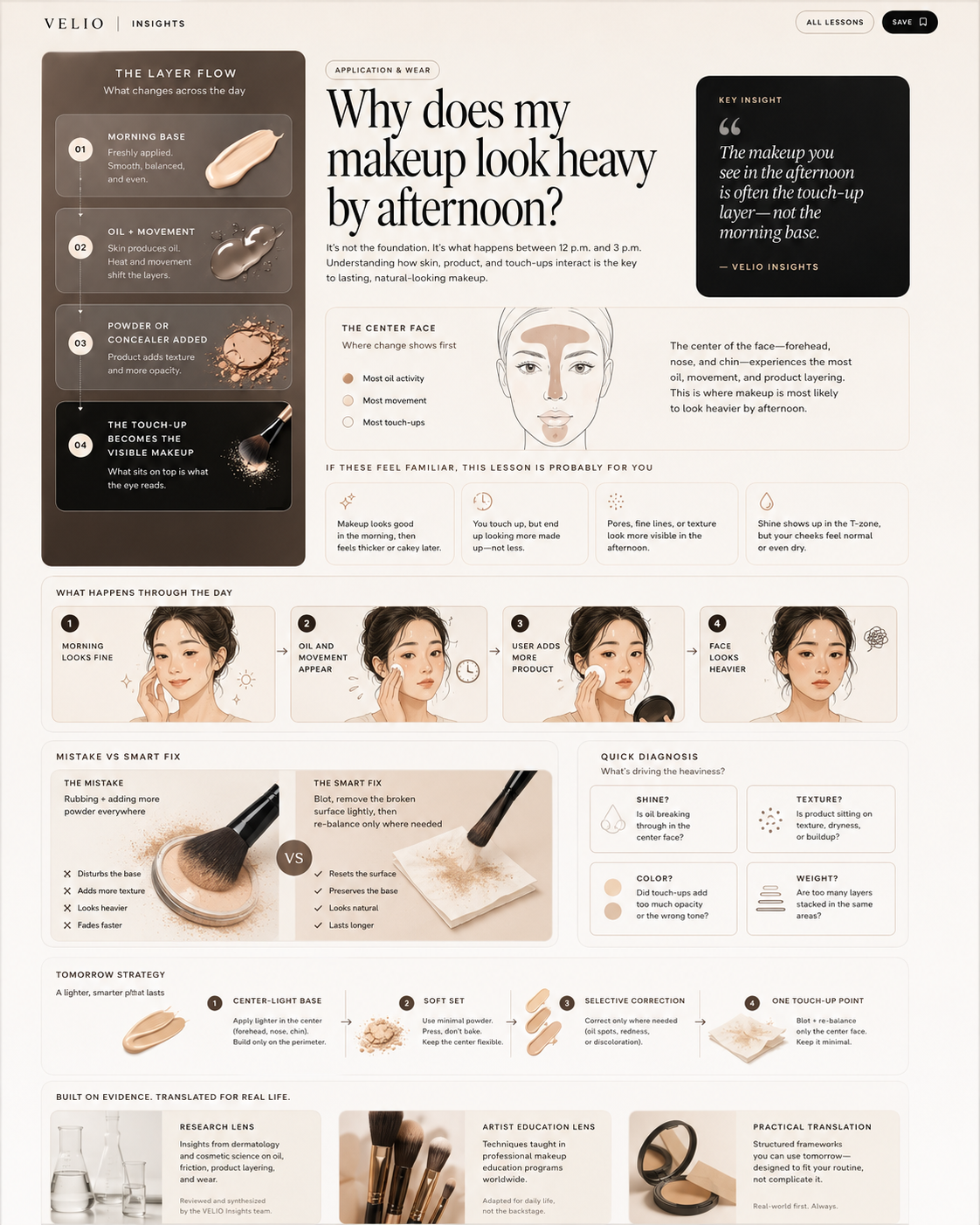
The makeup you see at 3 p.m. is often not the morning base. It is the new top layer created by oil, movement, powder, concealer, and repeated touch-ups.
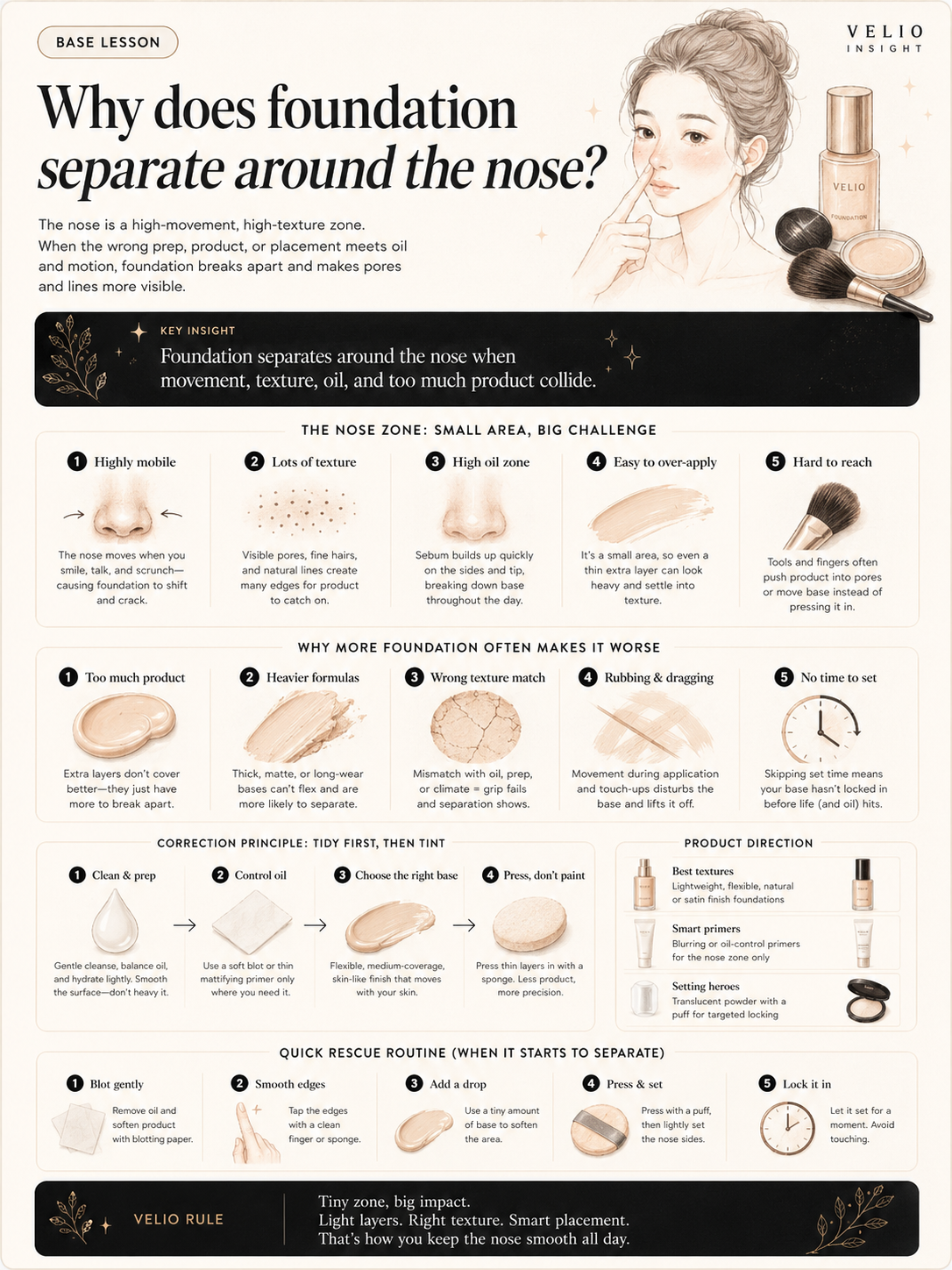
The nose zone is small, warm, and high-movement. Lift the loose layer, flatten the seam, and replace only the coverage that is missing.
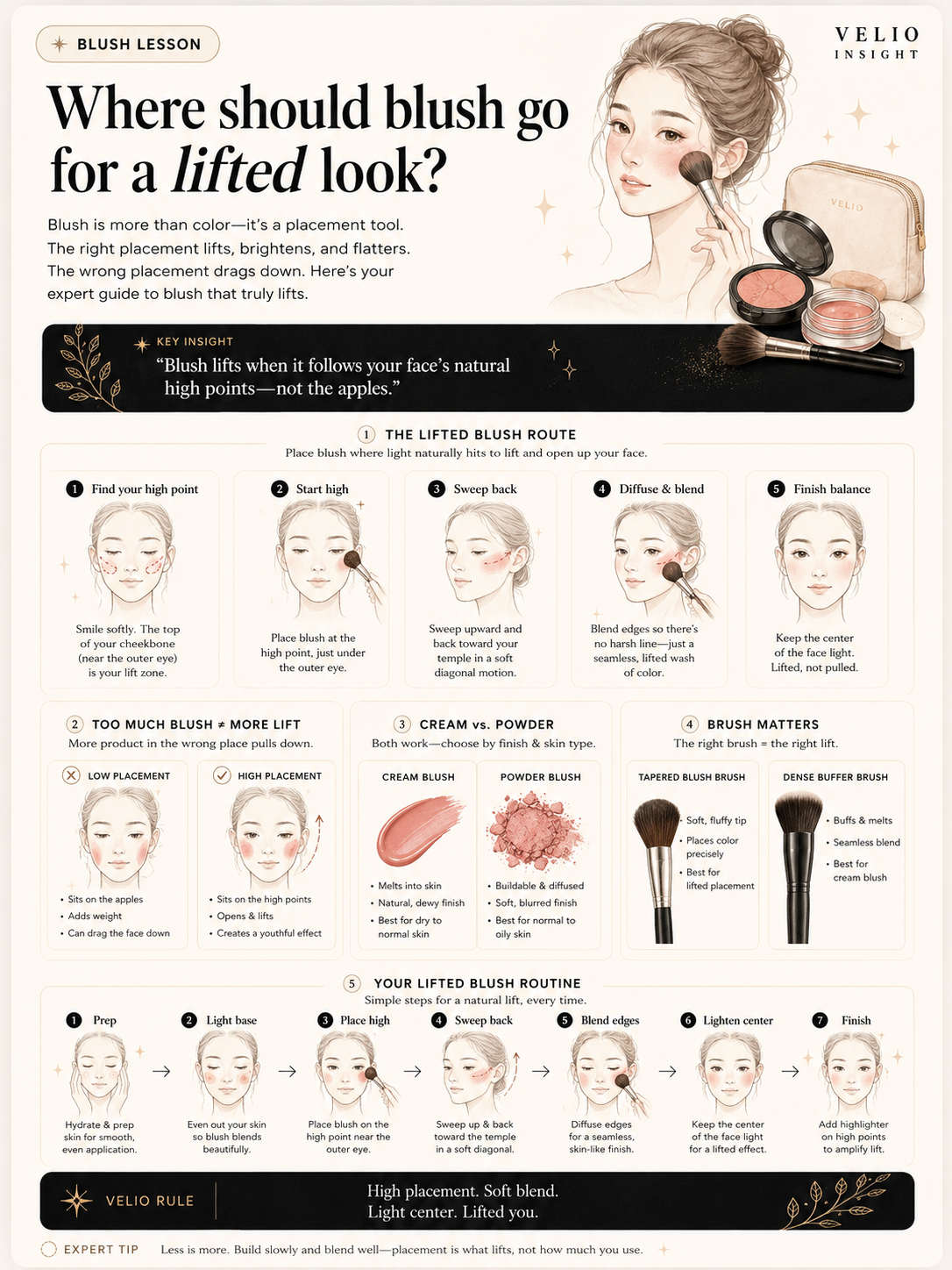
Lift usually comes from direction and placement, not from making the blush stronger or wider.