Base & FinishApplication & wear12 min visual lesson
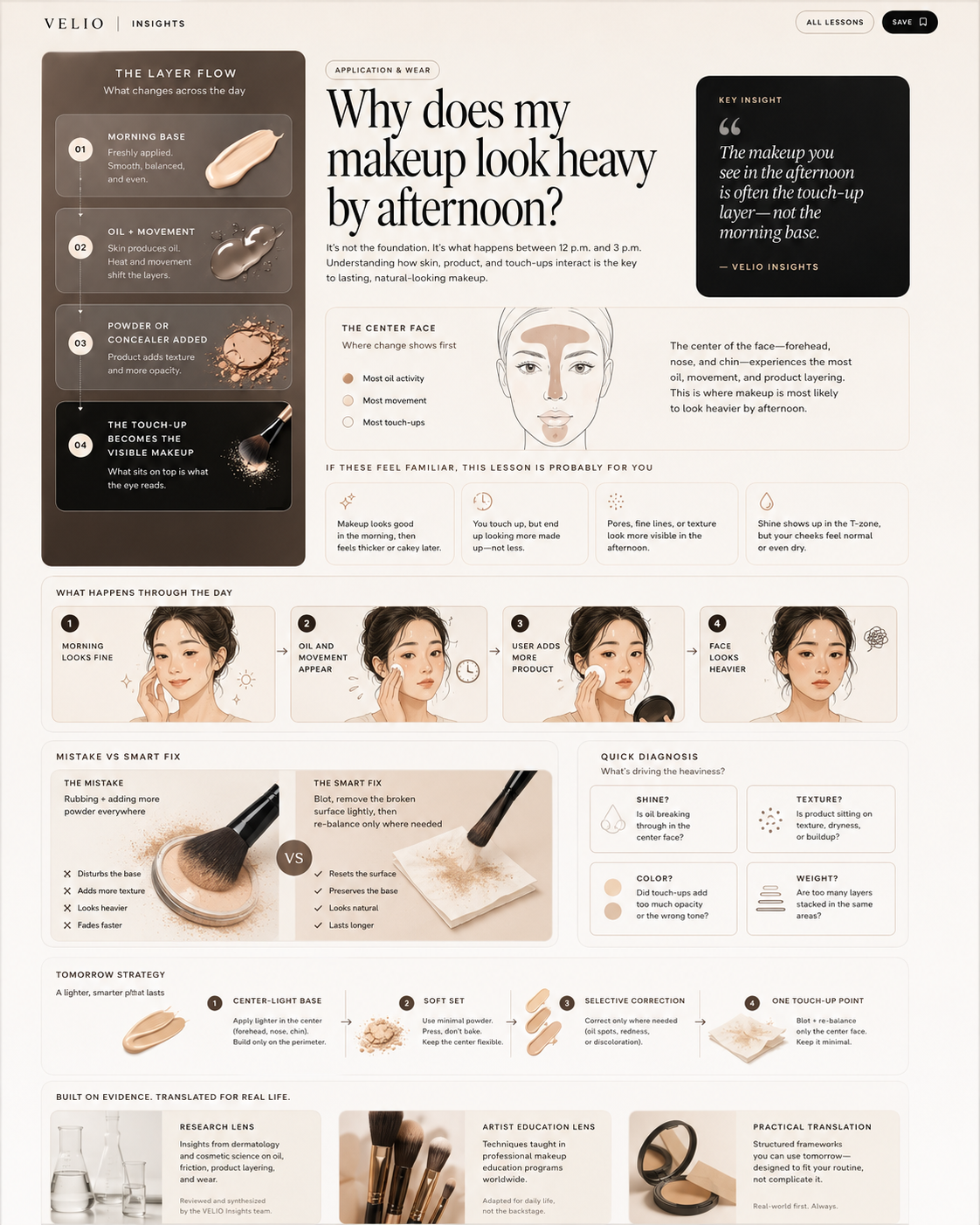
Why does my makeup look heavy by afternoon?
The afternoon face is not the same surface you applied makeup to in the morning.
Key insight
“The makeup you see in the afternoon is often the touch-up layer — not the morning base.”
If these feel familiar, this lesson is probably for you
1
Makeup looks good in the morning, then feels thicker or cakey later.
2
You touch up, but end up looking more made up — not less.
3
Pores, fine lines, or texture look more visible in the afternoon.
4
Shine shows up in the T-zone, but your cheeks feel normal or even dry.
Mixed visual lesson overview
The flagship reading rhythm: texture diagram, face map, one story comic, comparison board, quick diagnosis, strategy map, and evidence strip.
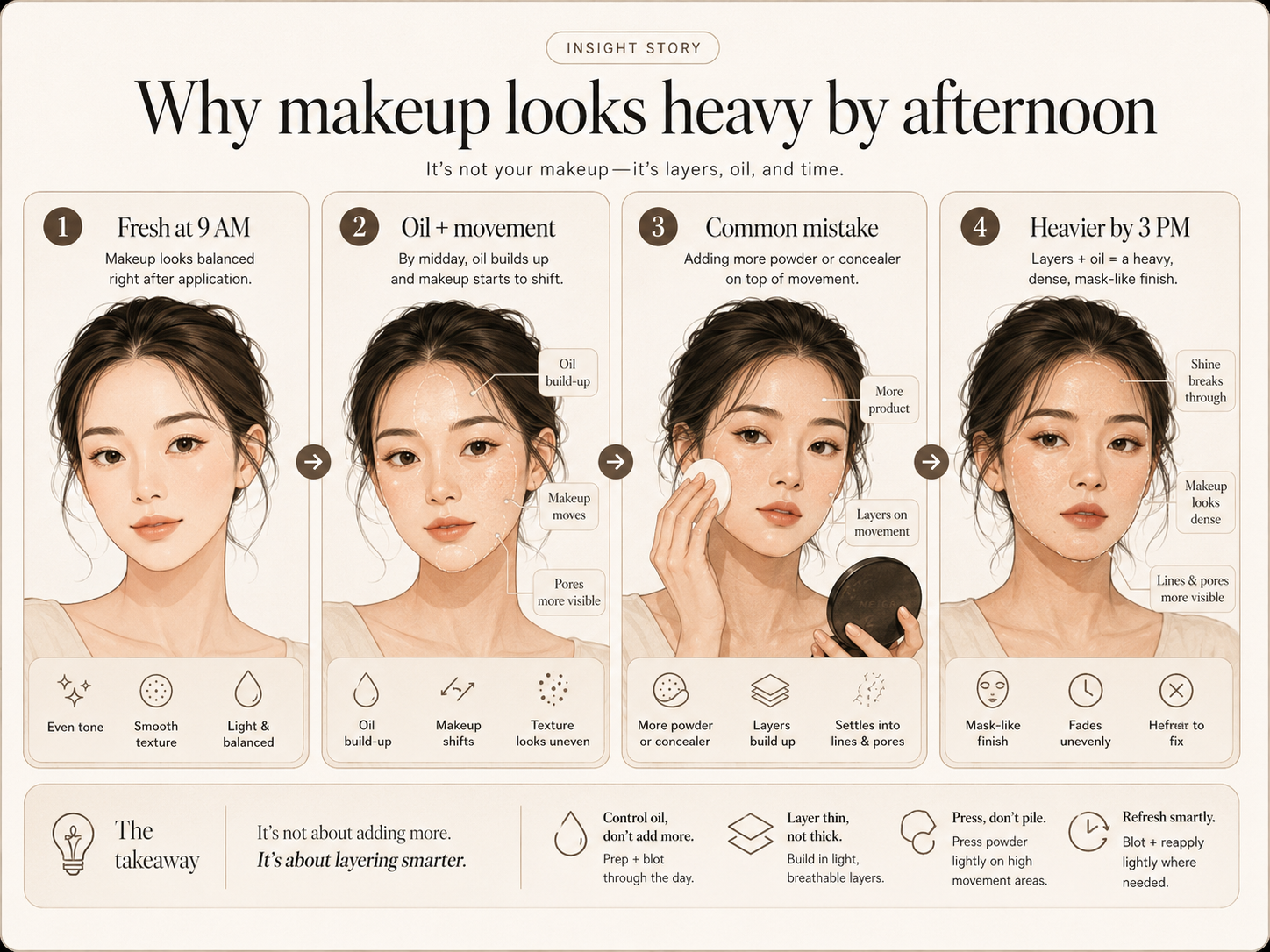
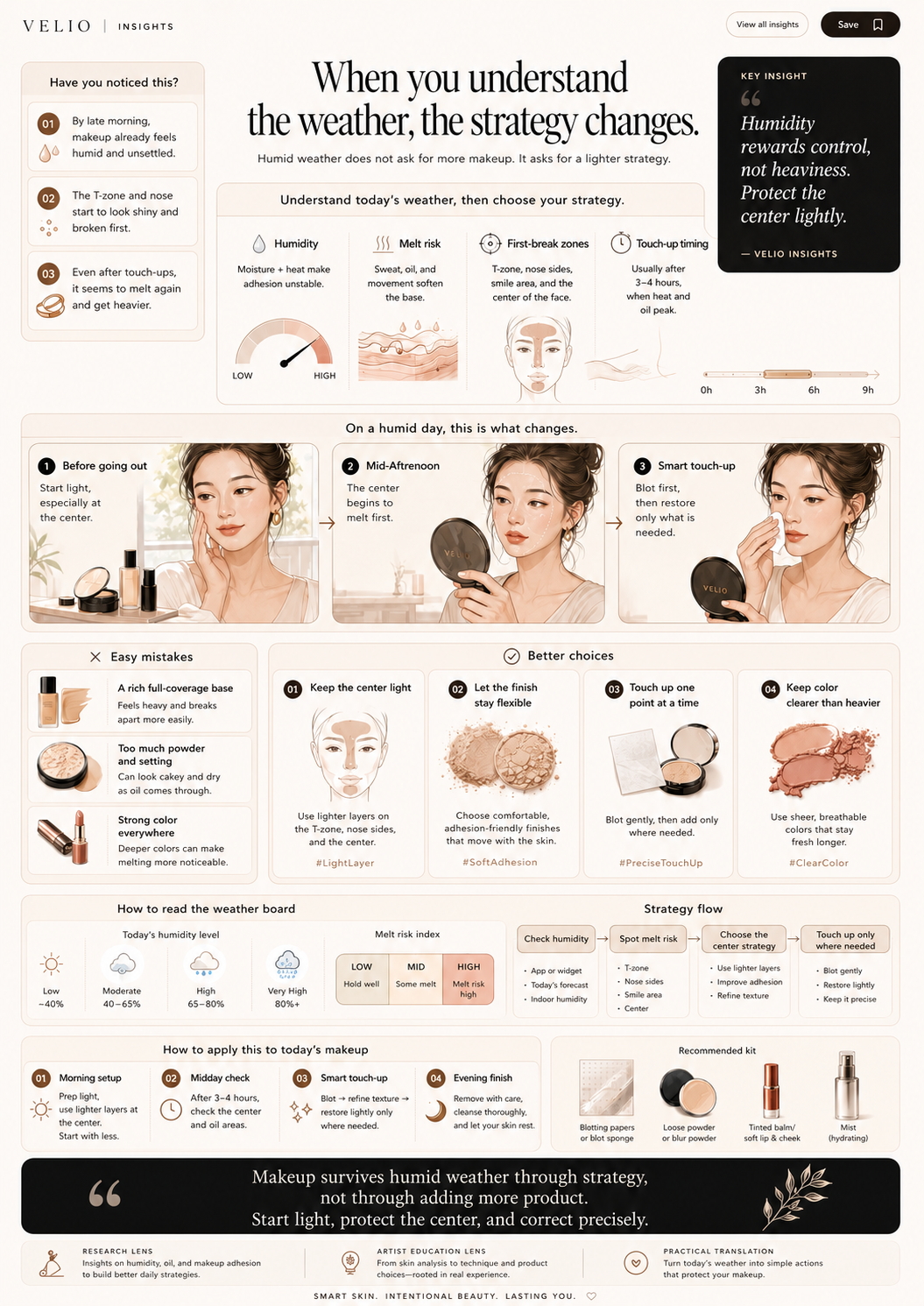
What happens through the day
This sequence shows how a fresh morning base can become heavier after repeated touch-ups.
Start with the story
The makeup did not suddenly become bad. The surface changed.
In the morning, makeup sits on a relatively even surface. Skin care has settled, the base is freshly blended, and the finish still has its original balance. By afternoon, that surface is different. Oil has moved through the center face. Heat and facial movement have softened tiny edges around the nose, mouth, and under-eye area. Product has started to settle where the face moves most.
That is why the afternoon problem cannot always be solved with the same thinking you used in the morning. Morning makeup is about application. Afternoon makeup is about editing a changed surface.
“The question is not 'what should I add?' The better question is 'what changed first?'”
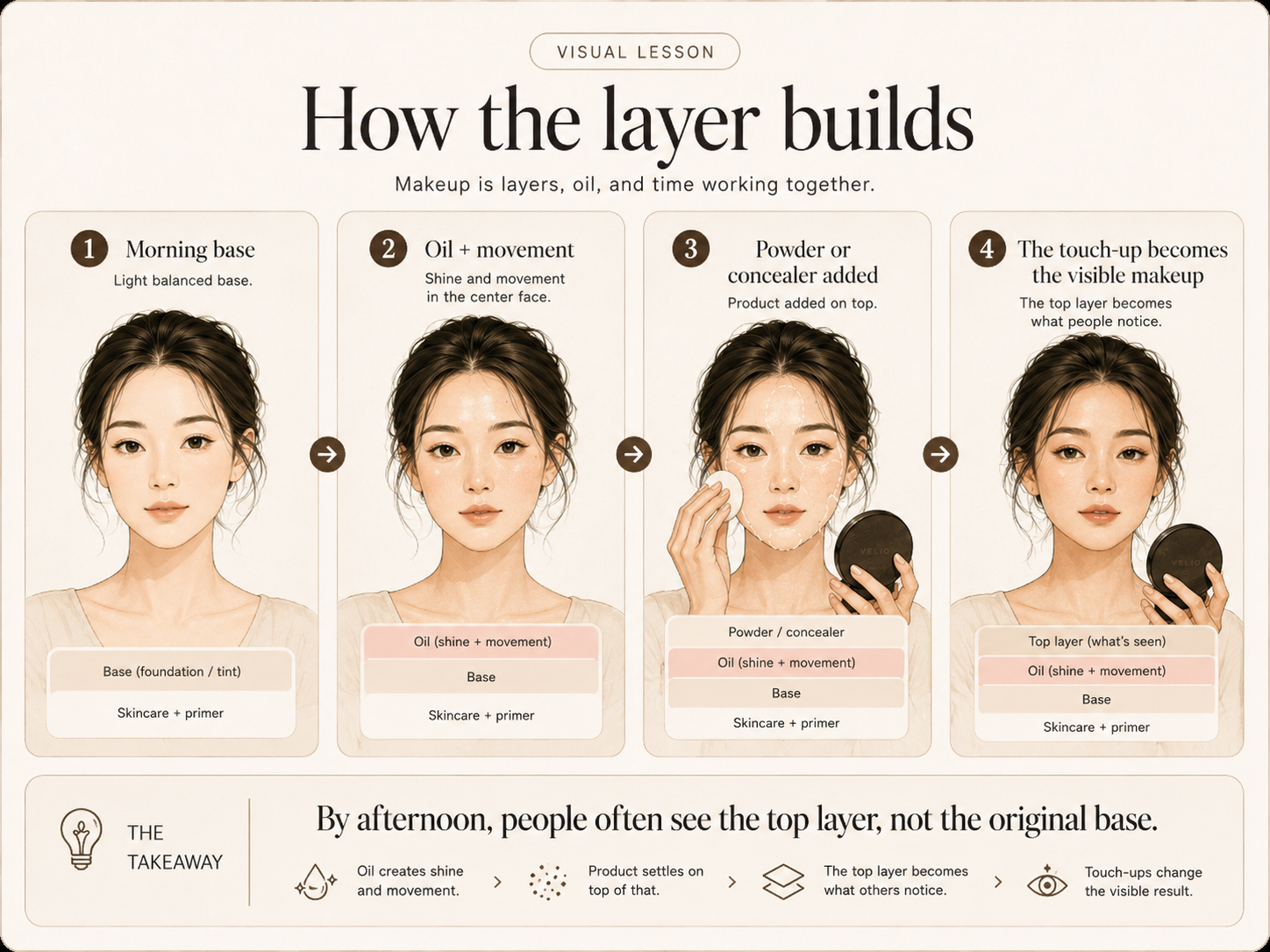
How the layer builds
This is the technical mechanism: the top layer, not the original base, is often what people notice in the afternoon.
The hidden mechanism
By afternoon, the top layer becomes what people see.
Most people blame the foundation because that is the product they remember applying. But the product people notice at 3 p.m. may be the layer added later. If powder goes straight over oil, it can bind to the changed surface. If concealer goes over a moving crease, the crease may look sharper. If the same area is corrected three times, that area becomes visually louder than the rest of the face.
This is why a light morning base can still become a heavy afternoon look. The issue is not only amount. It is order, timing, surface condition, and where the correction happens.
“By afternoon, people often see the top layer, not the original base.”
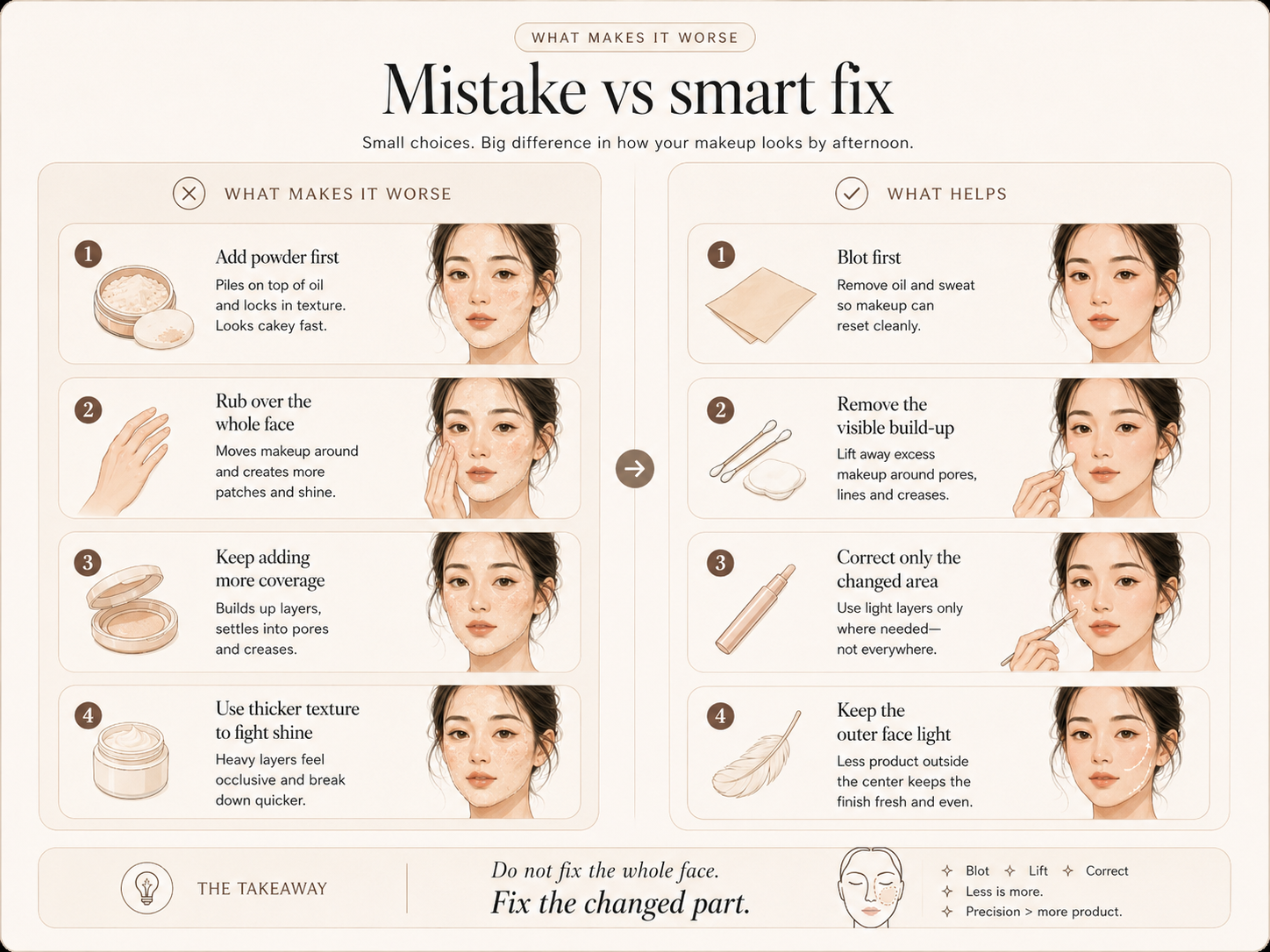
Mistake vs smart fix
A comparison board gives the reader an immediate behavior change: do not fix the whole face; fix the changed part.
Behavior change
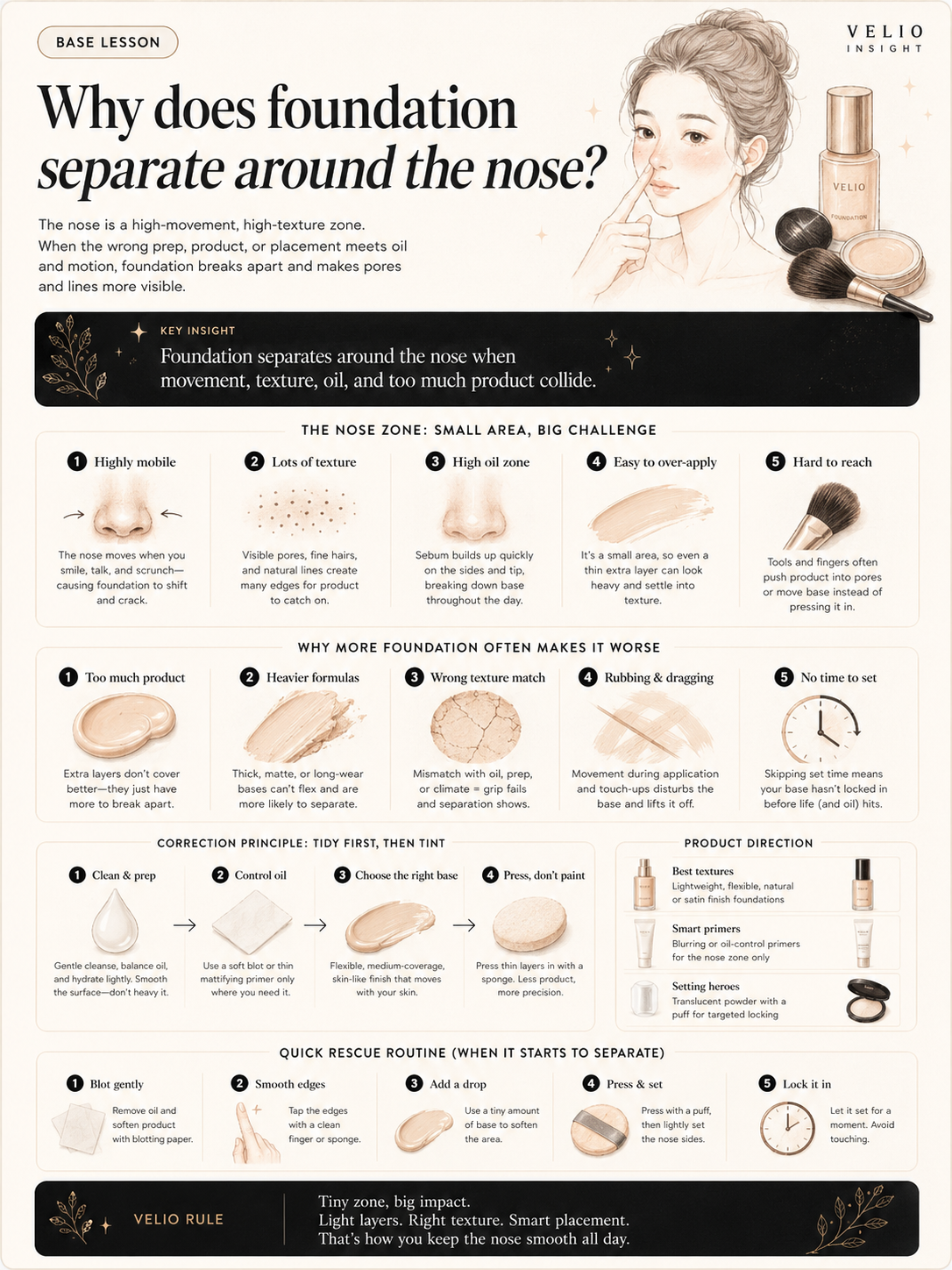
The common mistake is fixing before diagnosing.
When a face looks less fresh, many people reach for the fastest visible tool: powder, concealer, cushion, or foundation. That feels logical because it gives an instant sense of control. But if the real problem is oil, rubbing, or surface buildup, more product can lock in the problem instead of solving it.
A professional-looking touch-up usually does less. It removes oil first. It lifts visible buildup. It corrects only the changed area. It keeps the outer face light so the whole look still has air.
Before the next step
Name the change first.
Slow the mistake down: identify the changed area, choose the smallest correction, and stop before the fix becomes another visible layer.
Mistake vs smart fix
Small choices. Big difference.
The mistake
Rubbing and adding more powder everywhere disturbs the base, adds texture, and makes the center face heavier.
The smart fix
Blot, remove the broken surface lightly, then rebalance only where the face actually changed.
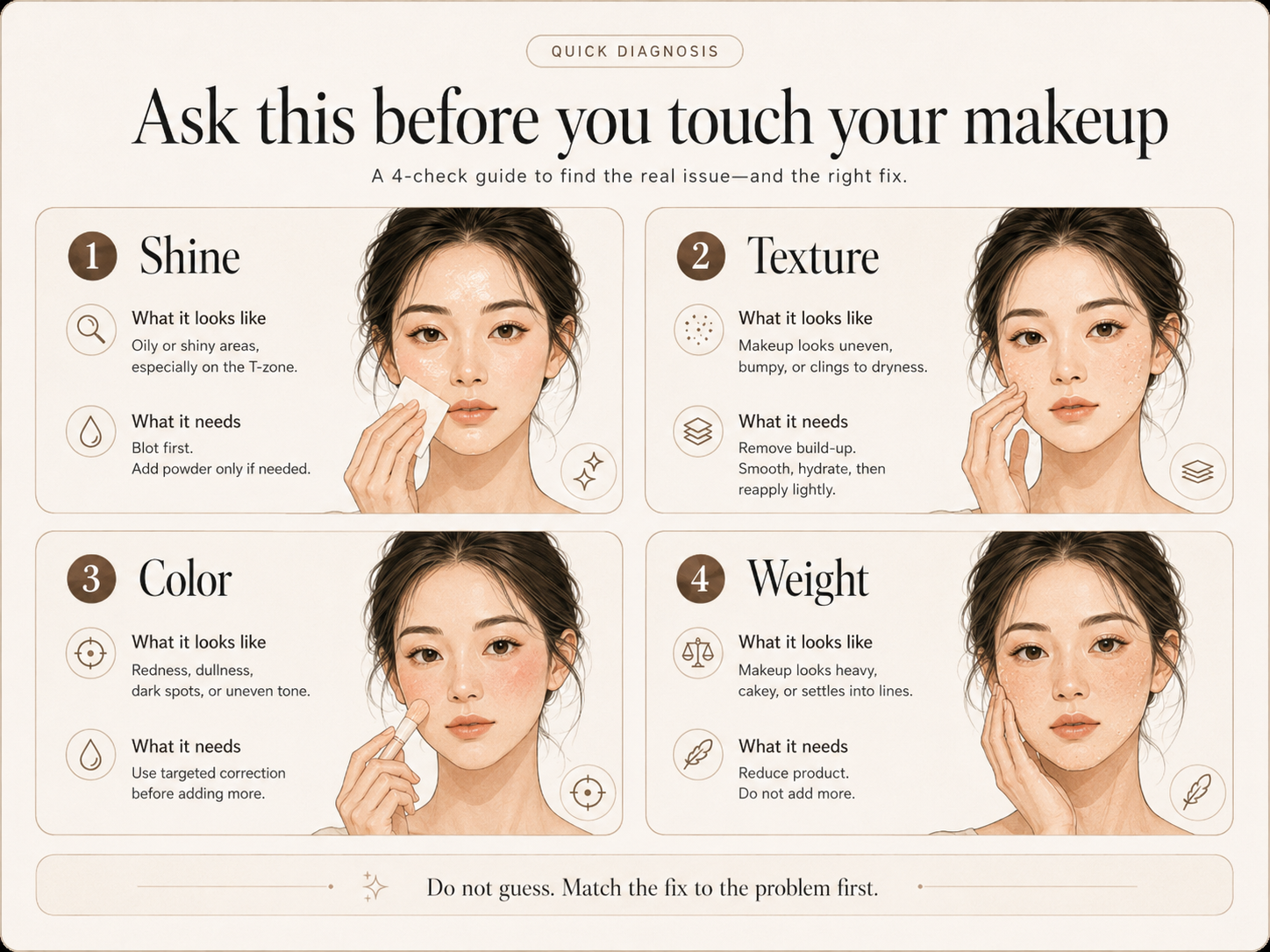
Quick diagnosis
What is changing first?
Shine?
Oil is breaking through in the center face. Blot first; powder only if needed.
Texture?
Product is sitting on dryness, buildup, or pores. Remove buildup before adding more.
Color?
Touch-ups may have added opacity or the wrong tone. Correct narrowly, not everywhere.
Weight?
Too many layers are stacked in the same area. Reduce product before reapplying.
Ask this before you touch your makeup
This turns the lesson into a small habit: name the problem first, then choose the smallest matching fix.
Quick diagnosis
Before you touch your makeup, name the problem.
Shine, texture, color, and weight can look similar at first glance, but they need different fixes. Shine needs blotting before powder. Texture needs smoothing or removal before reapplication. Color needs narrow correction. Weight needs subtraction, not more coverage.
The reason afternoon makeup gets worse is often that one solution is used for all four problems. Powder for everything. Concealer for everything. Cushion for everything. Once the real issue is named, the fix becomes smaller and cleaner.
“Do not guess. Match the fix to the problem first.”
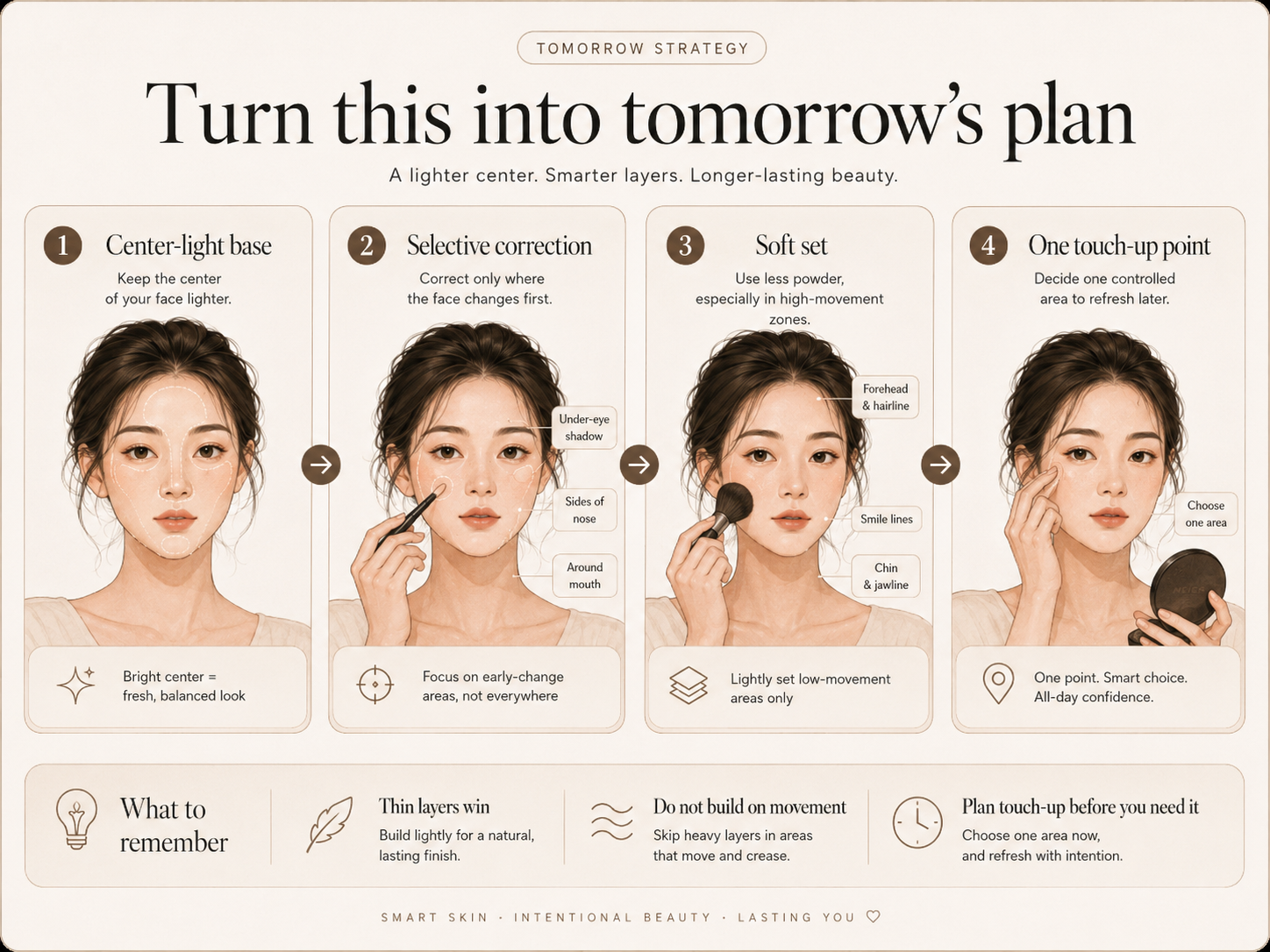
Turn this into tomorrow's plan
The lesson becomes valuable when it changes tomorrow's base, correction, setting, and touch-up plan.
Tomorrow strategy
The best insight is the one that changes tomorrow's plan.
A better tomorrow makeup plan starts before the first product touches the face. Keep the center lighter. Correct only the areas that usually change first. Set softly where movement is low, and avoid building thick powder in areas that crease. Decide one touch-up point in advance so the afternoon does not become a full-face rescue.
This is where the lesson becomes personal. If your center face gets heavy, your tomorrow plan should not be "more coverage." It should be a lighter center, smarter layers, and one controlled refresh point.
Tomorrow strategy
A more precise plan for next time.
Strategy map
1
Center-light base
Apply lighter in the center face — forehead, nose, and chin — then build only where needed.
2
Soft set
Use minimal powder. Press, do not bake. Keep the center flexible.
3
Selective correction
Correct only oil spots, redness, or discoloration instead of resetting the full face.
4
One touch-up point
Decide one controlled area to refresh later so the day does not become a full-face rescue.
The takeaway
Read it once. Use it tomorrow.
“Do not rebuild the whole face. Find the first visible shift, remove what changed, and correct only the part that needs it.”
Professional-looking makeup often comes from restraint.
Public makeup education summarized for everyday use
Many professional techniques emphasize thin layers, selective correction, and observing the face before adding product.
This is summarized as a practical lens inside VELIO, not presented as endorsement by any outside artist or brand.
Practical translation
The consumer action is simple: observe, remove, refine.
VELIO editorial translation
A useful touch-up is not a full reset. It is a small decision made after reading the surface of the face.
The goal is education first. Product prompts stay secondary and appear after the reader has learned something useful.
Frequently asked questions
Search questions, answered clearly.
FAQ
Why does my makeup look heavy by afternoon?
Makeup often looks heavy by afternoon because oil, movement, powder, concealer, and repeated touch-ups create a new top layer. The better first move is to identify what changed, then remove or soften that surface before adding more product.
Should I add more powder when makeup looks heavy?
Not immediately. If the surface is oily or built up, powder can make texture more visible. Blot first, then use a very small amount of soft-set powder only where shine still needs control.
How do I touch up without making my base look cakey?
Use the smallest correction route: blot oil, lift visible buildup, correct only the changed area, and keep the outer face light. A full-face reset usually adds more visible weight.
What products help makeup stay lighter through the day?
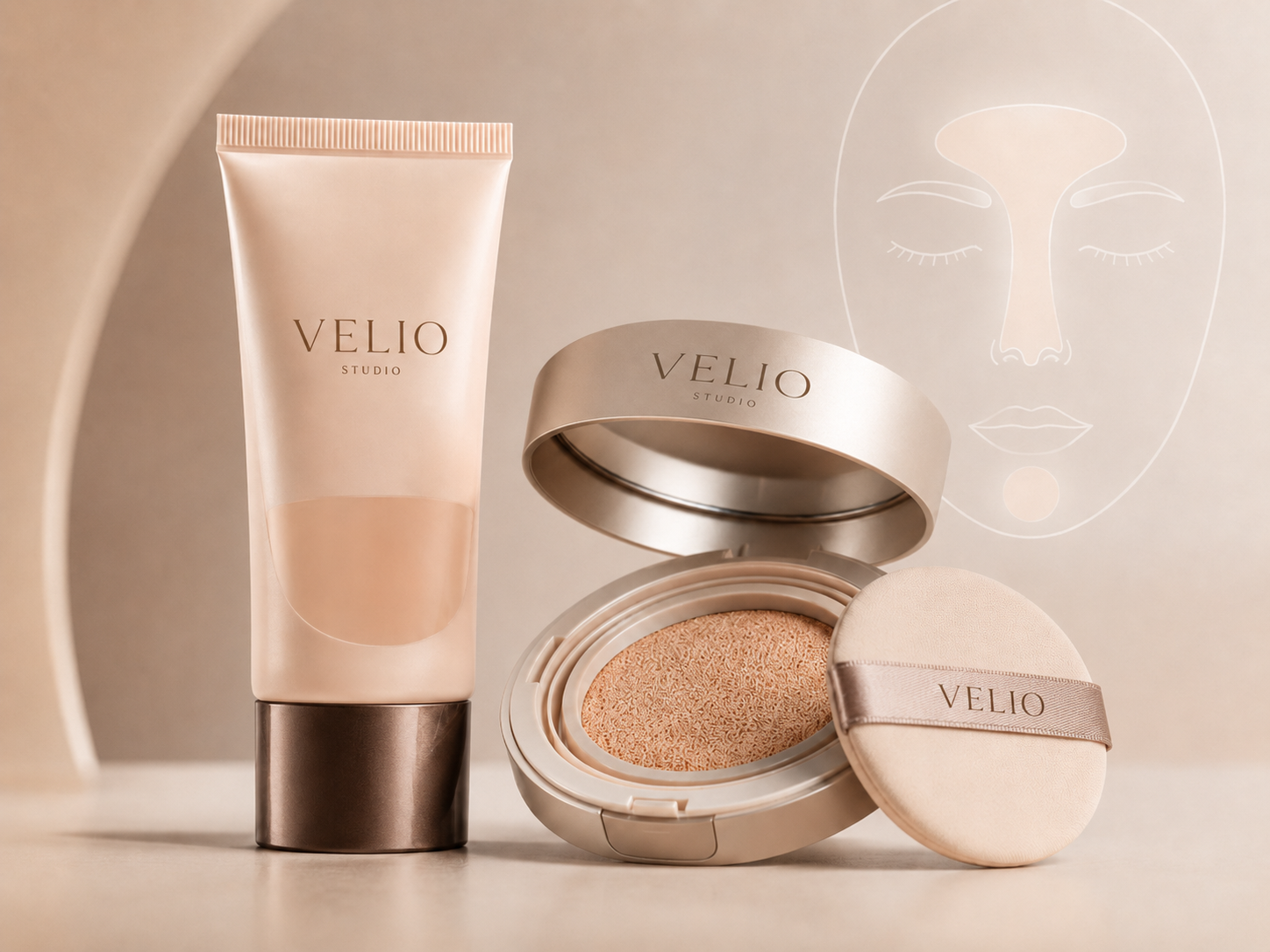
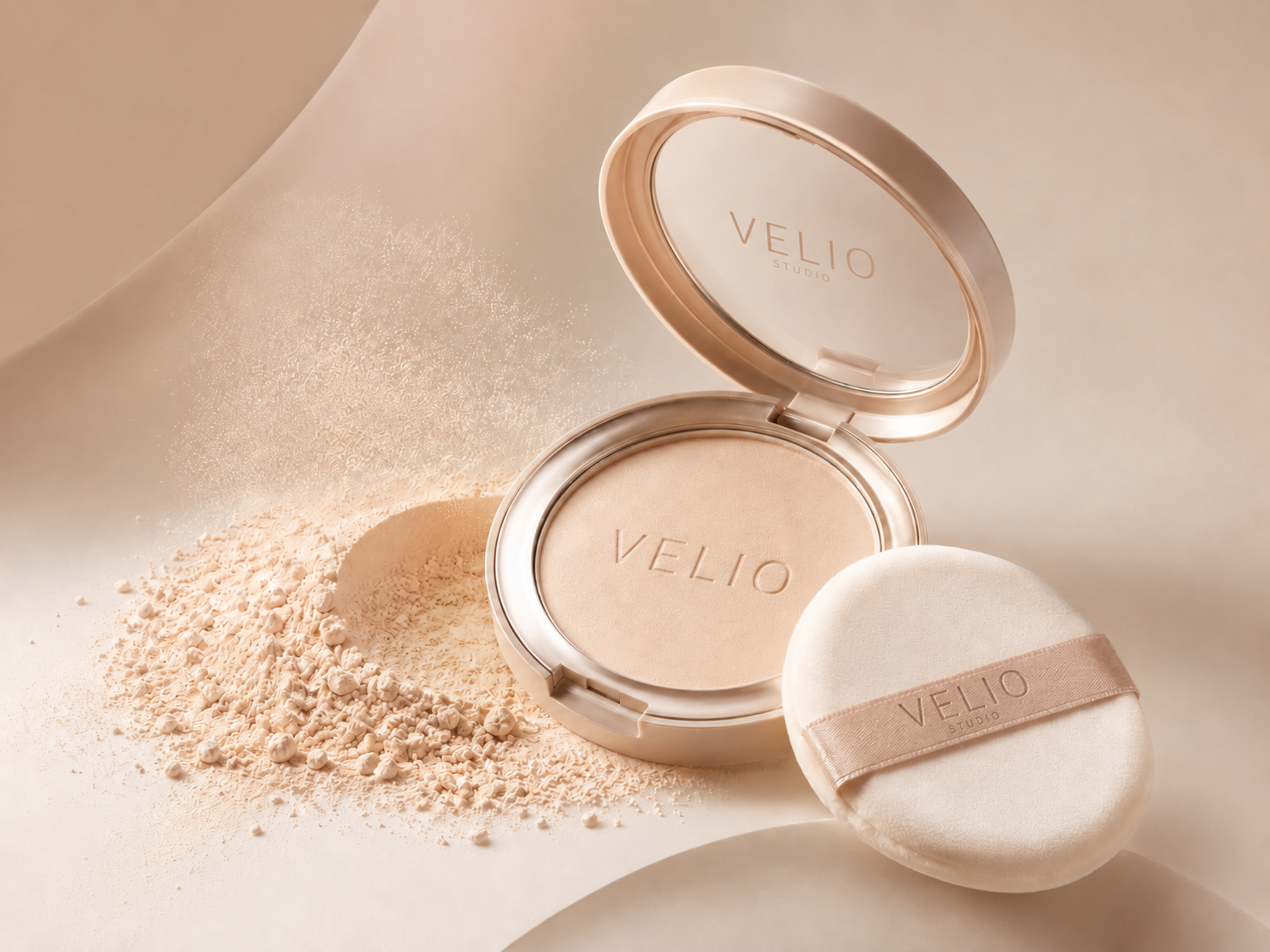
VELIO usually points this problem toward a center-light base, blotting paper, soft-set powder, and precision concealer rather than heavier all-over coverage.
Now make it personal
See what changed on your face today.
The lesson explains the general pattern. A mirror read turns it into one decision for your face, your conditions, and today’s wear.