Why does concealer crease under my eyes?
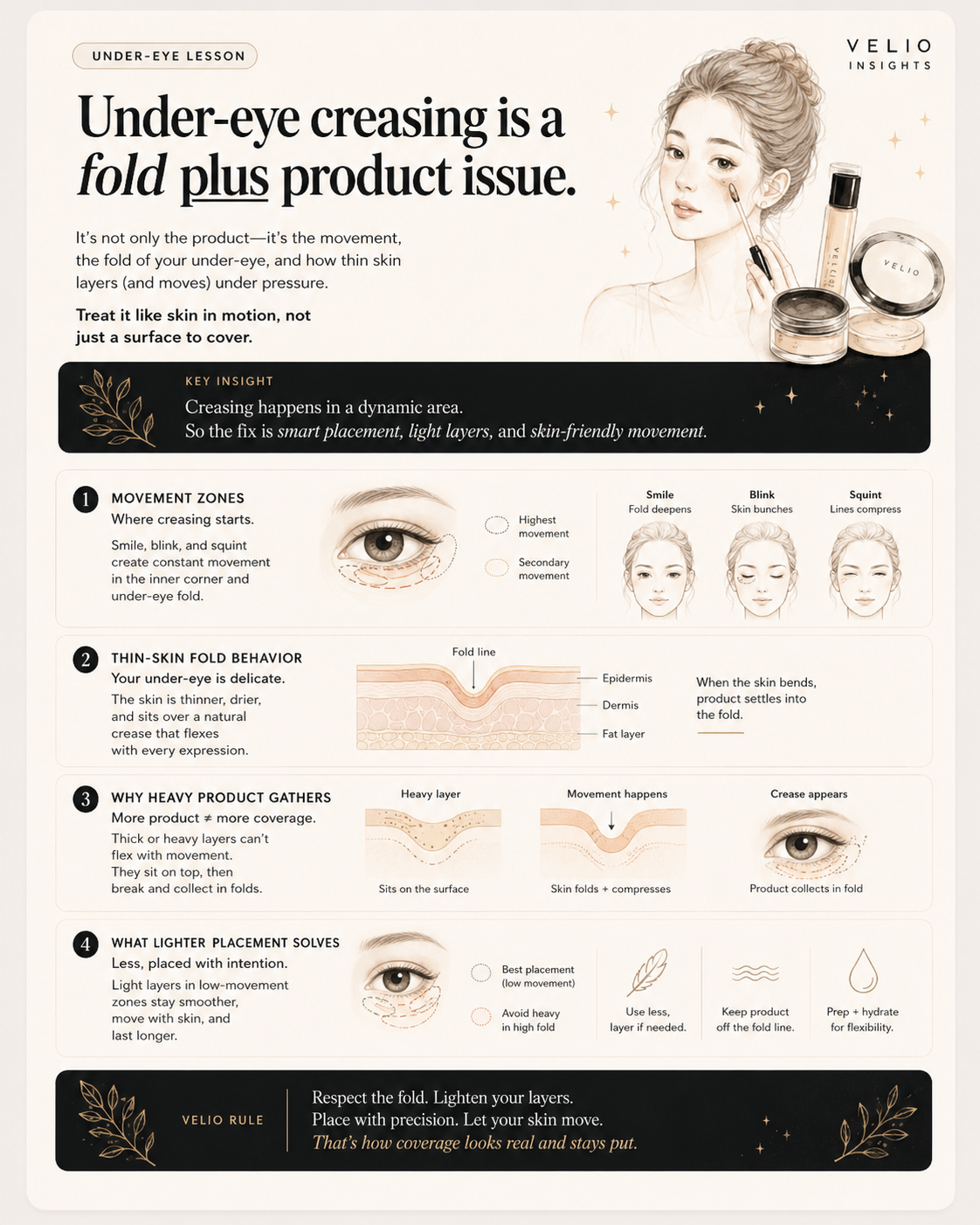
Under-eye creasing usually happens because product settles into a moving fold. Too much concealer, heavy powder, rubbing, dryness, and expression movement can make the crease more visible.
Under-eye concealer creasing is not always a product failure. It is often a thin-skin, movement, and layer-pressure problem.
“Concealer does not always fail. The method often does.”
Concealer looks smooth at first, then gathers into fine lines.
Adding more concealer makes the area look thicker, not smoother.
Powder helps briefly but later looks dry or gray.
The crease appears most when you smile, blink, or talk.

The first decision is to read the under-eye as a high-movement fold zone, not just a dark circle zone.

The first decision is to read the under-eye as a high-movement fold zone, not just a dark circle zone.
The under-eye is not a flat surface. It moves every time you blink, smile, talk, or squint. When concealer sits on top of that moving area, even a good formula can collect where the skin folds most.
That is why the fix is not automatically stronger coverage. The more useful question is how much product the fold has to carry, and whether the product is flexible enough to move with the area.

The first decision is to read the under-eye as a high-movement fold zone, not just a dark circle zone.
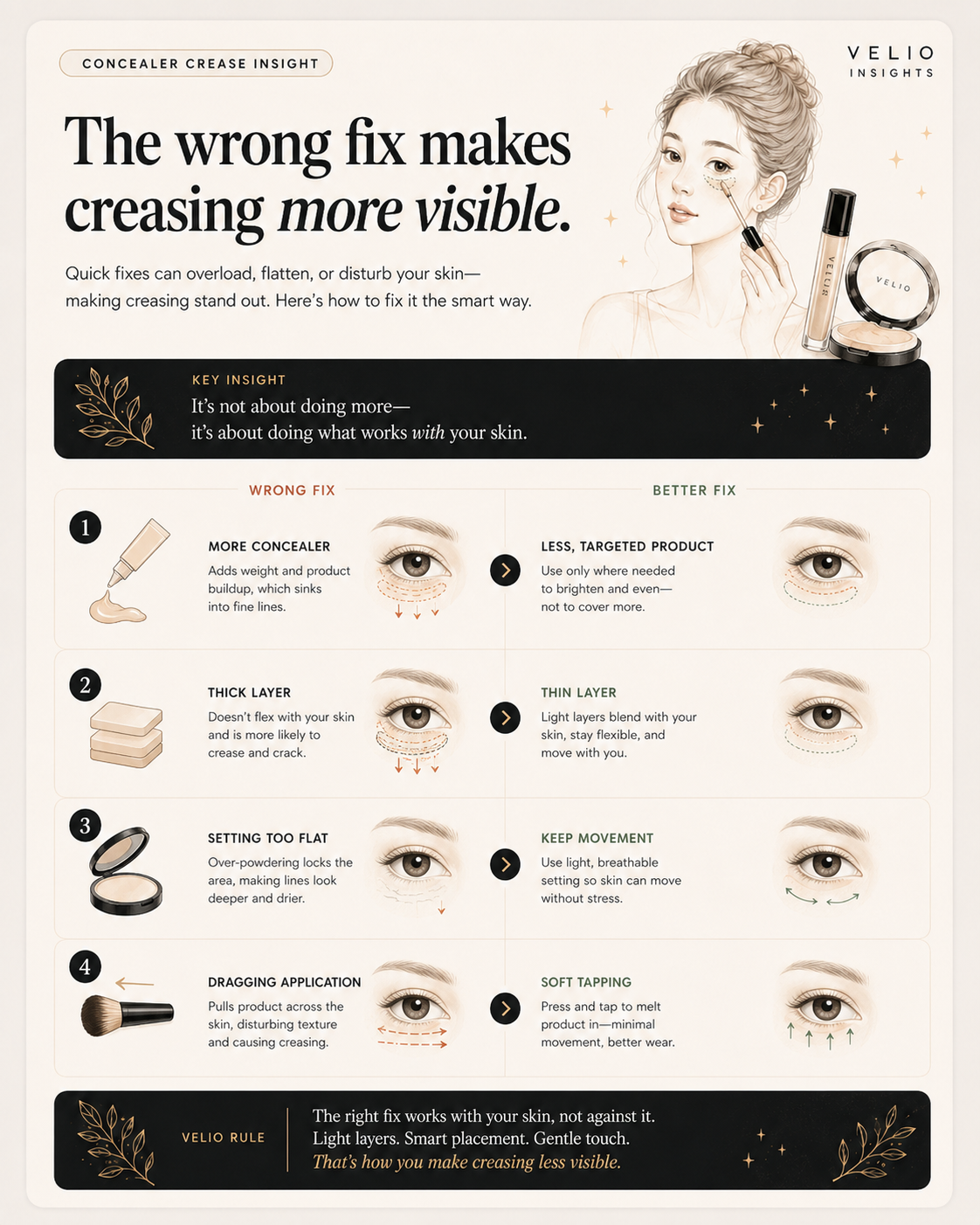
When the under-eye starts creasing, adding more concealer feels like the fastest fix. But if product is already sitting in the fold, more product can make the line look deeper and the texture look heavier.
A cleaner repair starts by tapping out the crease first. Once the fold is flat, a micro-layer can correct the visible shadow without rebuilding the entire area.

The first decision is to read the under-eye as a high-movement fold zone, not just a dark circle zone.
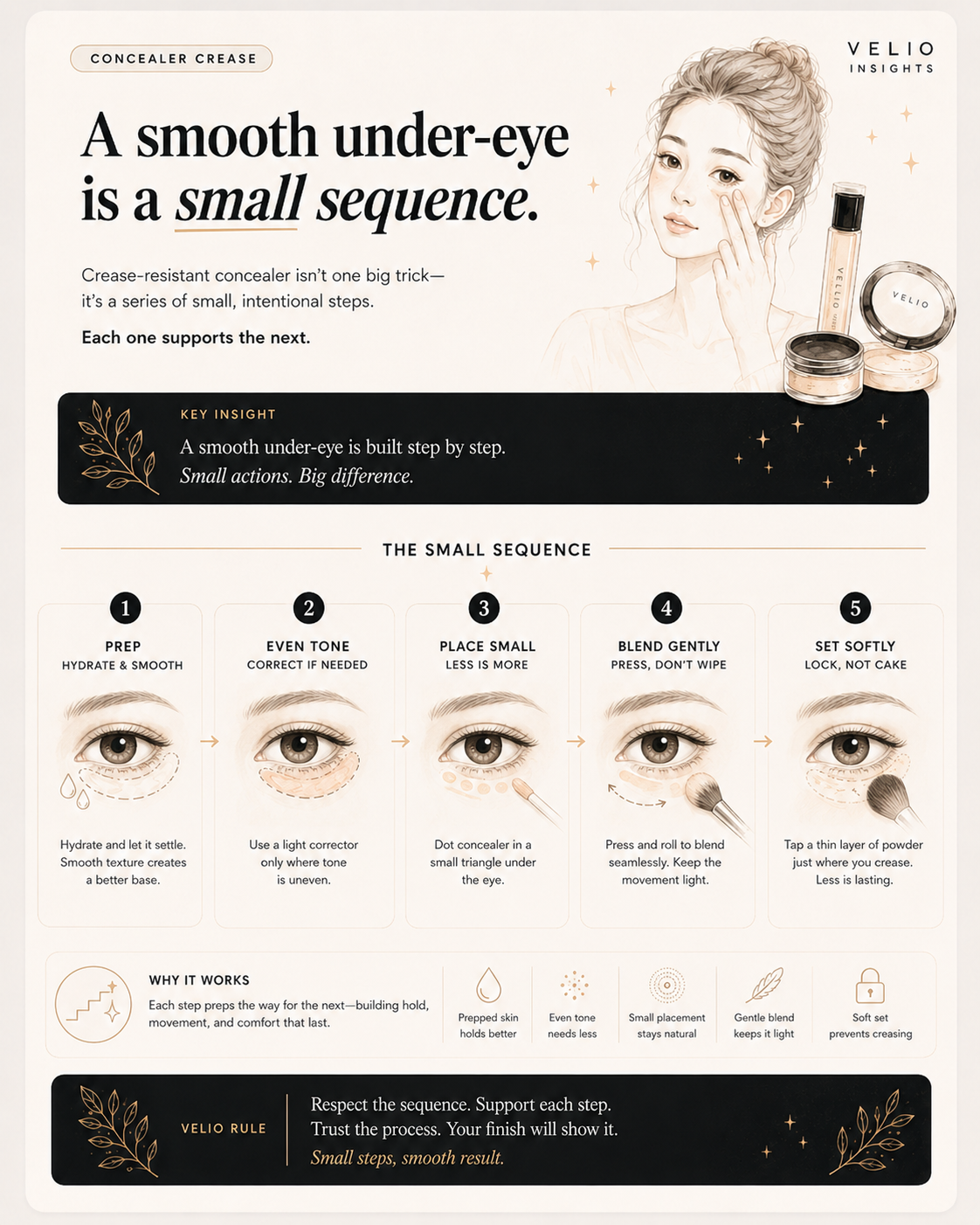
The order matters. Hydrate lightly, let the area settle, tap out the fold, apply a thin layer only where needed, then set the crease-prone edge. Each step keeps the layer smaller.
This routine also makes the midday touch-up easier. Instead of adding another full layer, you can tap out the crease and reapply only a tiny amount where the shadow returns.
Slow the mistake down: identify the changed area, choose the smallest correction, and stop before the fix becomes another visible layer.
Piling on concealer to hide creasing that is already caused by product load.
Use a thinner flexible layer and place it only where shadow is visible.
Powdering the whole under-eye heavily.
Set the fold lightly, not the entire under-eye.
The under-eye moves repeatedly, so product gets pushed into tiny folds.
Too much concealer or powder gives the fold more product to collect.
Dry or tight skin can make product crack faster.
Tap out the fold first, micro-correct, then set only the edge that moves.
Hydrate lightly and let the area settle before concealer.
Apply less product near the fold and build only where darkness remains.
Use a soft detail brush or fingertip press instead of dragging.
Powder only the crease-prone edge with a tiny amount.
“Under-eye concealer lasts better when the fold carries less product.”
Coban et al., Plastic and Reconstructive Surgery Global Open, 2025
Dynamic periocular movement helps explain why product can collect in expression lines even when the formula is good.
Hamie et al., Journal of Cosmetic Dermatology, 2024
Research reviews on eye-cream ingredients discuss hydration, elasticity, and periorbital skin appearance, supporting VELIO's thin-prep logic.
Professional makeup education summarized for everyday use
Many artist techniques use small-area correction and minimal powder rather than full under-eye rebuilding.
VELIO editorial translation
The reader action is simple: flatten the fold before adding product, then add less than instinct suggests.
Under-eye creasing usually happens because product settles into a moving fold. Too much concealer, heavy powder, rubbing, dryness, and expression movement can make the crease more visible.
Use powder only lightly and only where it is needed. Heavy powder can dry the area and make lines look sharper, while a tiny soft-set layer can help lock a thin concealer layer in place.
Tap out the crease before setting, apply a thin layer, blend by pressing rather than dragging, and set the fold lightly instead of powdering the whole under-eye area.
VELIO points this lesson toward hydrating prep, precision concealer, soft detail tools, and lightweight powder used only on the crease-prone edge.
The lesson explains the general pattern. A mirror read turns it into one decision for your face, your conditions, and today’s wear.

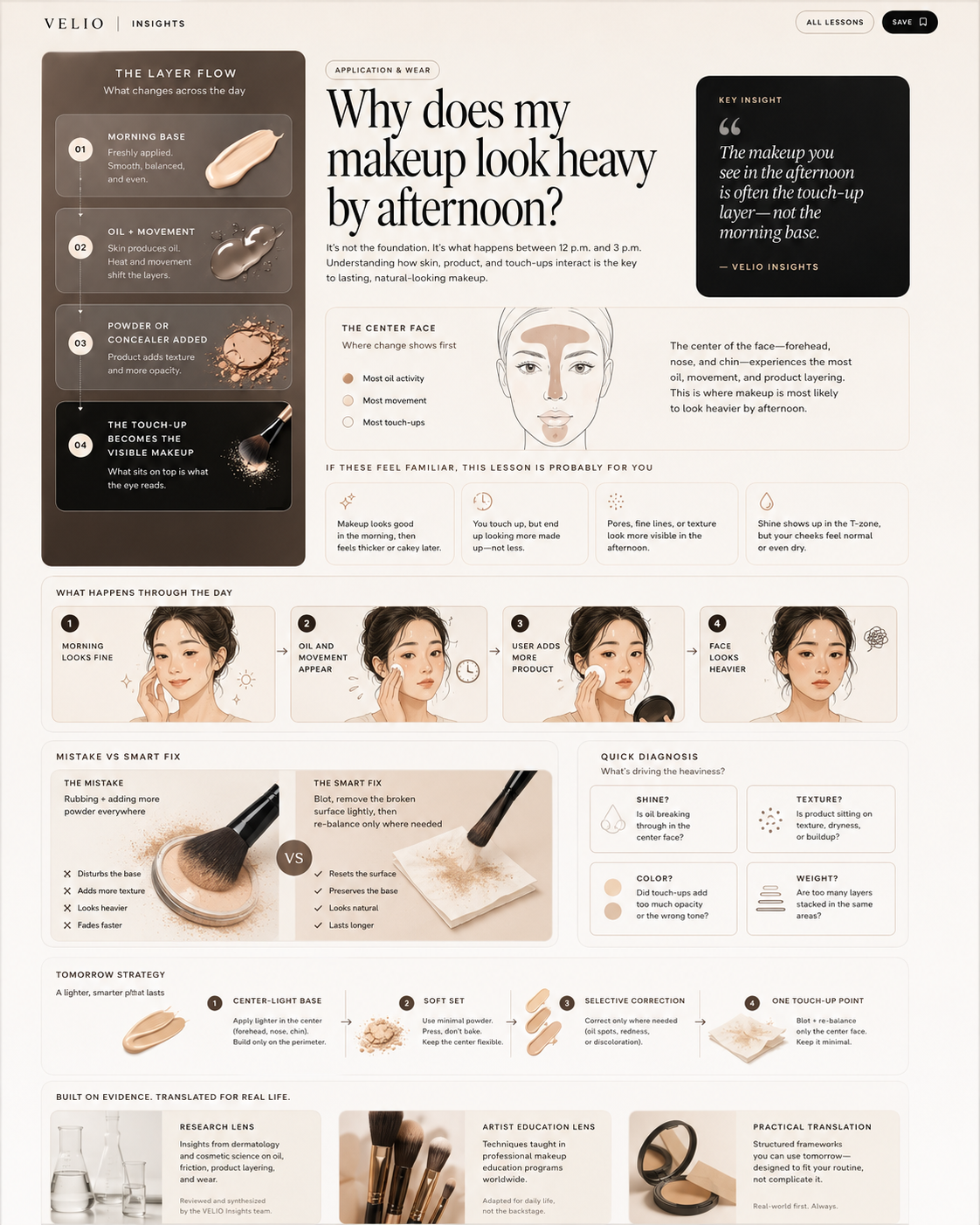
The makeup you see at 3 p.m. is often not the morning base. It is the new top layer created by oil, movement, powder, concealer, and repeated touch-ups.

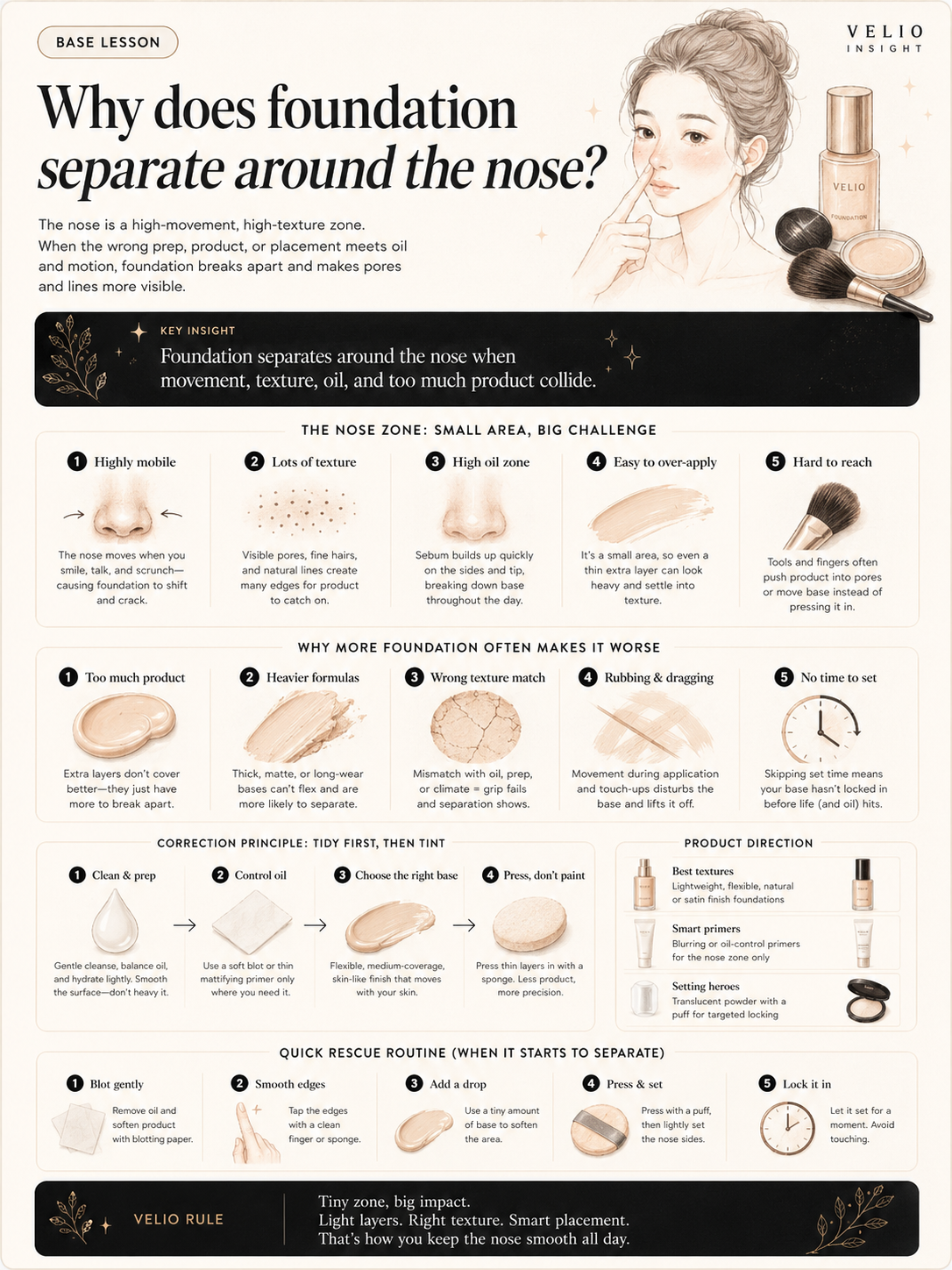
The nose zone is tiny, warm, and high-movement. The fix is usually smaller than the problem: remove the broken layer, then correct only the visible seam.

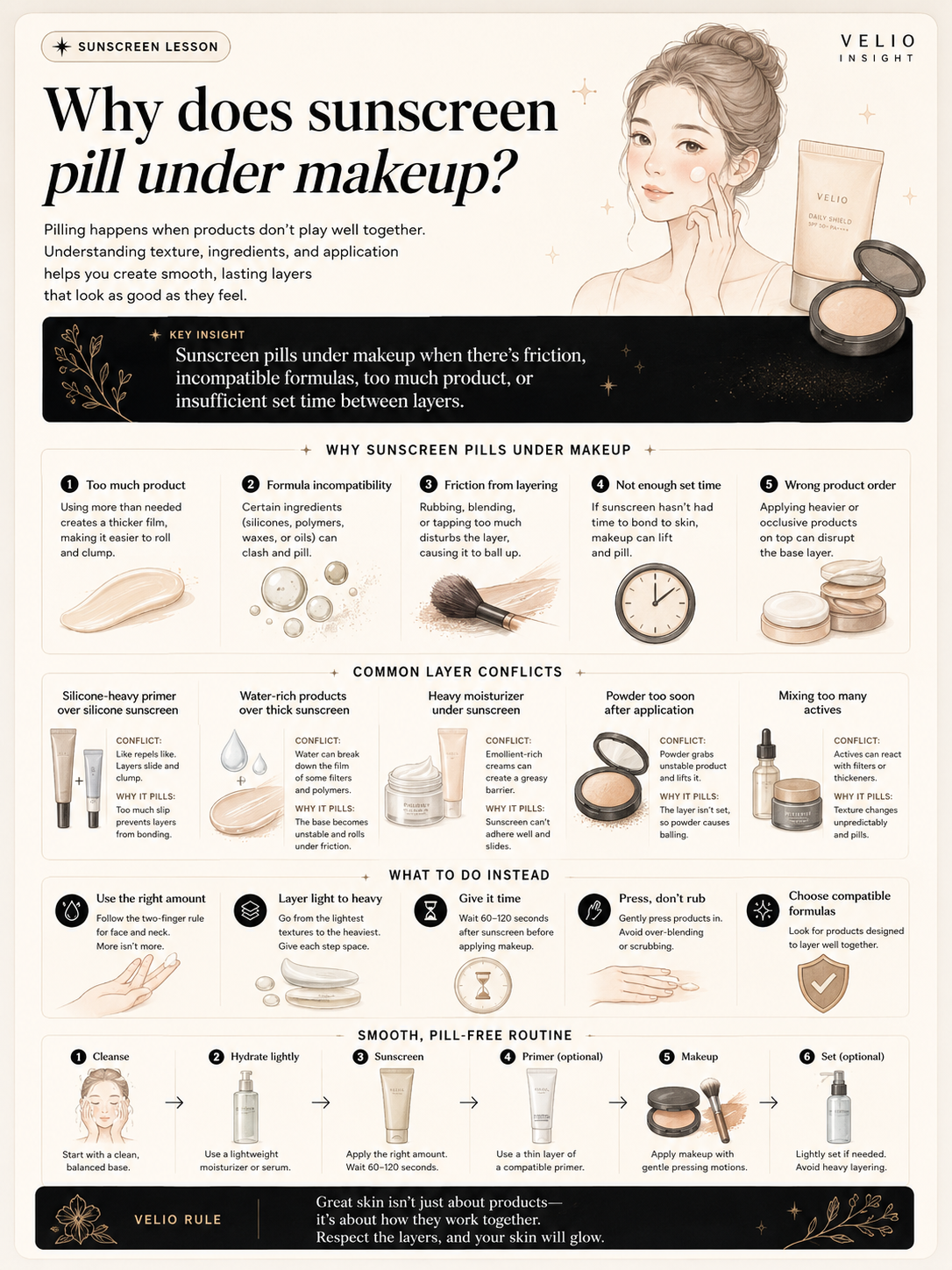
Sunscreen pilling is usually a layer conflict. The fix is better order, less friction, more settling time, and more compatible product families.