Why does powder make my makeup look dry?
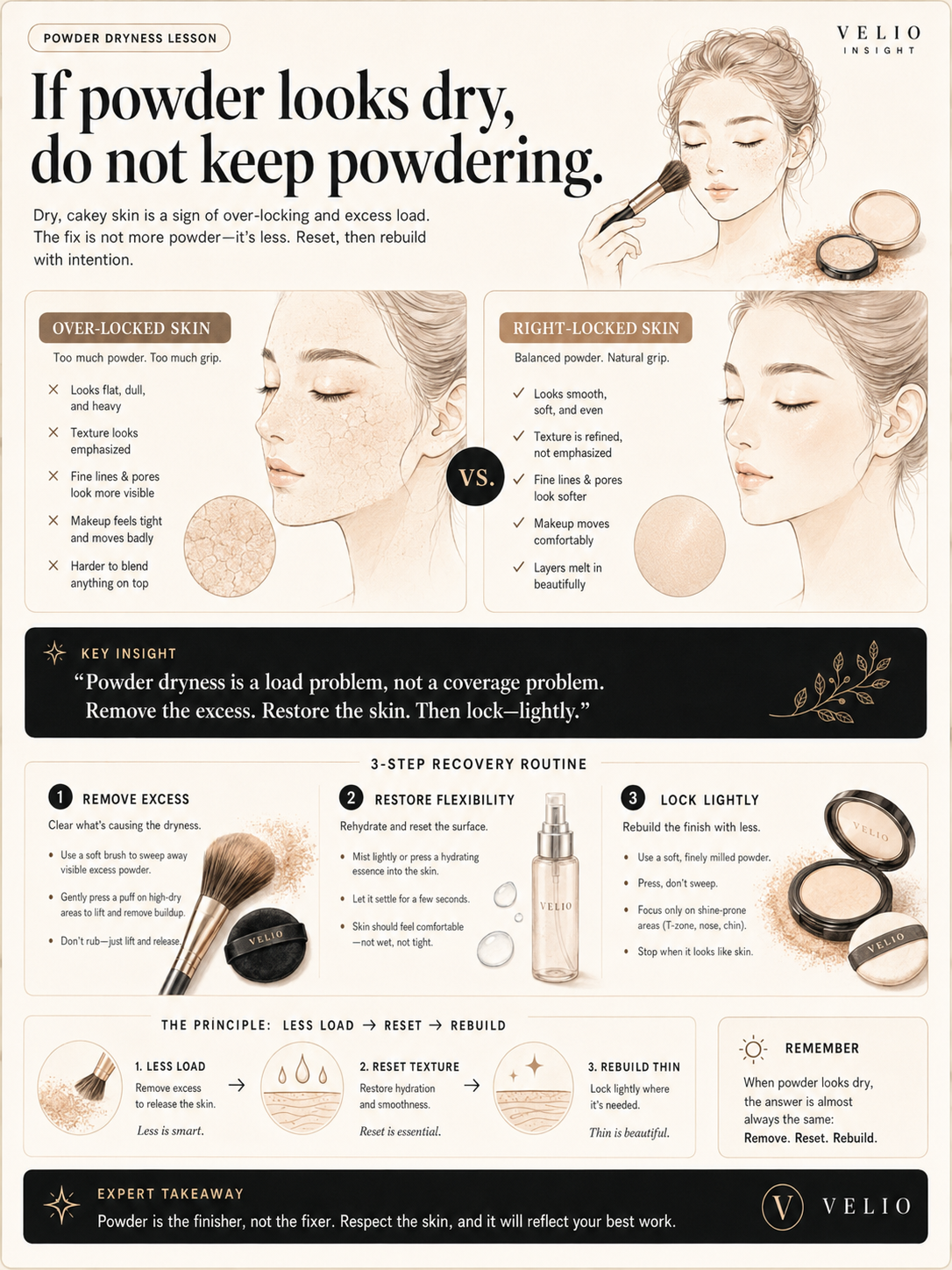
Powder can look dry when too much is applied, when it sits on dry texture, when it is placed on the wrong zone, or when a large tool deposits more product than the skin needs.
Powder is not the enemy. The problem is often amount, tool size, timing, and which zones you choose to set.
“Powder should control movement, not erase dimension.”
VELIO keeps the lesson attached to the mirror experience, then returns one face-aware Color Story and one practical route. It remains non-diagnostic.
Free first read · Non-diagnostic · Use what you own first
Makeup looks smooth before powder, then suddenly looks dusty or flat.
Texture, pores, or flakes look more visible after setting.
The under-eye area looks dry even when the rest of the face is normal.
Touching up with powder makes the face look older or heavier instead of fresher.
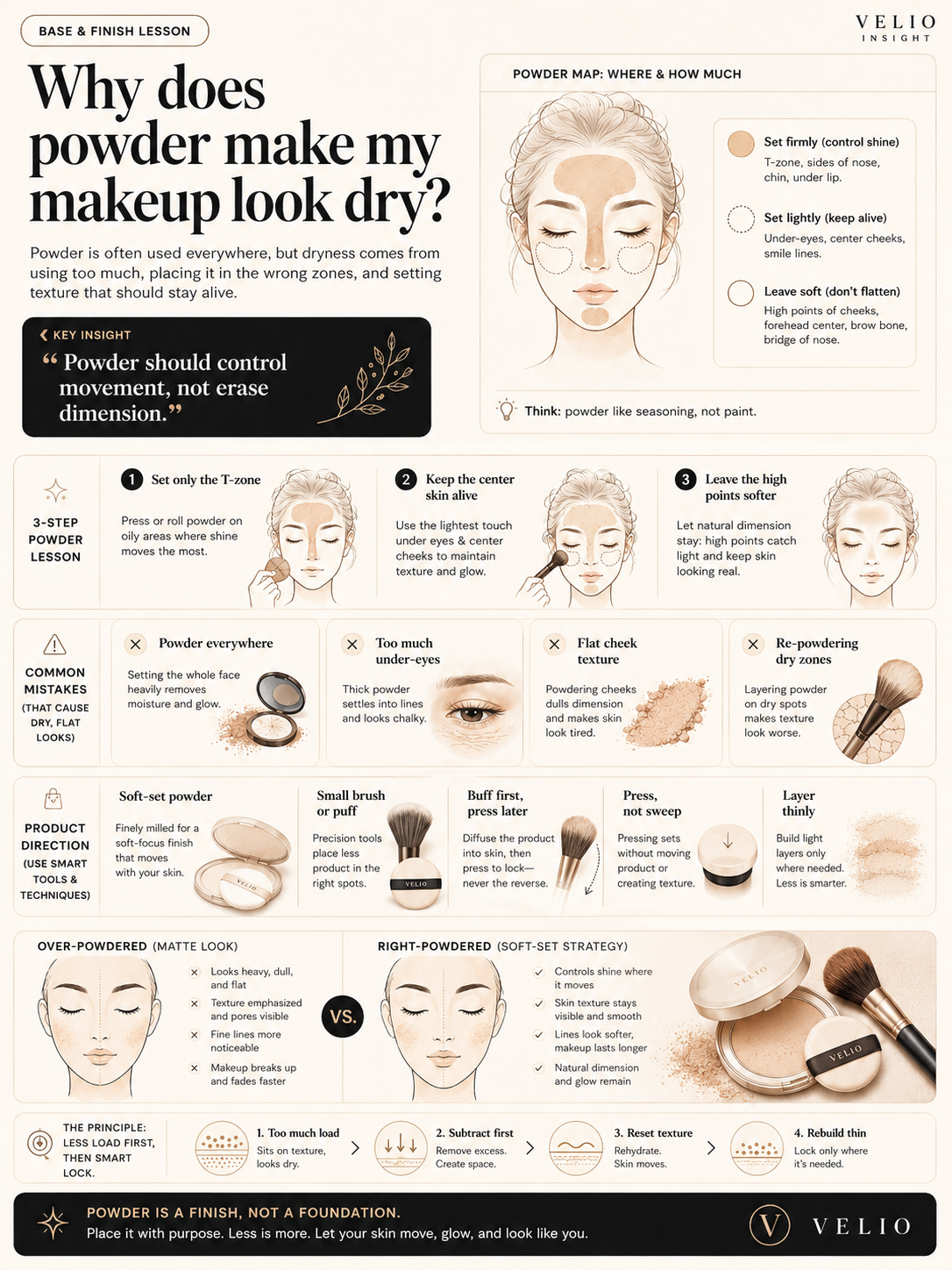
Powder becomes useful when it is treated as a zone tool instead of a full-face eraser.
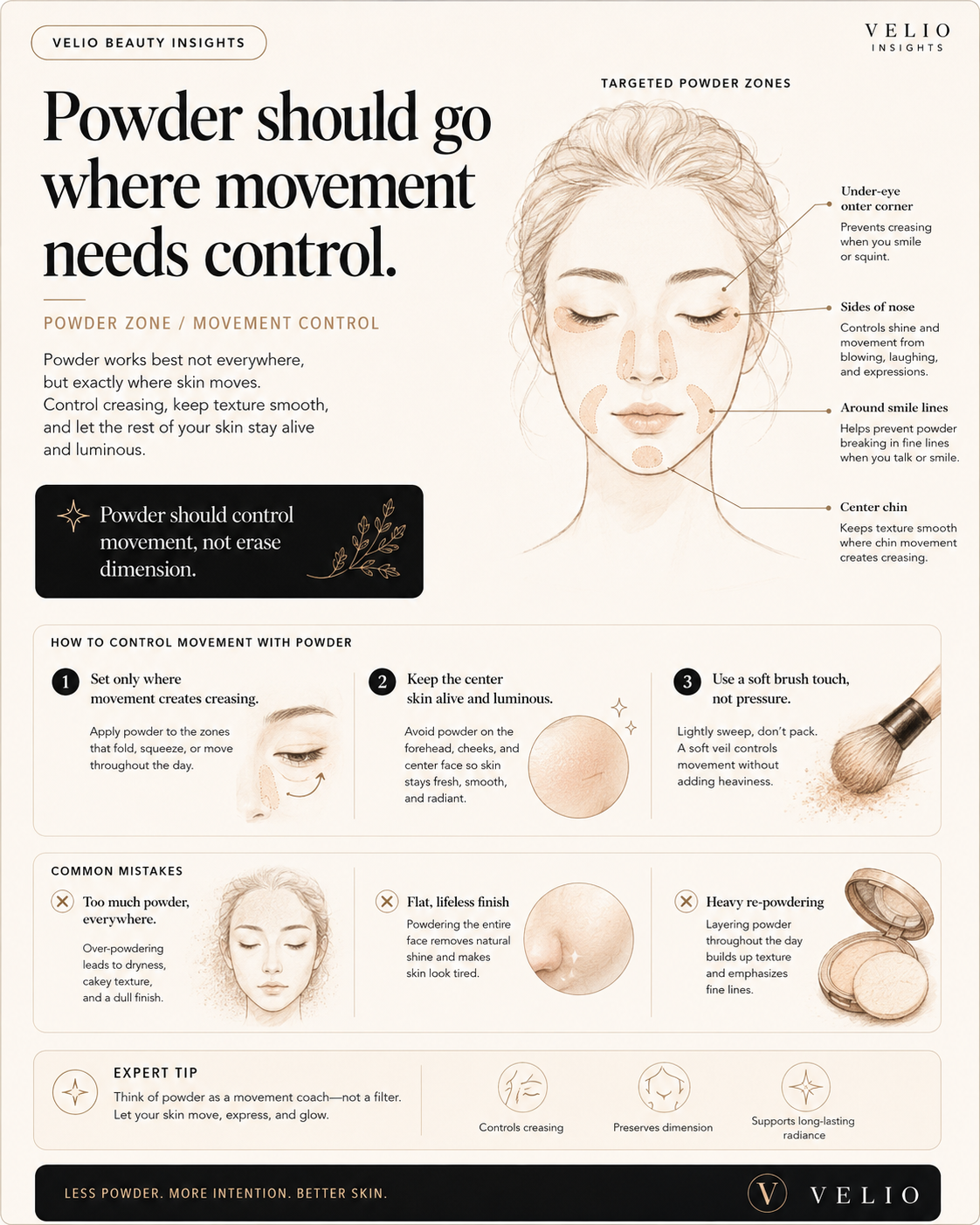
Different zones need different levels of control. Dry areas often need less powder, not more.
Powder often fails when it is used as a full-face rule. The T-zone may need control, but the cheek may need flexibility. The under-eye may need a tiny set on one edge, while a dry patch may need no powder at all.
This is why VELIO reads powder as a placement decision. The product family matters, but the zone map matters first. A fine powder placed in the wrong area can still make makeup look dry.
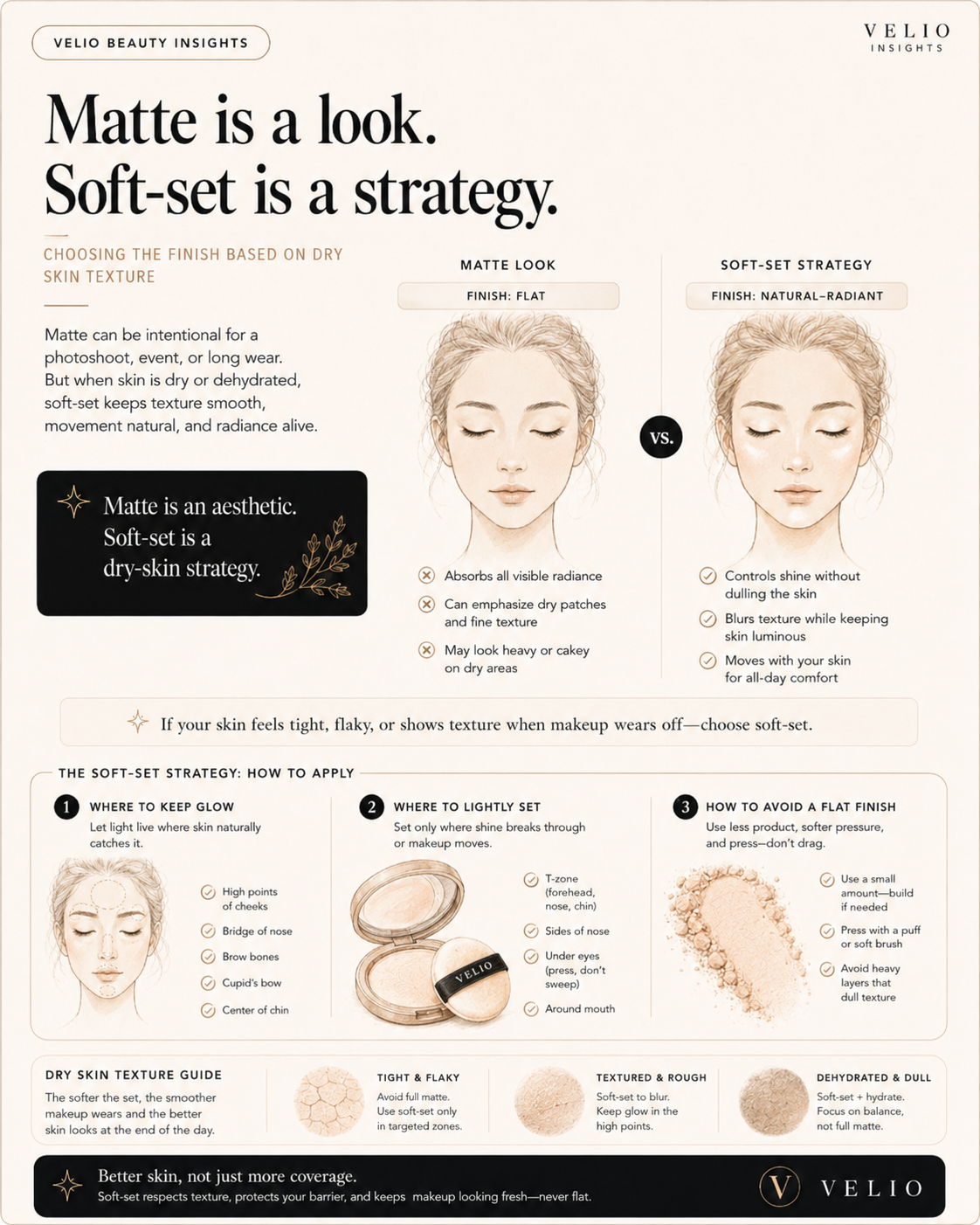
Different zones need different levels of control. Dry areas often need less powder, not more.
A fully matte finish can look polished in still photos, but on dry or moving skin it can look flat. A soft-set finish controls the places that need hold while leaving the rest of the face more alive.
That difference changes the product direction. Instead of choosing the strongest powder, choose the powder and tool that let you set less, more precisely.
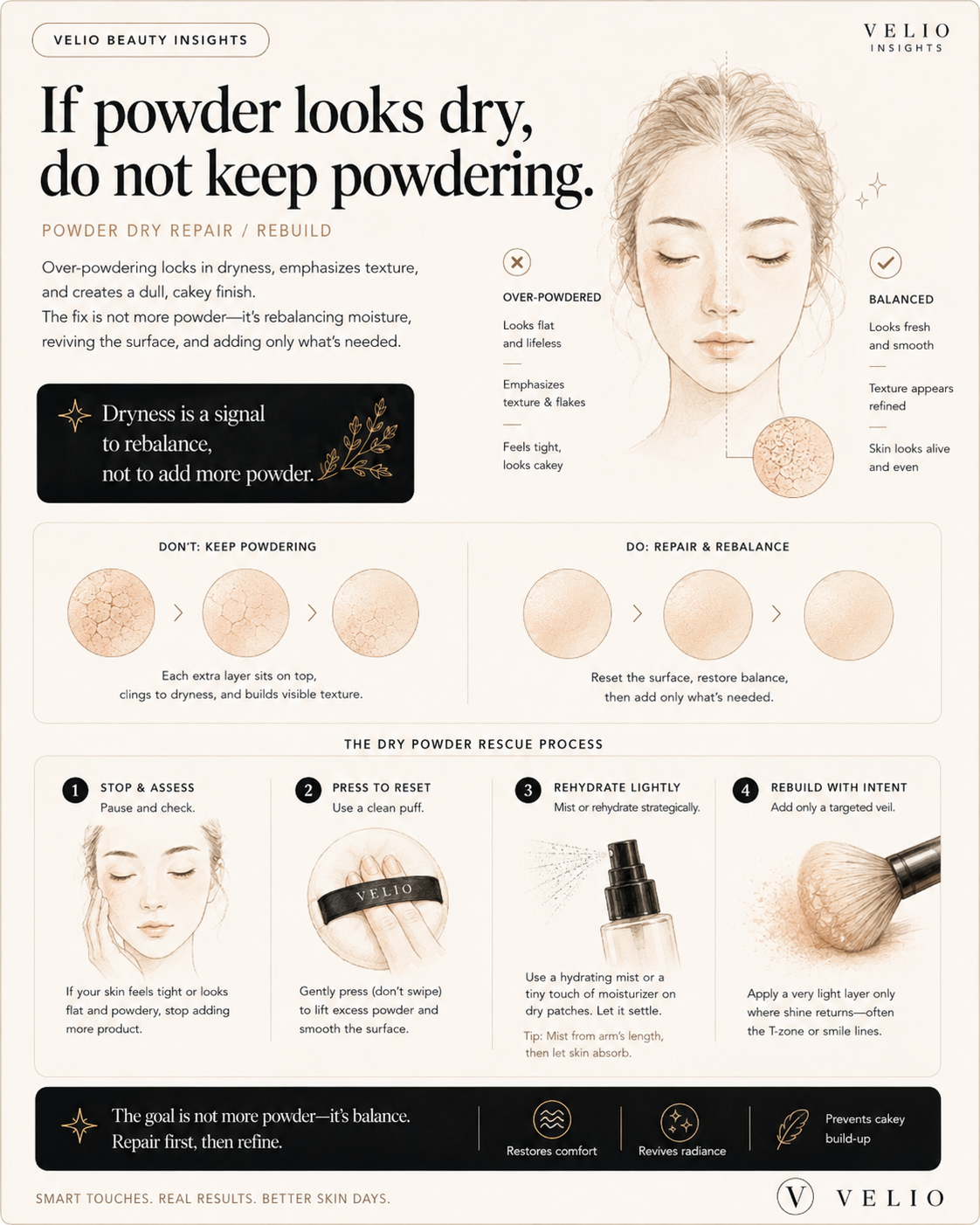
Different zones need different levels of control. Dry areas often need less powder, not more.
When powder looks dry, the instinct is often to add more base or more powder. That can make the texture louder. The better route is to stop, soften the finish, and reset only the area that still needs control.
A mist, clean sponge, or tiny flexible layer may help if the base can handle it. Then powder only the edge that needs hold. The rescue is smaller than the problem looks.
Identify the changed area, choose the smallest correction, and stop as soon as the surface looks clear again.
Powder the whole face because one area is shiny.
Blot and set only the zones that actually need control.
Add more powder when texture looks dry.
Soften the finish first, then reset the smallest area if needed.
A heavy layer can cling to texture and flatten natural dimension.
Powdering dry cheeks or flexible areas can make skin look tight.
A large or dense tool can deposit more powder than the face needs.
Use a smaller tool, set pressure zones only, and keep dry areas flexible.
Decide where powder is allowed before application starts.
Use a small fluffy brush for controlled placement.
Use a fine veil instead of a heavy matte layer.
If powder looks dry, soften first and avoid stacking more powder.
“Powder should control movement, not erase dimension.”
Green et al., Journal of Clinical and Aesthetic Dermatology, 2022
TEWL and barrier research helps explain why a dry or compromised surface can make finish problems more visible.
Nishino et al., skin patch based makeup finish assessment, 2024
Cosmetic finish research supports the idea that subtle surface changes can affect how makeup is perceived.
Professional setting technique principle
Artists often set the parts that move, shine, or transfer instead of powdering every zone equally.
VELIO editorial translation
The consumer action is simple: blot first, choose the zone, use less powder, and keep dry areas flexible.
Powder can look dry when too much is applied, when it sits on dry texture, when it is placed on the wrong zone, or when a large tool deposits more product than the skin needs.
Set only pressure zones, use a small fluffy tool, choose a fine soft-set powder, and leave flexible or dry areas with less product.
Usually not. The T-zone may need powder, but cheeks, dry patches, and flexible areas often look better with little or no powder.
VELIO points this lesson toward soft-set powder, smaller brushes, flexible base, and light mist or sponge rescue when the finish looks too dry.
VELIO keeps the lesson attached to the mirror experience, then returns one face-aware Color Story and one practical route. It remains non-diagnostic.
Free first read · Non-diagnostic · Use what you own first
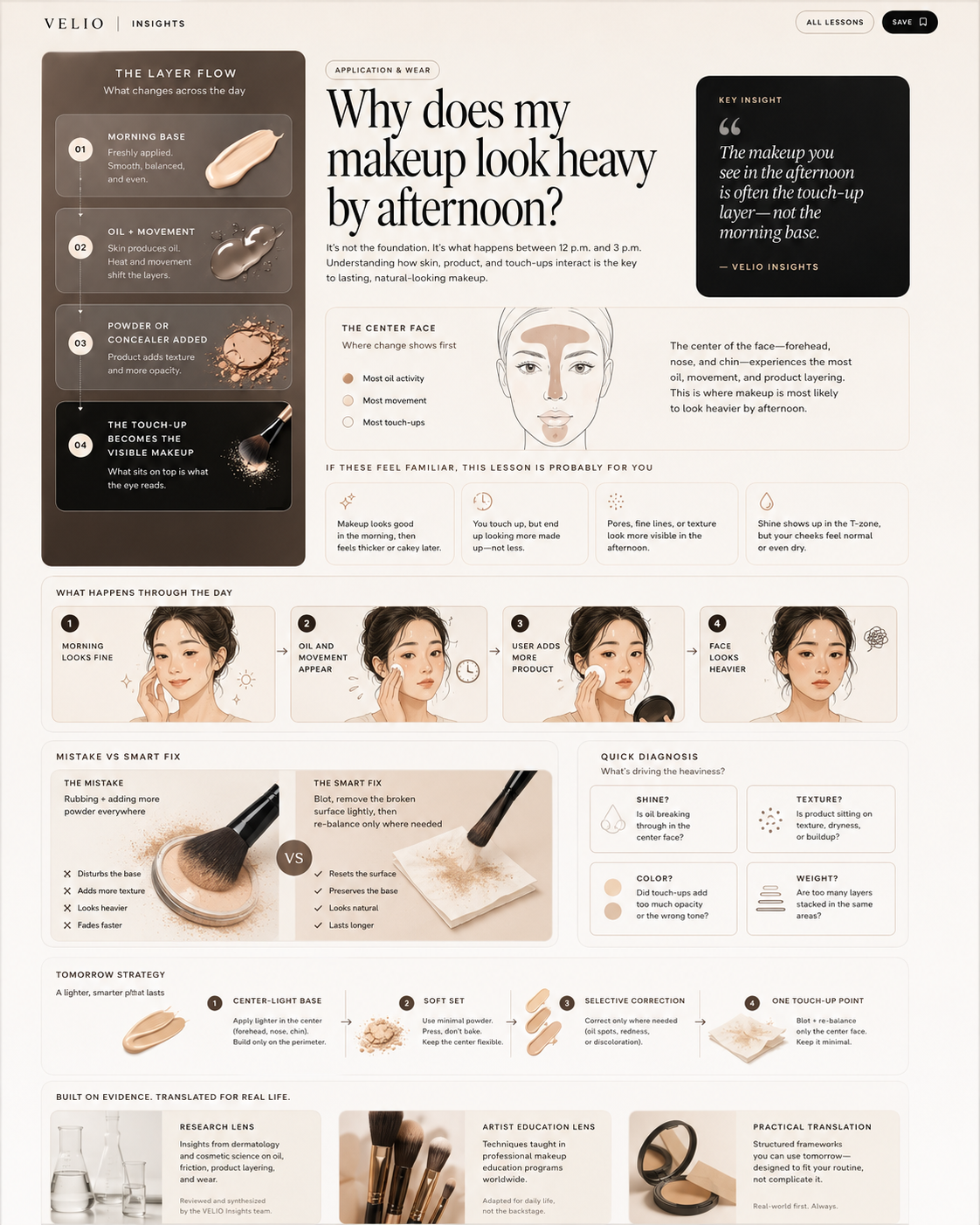
The makeup you see at 3 p.m. is often not the morning base. It is the new top layer created by oil, movement, powder, concealer, and repeated touch-ups.
Patchy foundation is often a surface issue. Smooth the surface first, choose flexible formulas, and set only where needed.
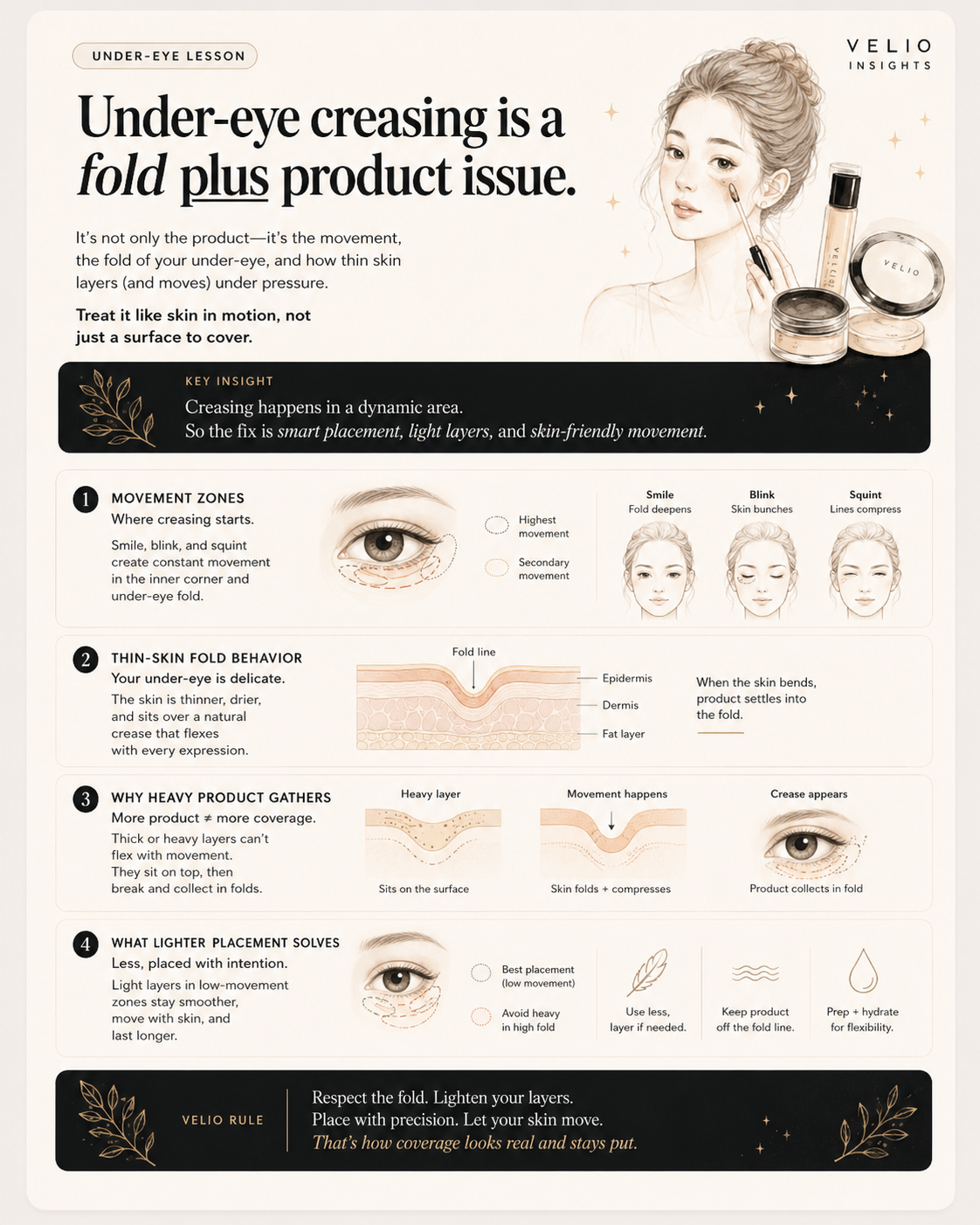
Under-eye creasing is usually a fold, movement, and product-load problem. The better fix is lighter prep, micro-correction, and setting only the fold.