Why does my makeup oxidize?
Makeup can oxidize when pigment, formula, oil, heat, and wear time change how the base reads on skin. It may look darker, warmer, or more orange after it settles.
The shade you apply is not always the shade you wear. VELIO treats oxidation as a color-shift signal, not just a shopping mistake.
“Choose for the color you wear, not the color you apply.”
VELIO keeps the lesson attached to the mirror experience, then returns one face-aware Color Story and one practical route. It remains non-diagnostic.
Free first read · Non-diagnostic · Use what you own first
Foundation matches at first, then looks darker or warmer later.
The center face turns orange faster than the outer face.
Powdering makes the finish look dull but does not fix the shade shift.
A base that looks good indoors looks different after oil or heat appears.
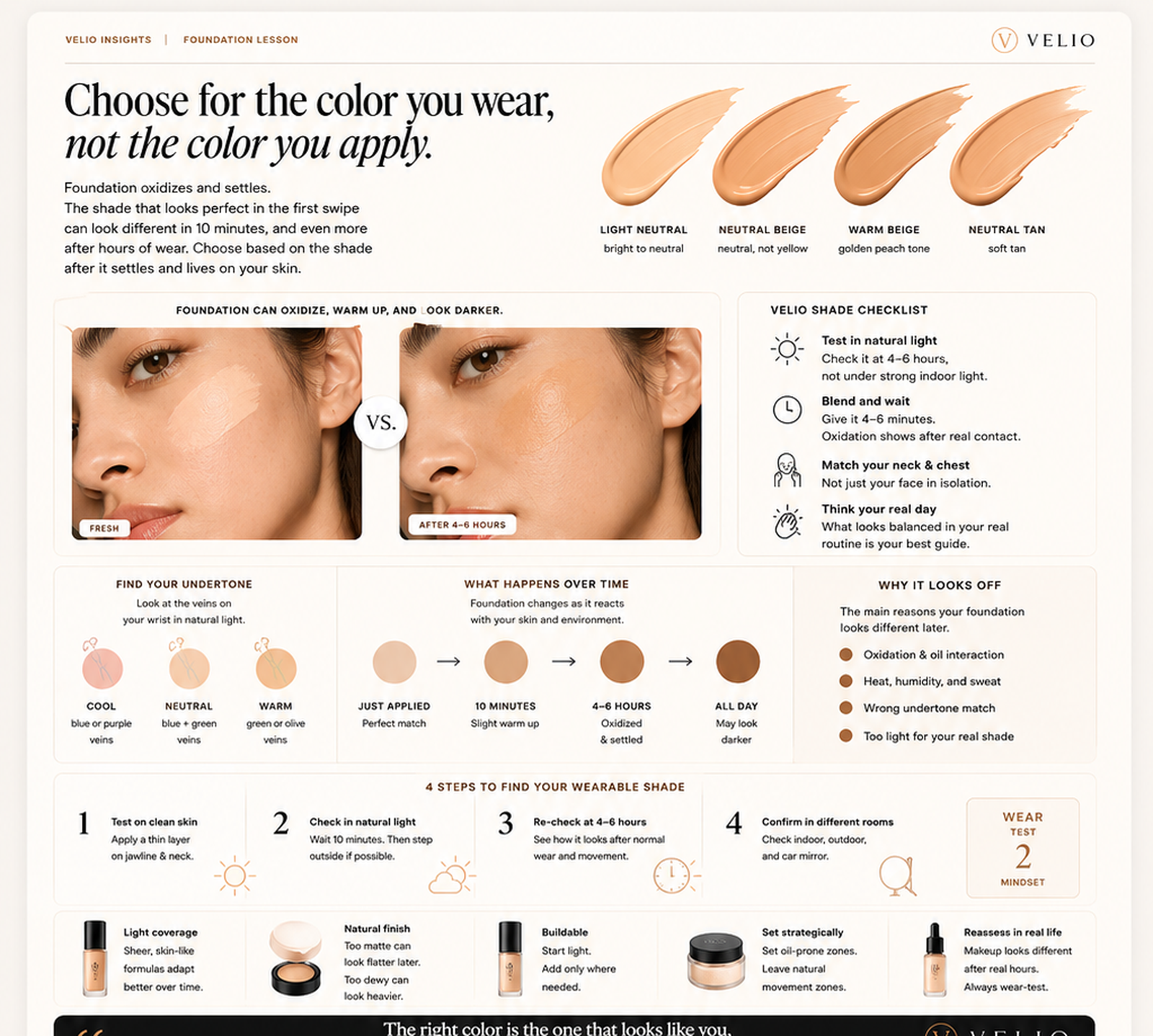
A color shift is easier to solve when you test after the formula meets real skin, oil, and time.
The useful question is not only whether the shade matches now, but whether it stays close after settling.
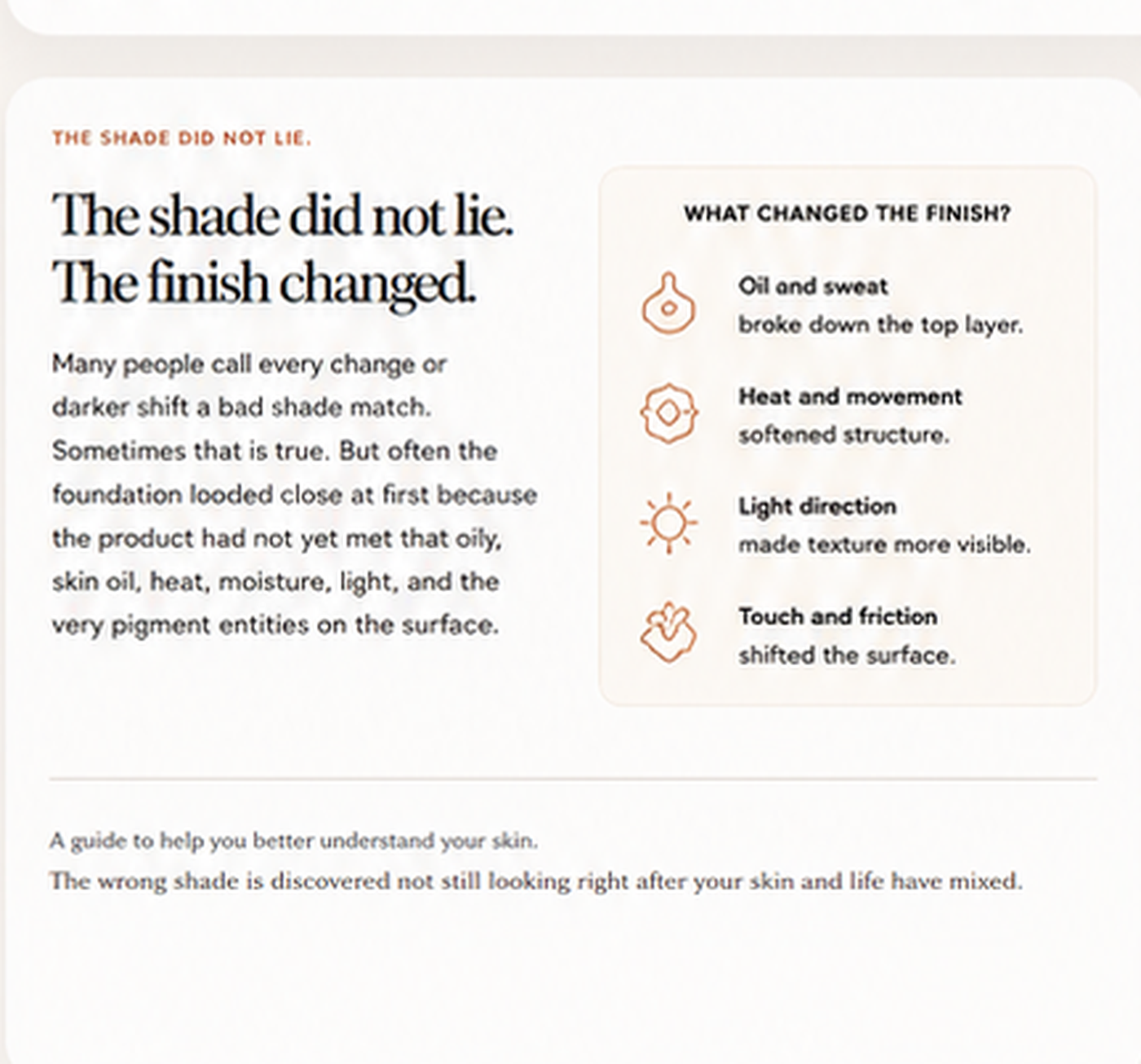
Many people call every orange or darker shift a bad shade match. Sometimes that is true. But often the foundation looked close at first because the product had not yet met the full day: skin oil, heat, moisture, light, and the way pigment settles on the surface.
VELIO reads oxidation as a wear-time signal. The product may need a different undertone, but it may also need a lighter center layer, a better setting strategy, or a different texture family. The color problem starts as a surface problem before it becomes a shopping decision.
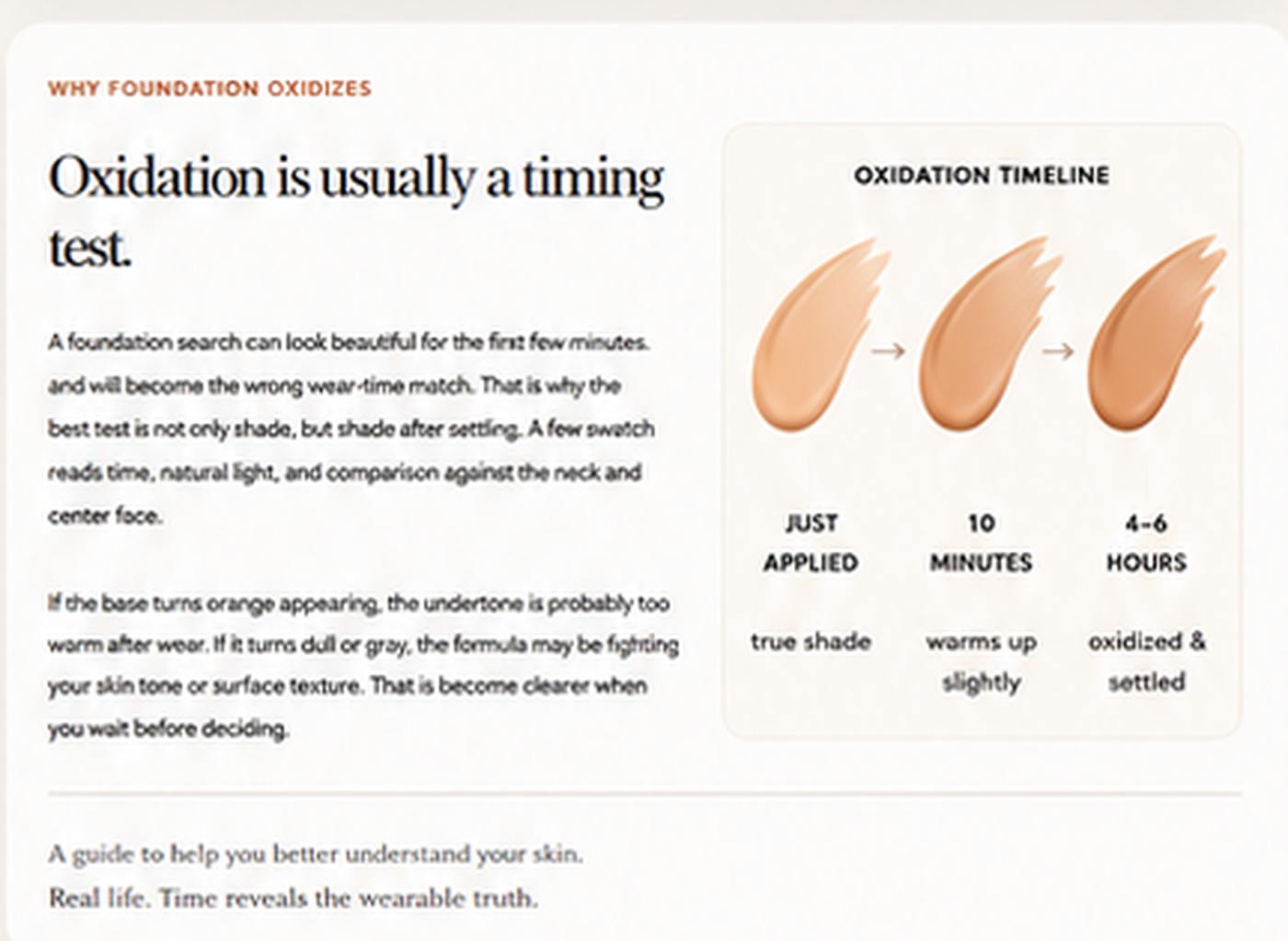
A jaw swatch needs time. The winning shade is the one that still looks right after your skin and the formula meet.
A foundation swatch can look beautiful for the first few minutes and still become the wrong wear-time match. That is why the better test is not only shade, but shade after settling. A jaw swatch needs time, natural light, and comparison against the neck and center face.
If the base turns orange repeatedly, the undertone is probably too warm after wear. If it turns dull or gray, the formula may be fighting your skin tone or surface texture. The fix becomes clearer when you wait before deciding.
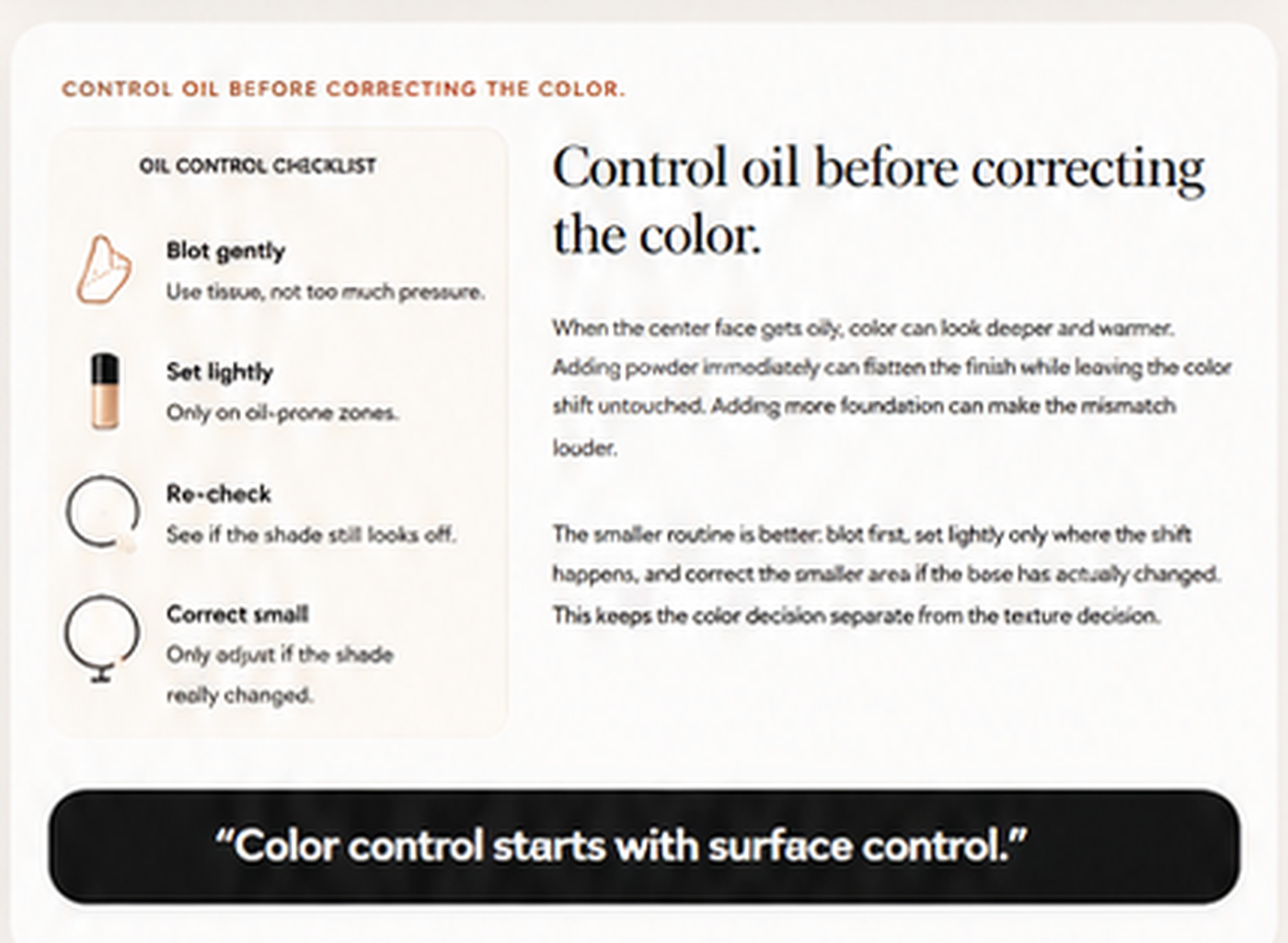
Color control starts with surface control. Blot first, then correct the smallest changed area.
When the center face gets oily, color can look deeper and warmer. Adding powder immediately can flatten the finish while leaving the color shift untouched. Adding more foundation can make the mismatch louder.
The smaller route is better: blot first, set softly only where the shift happens, and correct the smallest area if the base has actually changed. This keeps the color decision separated from the texture decision.
Identify the changed area, choose the smallest correction, and stop as soon as the surface looks clear again.
Judging foundation only at first application.
Check the shade after 20–30 minutes and again after real wear.
Using more powder to hide a color shift.
Blot first, set softly, and adjust undertone only if the shift repeats.
The formula may read differently after oil, pigment, and time interact.
The base may be close at first swipe but too warm after it settles.
Oil can make a color change look stronger and more visible in the center face.
Swatch, wait, compare, then control the surface before changing the entire shade family.

The best base direction is chosen from the color you actually wear after a few hours, not the color at first swipe.
Tomorrow's base should be chosen from evidence: how it looks after a few hours, where it warms first, and whether the shift repeats. If it repeats, change the undertone or formula. If it happens only in the center, change the center-face strategy first.
This is how VELIO turns a shade complaint into a product direction: stable base, oil-control support, soft-set finish, and a repeatable swatch habit.
Compare two undertones after the base settles, not immediately.
Keep the center face lighter and blot before setting.
Look for formulas that stay closer to your skin after wear.
Choose the color that looks right after time, not the one that wins instantly.
“Choose foundation by the color it becomes after wear, not only by the color it is at first swipe.”
Chen et al., Cosmetics, 2022
Research on liquid foundation darkening supports the idea that product formula and pigment coating can influence how a base changes after application.
Huang et al., study on liquid foundation darkening
Foundation darkening research points to sebum as an important factor in wear-time color change.
Professional base matching principle
Makeup artists often check a base after it settles rather than trusting only the first swipe.
VELIO editorial translation
A useful oxidation routine separates shade, oil, and texture before replacing the whole base.
Makeup can oxidize when pigment, formula, oil, heat, and wear time change how the base reads on skin. It may look darker, warmer, or more orange after it settles.
Swatch and wait before choosing a shade, control surface oil, keep the center base lighter, and choose a base that stays closer to your undertone after wear.
Only if the color shift repeats after testing. Sometimes the better first move is a different undertone, a more stable formula, or better oil control rather than simply going lighter.
VELIO connects oxidation to stable base choice, oil-control support, soft-set powder, and shade testing after the formula settles.
VELIO keeps the lesson attached to the mirror experience, then returns one face-aware Color Story and one practical route. It remains non-diagnostic.
Free first read · Non-diagnostic · Use what you own first
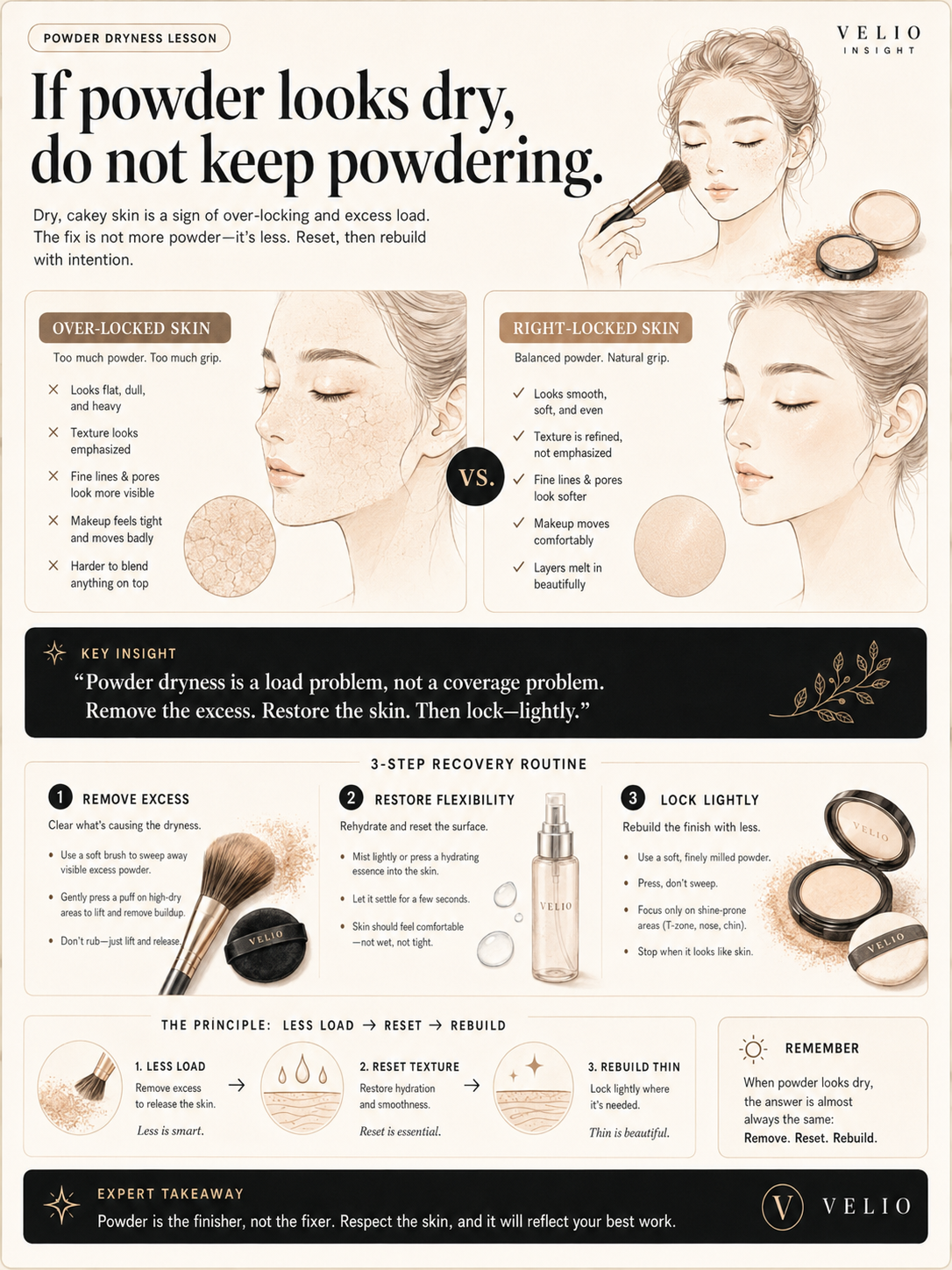
Patchy foundation is often a surface issue. Smooth the surface first, choose flexible formulas, and set only where needed.
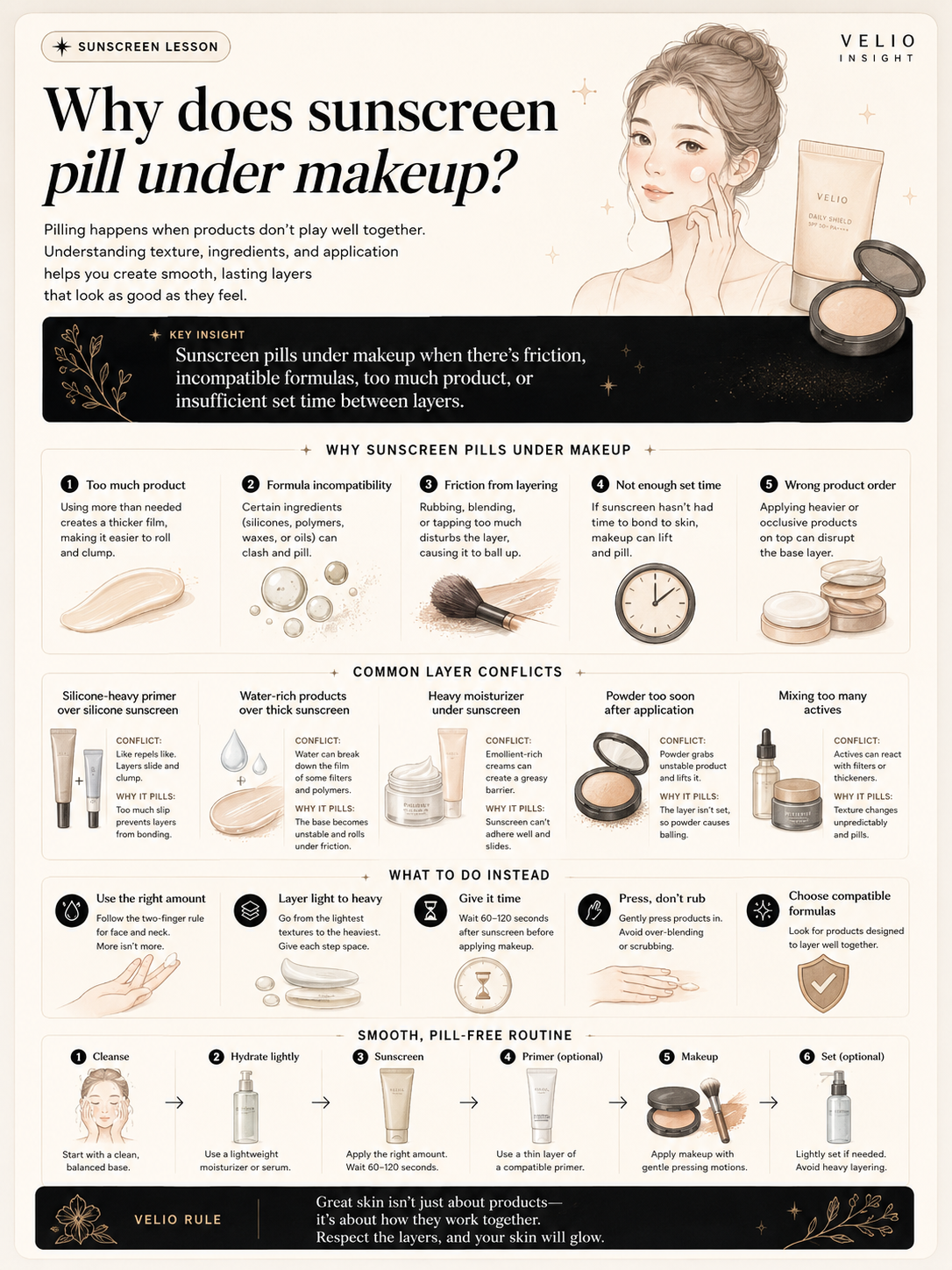
Sunscreen pilling is usually a layer conflict. The fix is better order, less friction, more settling time, and more compatible product families.
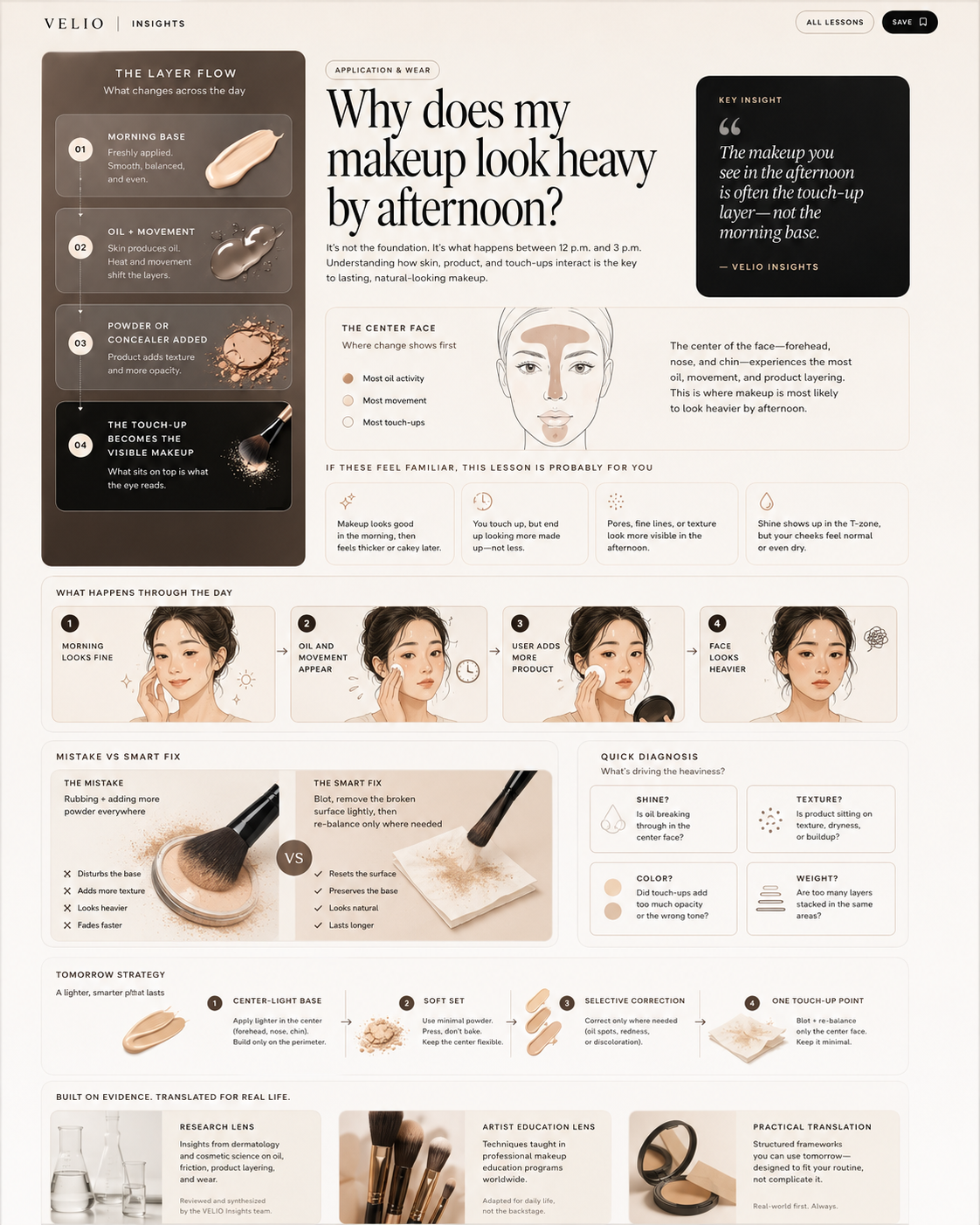
The makeup you see at 3 p.m. is often not the morning base. It is the new top layer created by oil, movement, powder, concealer, and repeated touch-ups.