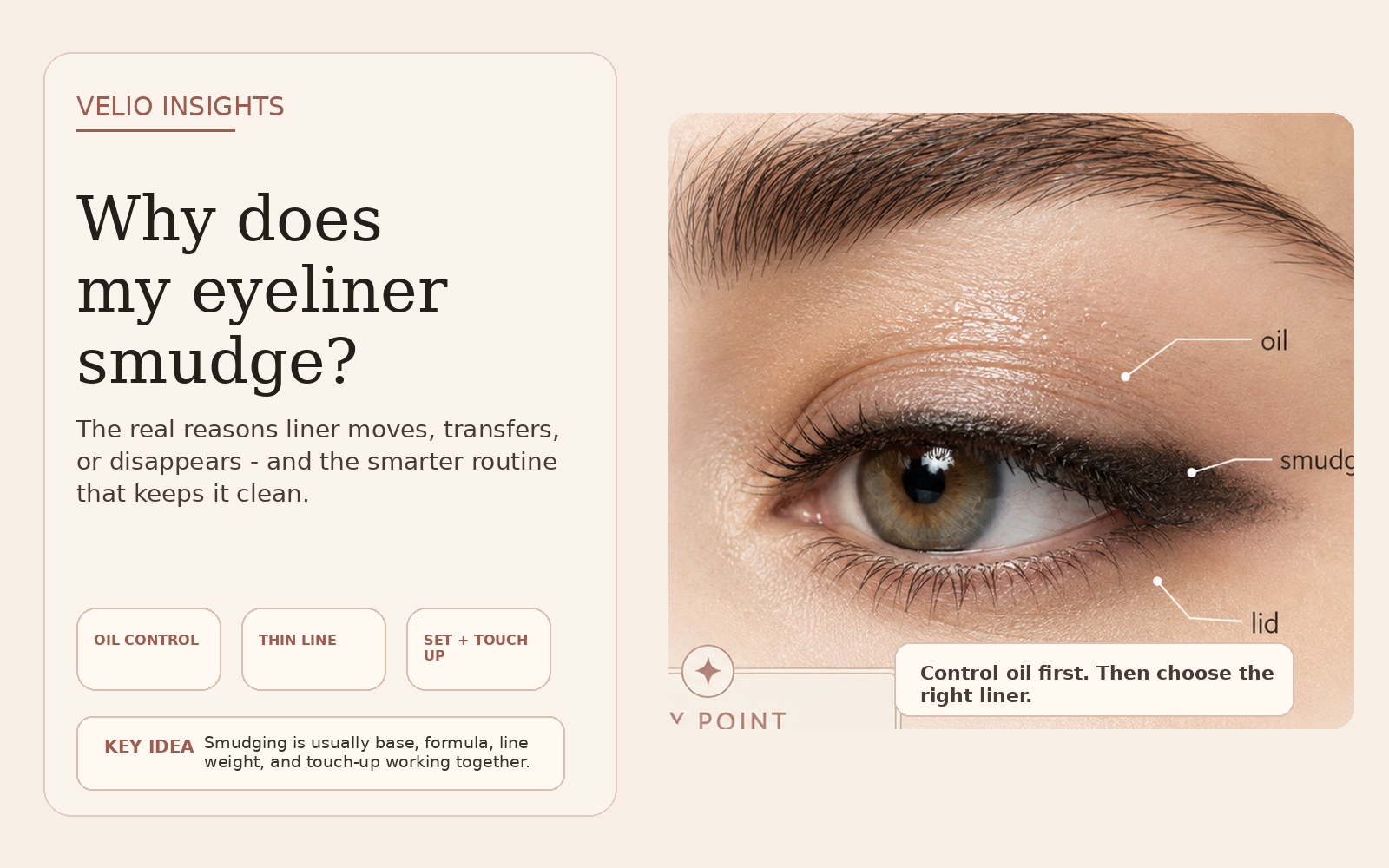
Clean liner starts before the line. Control the lid, choose the right formula, draw thinner, set smarter, and touch up only where it moved.
Key insight
“Smudging is usually a system problem, not a talent problem. The fix is to control oil first, match the liner formula to the day, keep the line thin, and set only where hold is needed.”
Turn this answer into one decision
See how much definition today’s look actually needs.
VELIO uses the concern as route context, then gives one face-aware Color Story and one focal-point decision. It does not identify a medical cause or guarantee a formula match from a photo.
1How strong the eye focal point should be
2Whether the line can stay thinner
3Which correction keeps the rest of the face balanced
Free first read · Non-diagnostic · Use what you own first
If these feel familiar, this lesson is probably for you
1
Your liner looks clean at first but transfers under the eye within a few hours.
2
The outer corner gets smoky even when you wanted a crisp line.
3
Your eyeliner disappears faster on humid days or long days.
4
You keep adding more liner, but the result gets heavier and less clean.
Eyeliner movement decision lab
Find where the line moves before buying another liner.
A liner can be waterproof and still transfer through oil, lid contact, a damp lash line, or too much product. The useful question is not only which formula you used, but where the line lost its boundary.
Decision rule
Prep the contact point, keep the line thinner there, and reinforce only the edge that actually moves.
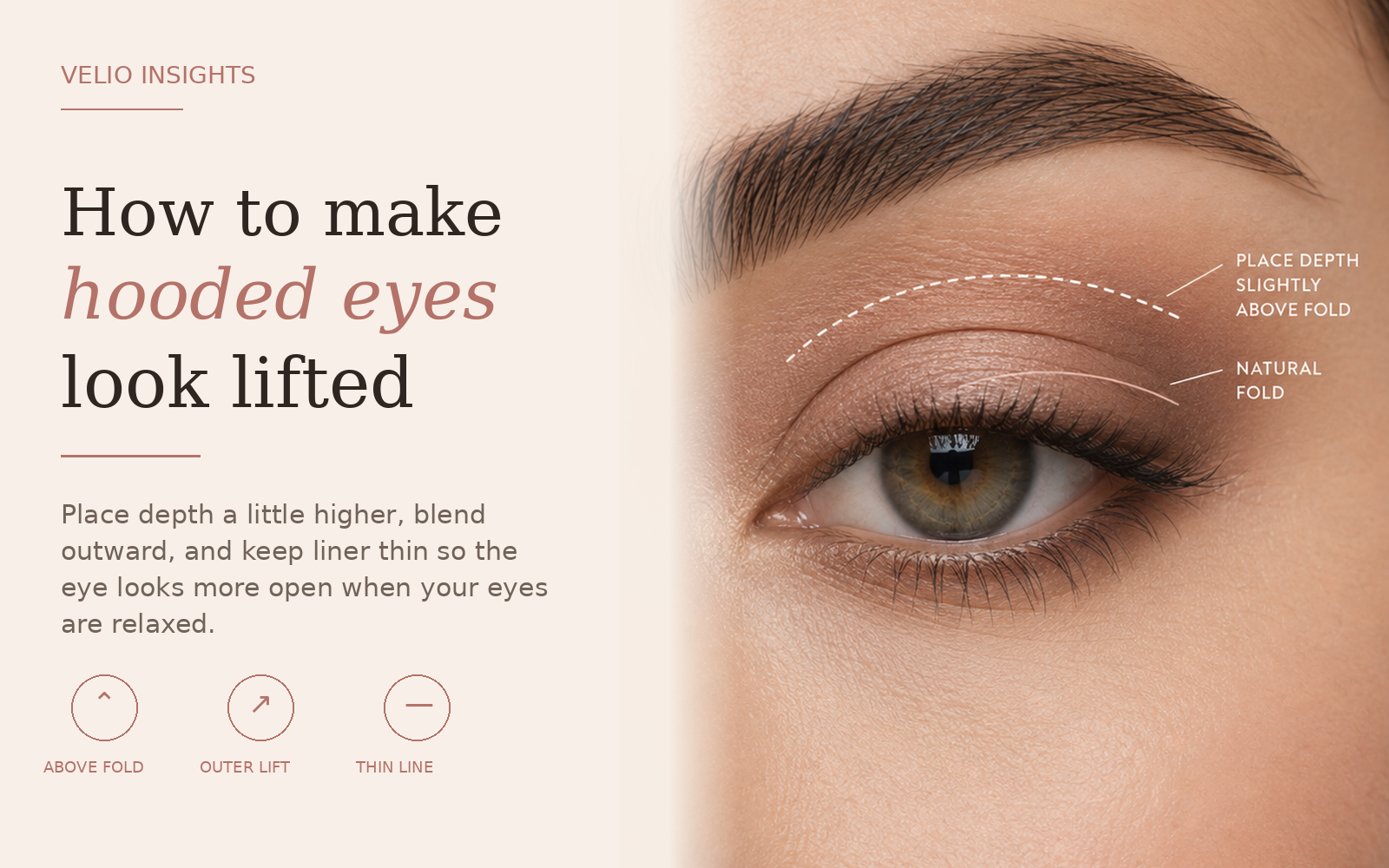
Look for: A duplicate line appears above the crease or on the hood.
What it means: Lid contact and line height matter as much as formula.
First move: Thin the line where the lid folds and let each pass set before opening the eye fully.
2
Outer-corner haze
Look for: The wing loses its point while the inner line stays clean.
What it means: The moving edge needs less product and more precise support.
First move: Clean the tail, then rebuild only the final third with a fine tip.
3
Under-eye shadow
Look for: Pigment appears below the eye even though the top line still looks present.
What it means: Oil, rubbing, or a soft formula may be migrating rather than disappearing.
First move: Remove the haze first and keep lower-lash definition lighter.
One-minute reset
Fix less. See more.
This is a cosmetic correction route, not a diagnosis. Stop after the smallest step that restores clarity.
1
10 sec
Dry the contact point
Blot the lid or outer corner with a clean tissue or cotton swab. Do not redraw onto an oily surface.
2
20 sec
Erase the moved edge
Use a clean pointed swab to restore the boundary. A crisp negative space often fixes the look before more pigment is needed.
3
30 sec
Reinforce one section
Add a thin pass only where the line faded, then let it set with the eye relaxed before blinking normally.
Stop sign
×Do not make the whole line thicker because the outer edge moved.
×Do not place rich eye cream directly on the lash line before liner.
×Do not keep redrawing over a damp or oily lid.
Field test
The contact-map test
Apply liner, relax the eye, and note exactly where the lid touches the line. That contact map should decide line height and thickness tomorrow.
PassIf the line sits below the contact point, transfer risk is lower.
RethinkIf the hood presses directly onto a thick band, placement matters more than buying a stronger formula.
Common versions of this question
Why does waterproof eyeliner transfer?How do I stop eyeliner smudging on hooded eyes?Why does my wing disappear at the outer corner?How can I keep pencil eyeliner from moving?
Why eyeliner smudges overview
The best liner routine starts with the lid, not the pen. Prep, formula, line weight, and touch-up all matter.
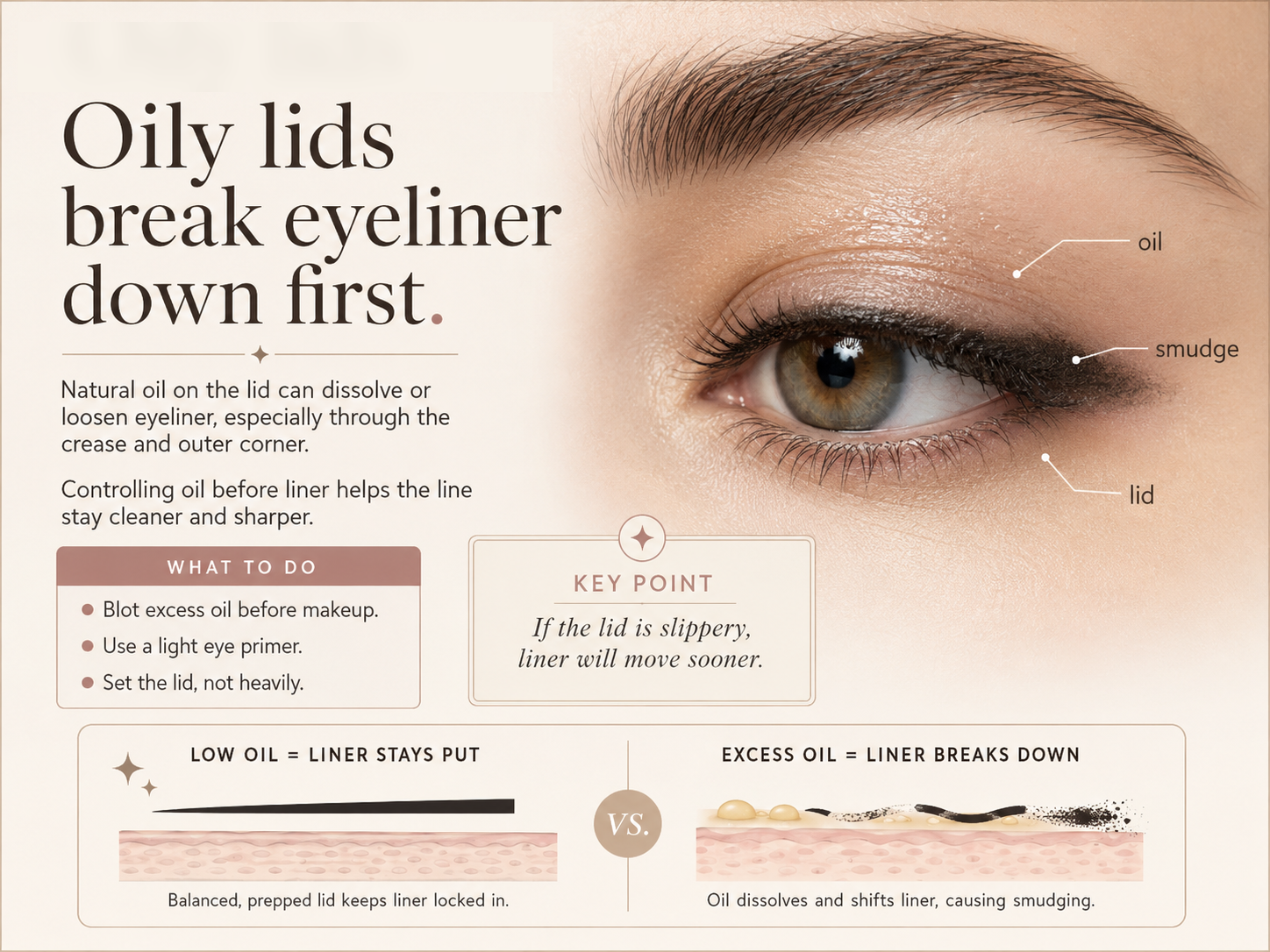
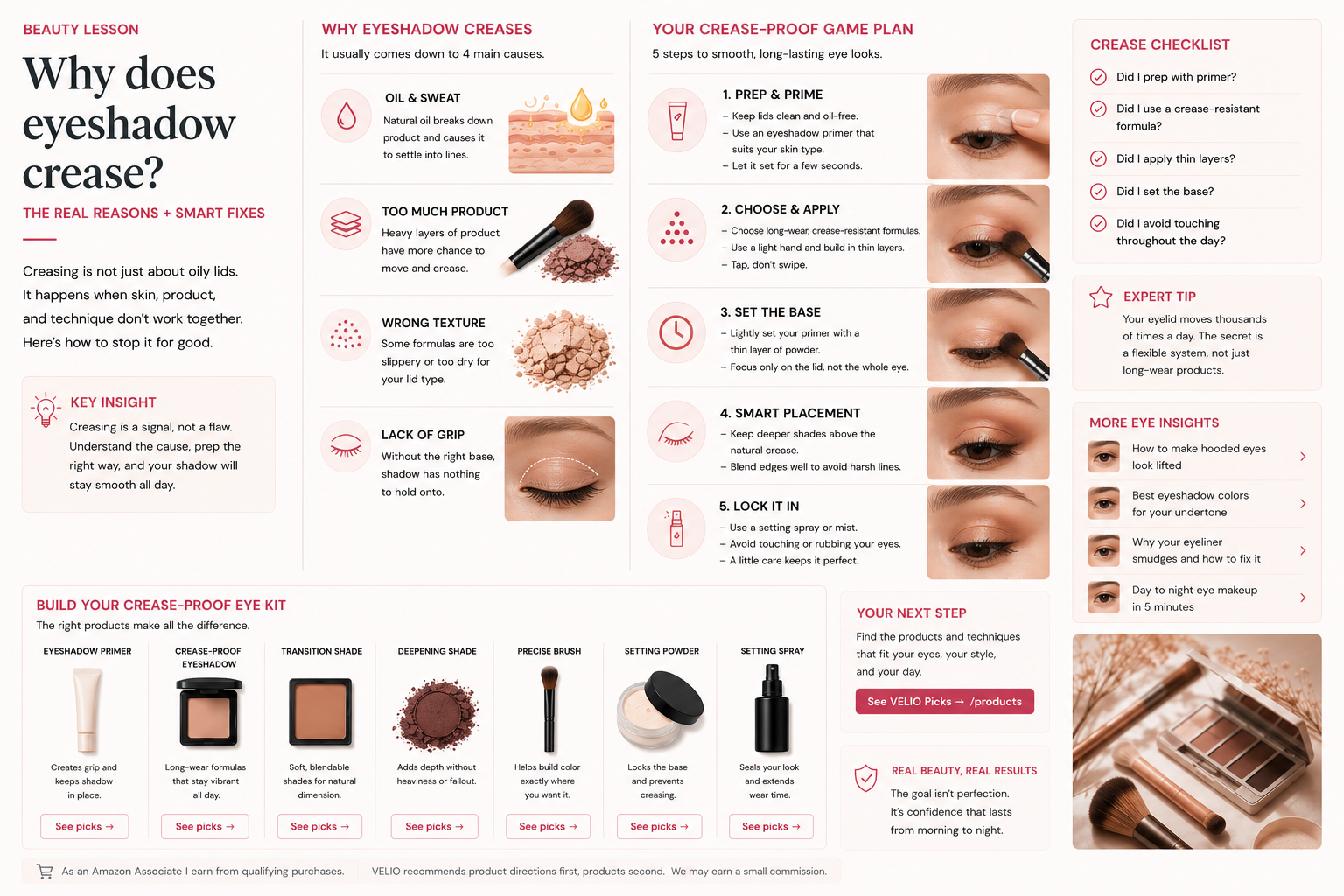
Oily lids break eyeliner down first
Natural oil can loosen liner through the crease and outer corner. Blot and prime before drawing the line.
Oil control
Oily lids break eyeliner down first.
When eyeliner smudges quickly, the first issue is often not the liner itself. Natural oil, sweat, sunscreen, or eye cream can sit on the lid and weaken the grip before the line has a chance to set.
Start by blotting excess oil, then use a light eye primer or a very small amount of setting powder where the liner sits. The goal is not to dry the eye area completely. The goal is to remove slipperiness so the line has something clean to hold onto.
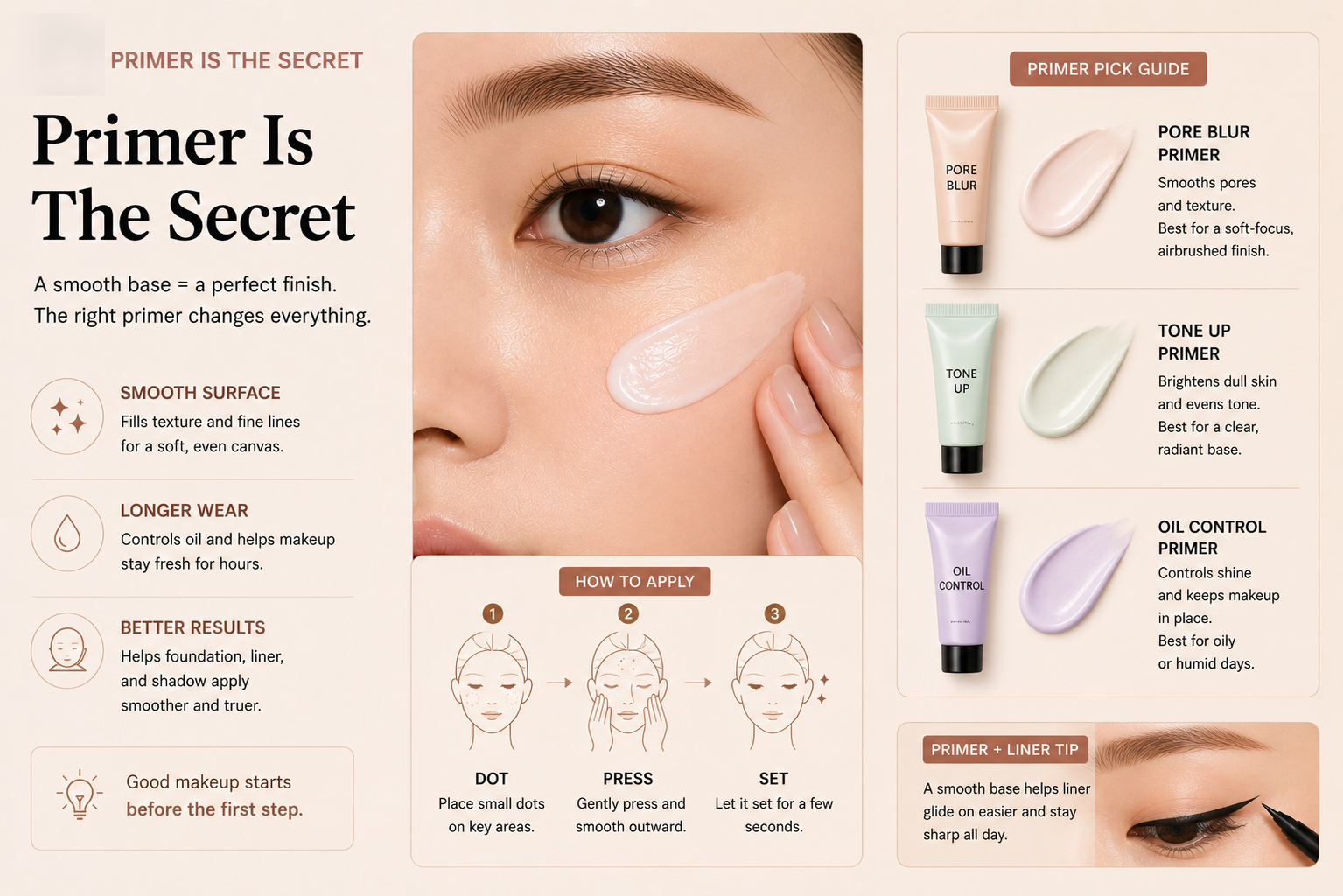
Primer gives liner something to hold onto
A smooth, oil-controlled base helps liner glide on cleaner and stay sharp longer.
Base grip
Primer gives liner something to hold onto.
Primer matters because eyeliner is a film sitting on moving skin. If the surface is too slick, the line may glide beautifully at first but break apart once the eyelid moves, warms up, or produces oil.
Use a thin layer of eye primer and let it set for a few seconds before drawing. If your lids are oily, press a trace of translucent powder over the primer. This creates grip without making the eye area heavy or textured.
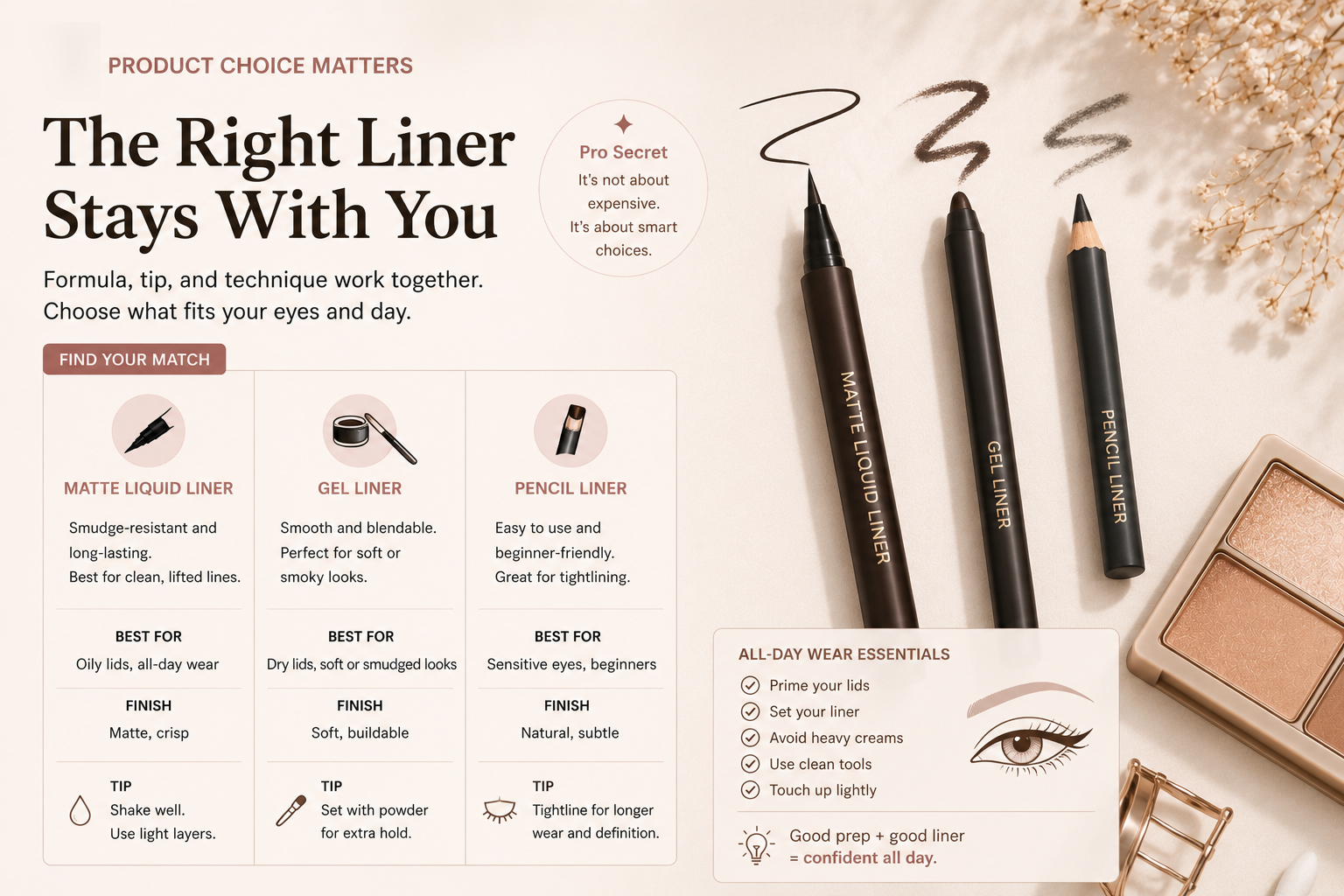
The right liner formula changes wear
Liquid, gel, and pencil do different jobs. The best choice depends on your lid, look, and day length.
Formula choice
The right liner formula changes how long it wears.
Different liner types solve different problems. Matte liquid liner usually gives the crispest long-wear line. Gel liner is smoother and better for smoky definition. Pencil liner is easy to control but may need more setting if your lids are oily.
Choose the formula for the day you are actually having. For a long humid day, pick smudge-resistant liquid or set gel liner with powder shadow. For a soft look, pencil can work well, but keep it thin and avoid placing too much product in the outer corner.
Before you add more
Pause before the next layer.
Identify the changed area, choose the smallest correction, and stop as soon as the surface looks clear again.
Common response vs smarter fix
Keep the repair smaller than the problem.
Common response
Applying liner over skincare, sunscreen, or oil. Fix it by blotting the lid and using a light eye primer first.
Common response
Using a soft pencil when you need a crisp long-wear line. Fix it by choosing formula by finish, not habit.
Common response
Redrawing the entire line at touch-up time. Fix only the moved edge with a cotton swab, then reset lightly.
Quick diagnosis
What is changing first?
Oil movement
Natural oil and skincare residue can dissolve or loosen the liner bond.
Formula mismatch
Some liners are great for softness but not ideal for a crisp all-day line on oily lids.
Line weight
A thick line contains more product, so it has more opportunity to transfer or break apart.
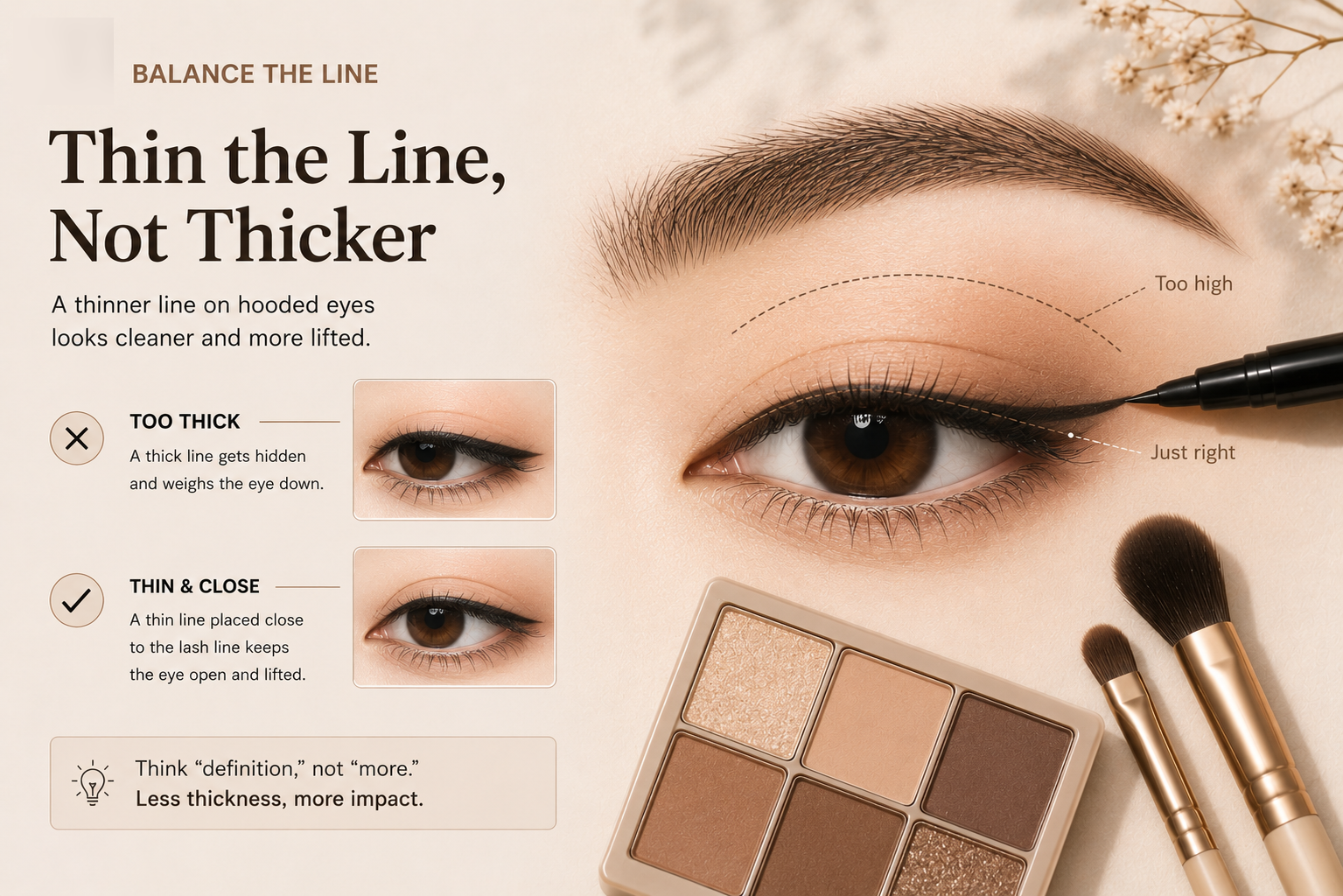
A thinner line is easier to keep clean
Thick liner has more product to move. A thin line close to the lashes usually looks cleaner for longer.
Line weight
A thinner line is easier to keep clean.
A thick line can look dramatic for the first hour, but it also gives the eye more product to move. When the lid folds, blinks, or touches the lower eye area, that extra product is more likely to transfer.
Draw close to the lash line and build gradually. If you want more definition, extend the outer edge or deepen the lash base instead of making the entire line thicker. Less product in the wrong place often means more impact overall.
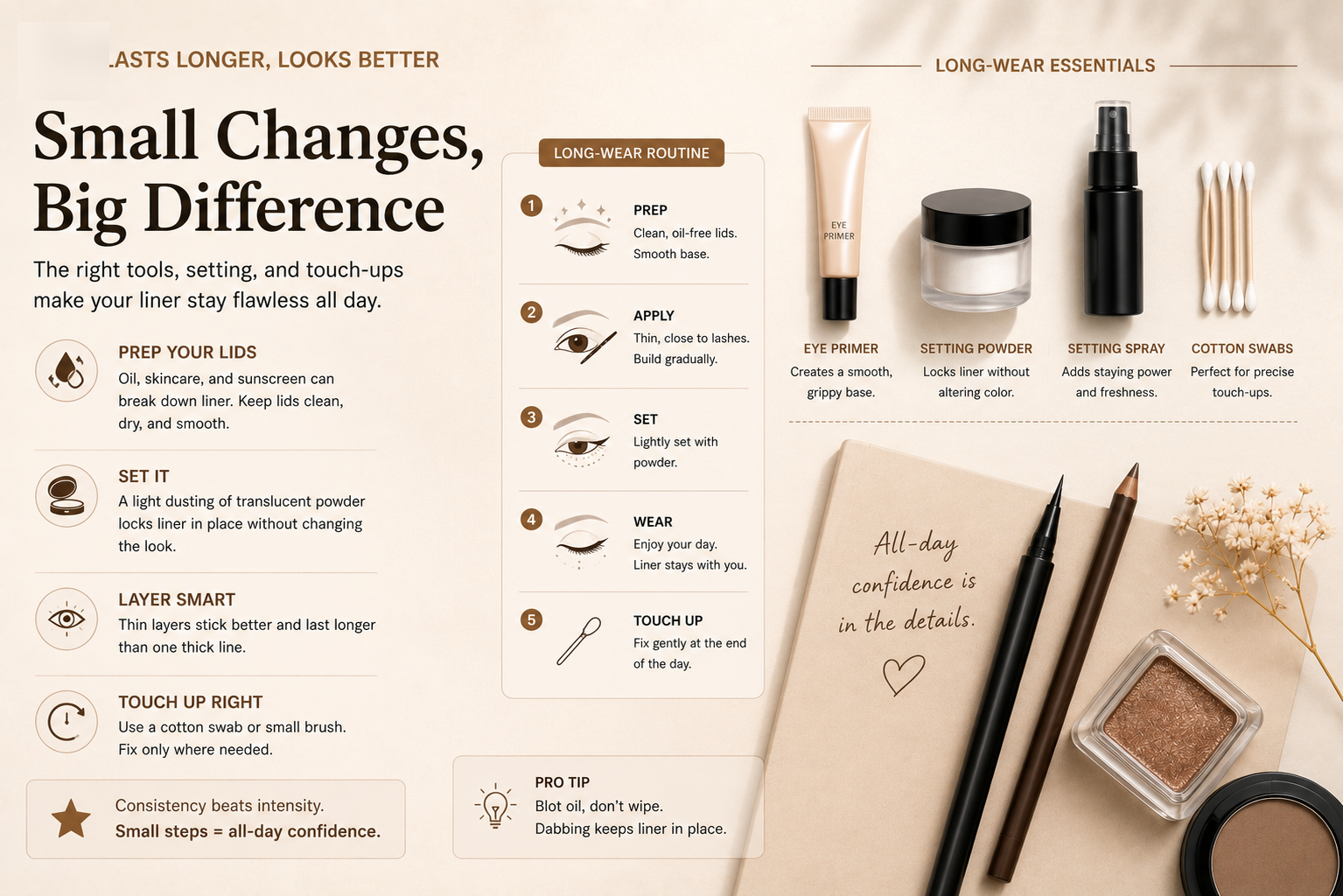
Small routine changes make liner last longer
Prep, thin application, light setting, and precise touch-up work better than simply redrawing the whole line.
Touch-up system
Set and touch up the moved edge, not the whole eye.
Many people fix smudging by adding more liner over the problem area. That usually makes the line heavier and easier to smudge again. A smarter touch-up removes the moved product first.
Use a cotton swab to clean only the blurred edge, then re-apply a thin line and set lightly. Keep the rest of the liner intact. This keeps the look fresh without turning a crisp line into a smoky one by accident.
Tomorrow strategy
A more precise plan for next time.
Strategy map
1
Prep the lid
Blot oil, apply a tiny amount of eye primer, and let it set before liner.
2
Draw thinner
Place the line close to the lashes and build only where definition is needed.
3
Set and touch up
Dust a very light powder near the edge and carry a cotton swab for precise correction.
The takeaway
Read it once. Use it tomorrow.
“Smudged eyeliner is usually not solved by buying a stronger pen alone. Prep the lid, choose the right formula, keep the line thin, set strategically, and touch up only where the line moved.”
Liner wear depends on the lid surface before application
Professional makeup education
Artists often prep eyelids before liner because oil, skincare, and movement can affect how a line sets and wears.
VELIO uses this as practical beauty coaching, not a medical or dermatology claim.
FORMULATION LENS
Different liner formulas have different wear behavior
Cosmetic formulation education
Film formers, waxes, pigments, and setting methods can affect whether liner stays crisp, smokes out, or transfers.
VELIO translates this into product direction and application steps. Results vary by skin, product, weather, and technique.
Frequently asked questions
Search questions, answered clearly.
FAQ
Why does my eyeliner smudge even when it is waterproof?
Waterproof does not always mean transfer-proof. Oil, a damp lash line, hood contact, heavy eye cream, and repeated blinking can still move liner before it fully sets.
How do I keep eyeliner from transferring to my upper lid?
Keep the line thinner where the lid folds, remove excess oil first, let each layer set, and place the strongest definition toward the outer eye instead of building a thick band across the whole lash line.
Should I set eyeliner with eyeshadow?
A small amount of matching shadow can support a pencil or gel line, but too much powder can create fallout or a heavy edge. Press it only where transfer usually begins.
What product direction helps smudging eyeliner?
VELIO points this problem toward a fine-tip liner, a small detail brush, light lid prep, and controlled shadow support rather than a thicker all-over line.
Now make it personal
See how much definition today’s look actually needs.
VELIO uses the concern as route context, then gives one face-aware Color Story and one focal-point decision. It does not identify a medical cause or guarantee a formula match from a photo.
1How strong the eye focal point should be
2Whether the line can stay thinner
3Which correction keeps the rest of the face balanced
Free first read · Non-diagnostic · Use what you own first