Where should eyeshadow go on hooded eyes for a lifted look?
Keep the visible structure slightly above the natural fold and direct the outer edge upward. Check the placement with the eyes open so the shape stays visible in a relaxed expression.
For hooded eyes, lift comes from placing visible structure slightly above the fold and keeping weight away from the moving lid.
“A lifted hooded-eye look is not about forcing a bigger crease. It is about visible placement, upward blending, outer-third depth, thin liner, and light products.”
VELIO keeps the lesson attached to the mirror experience, then returns one face-aware Color Story and one practical route. It remains non-diagnostic.
Free first read · Non-diagnostic · Use what you own first
Eyeshadow disappears when your eyes are open.
A normal crease placement looks hidden or too low on your eye shape.
Eyeliner makes the eye look smaller instead of more defined.
Dark shadow in the center or inner crease makes the eye feel heavier.
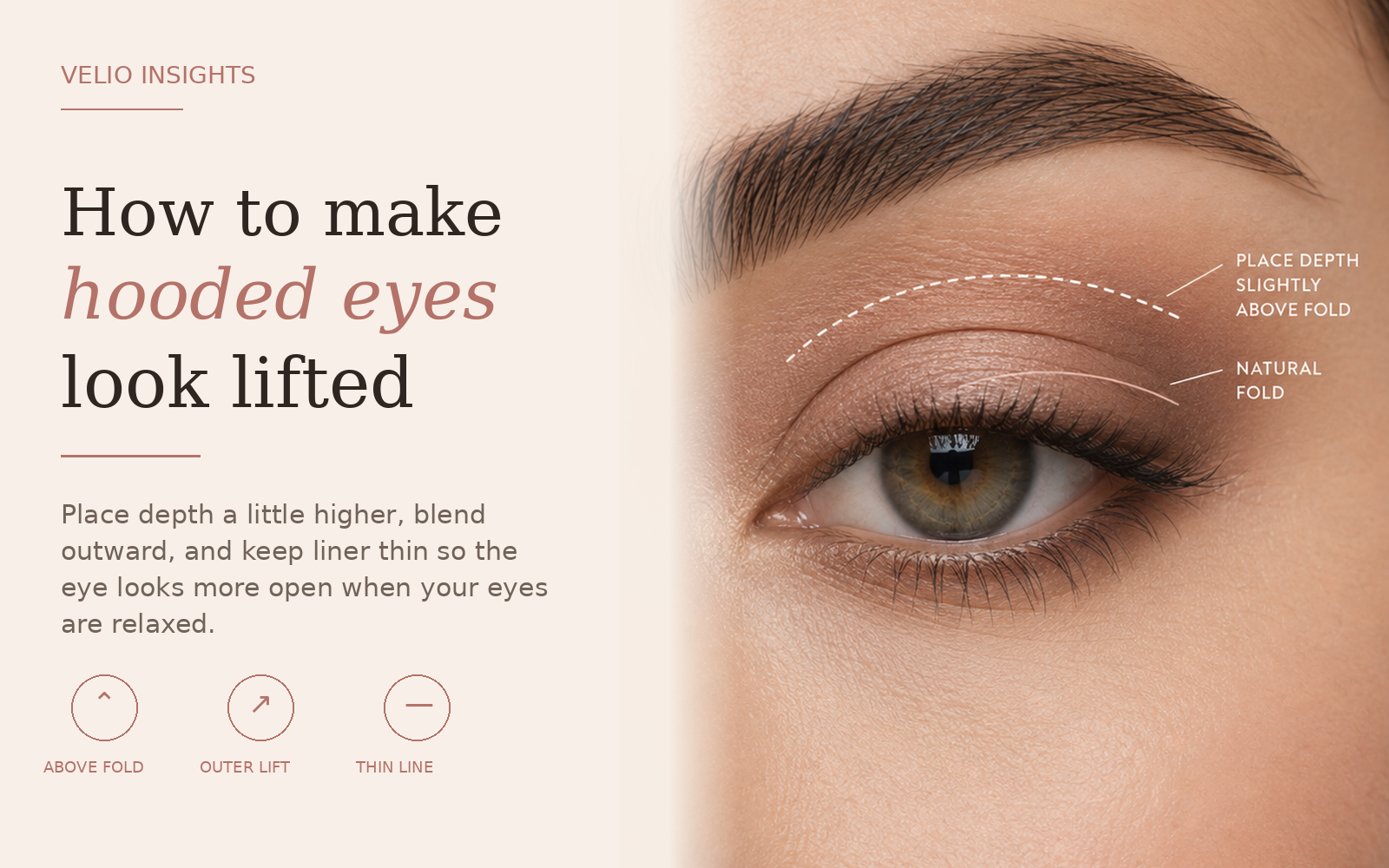
Hooded-eye lift is built from placement that stays visible when the eyes are open, not from simply adding more dark shadow.
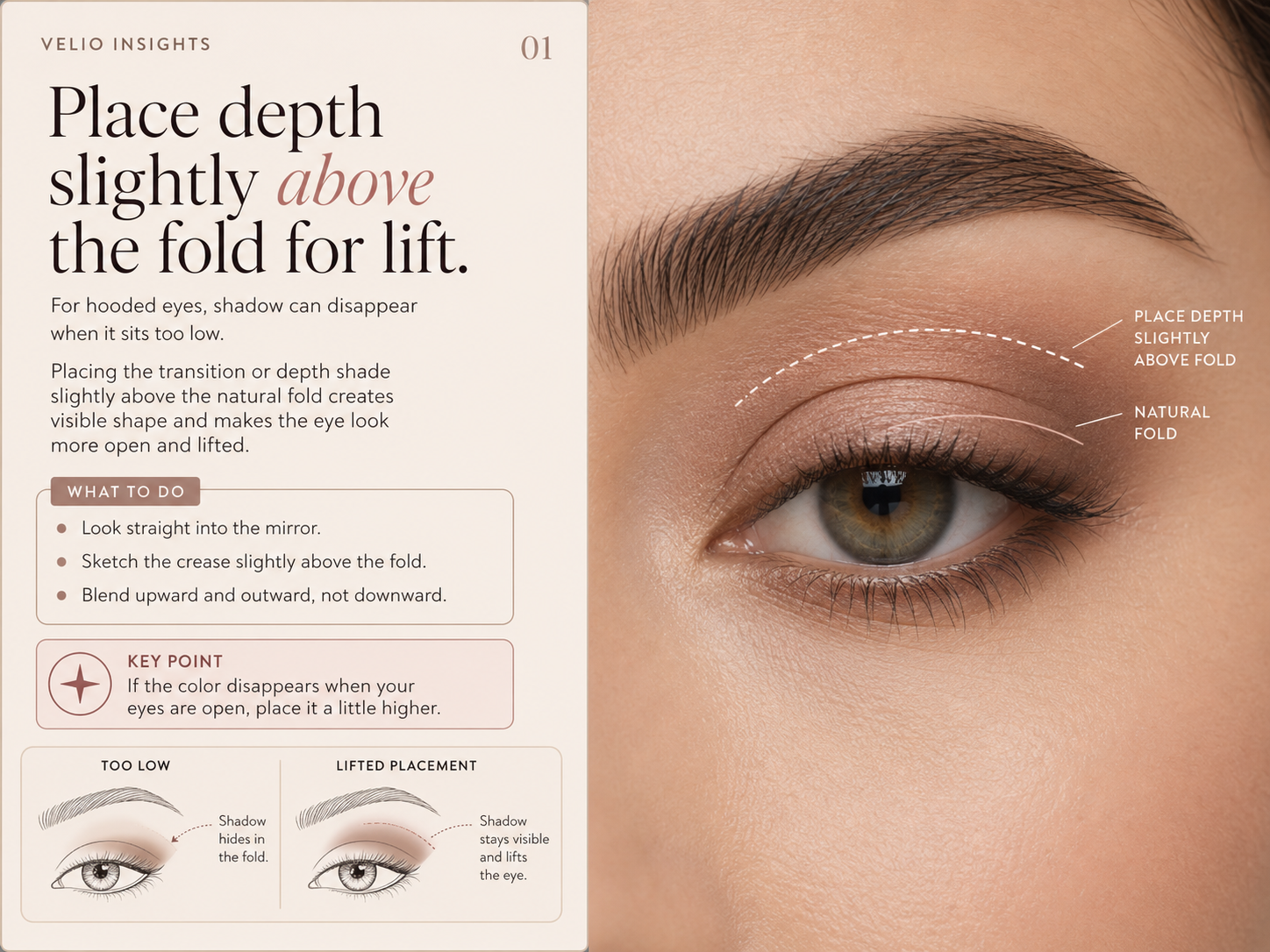
If the color disappears when your eyes are open, the placement is probably too low. Move the visible structure slightly higher.
For hooded eyes, shadow can disappear when it sits directly in the natural fold. The color may look visible while the eye is closed, but once the eye opens, the fold covers the work.
Look straight into the mirror and place the transition or depth shade slightly above the fold. This creates a visible lifted shadow shape while keeping the moving lid lighter and more open.
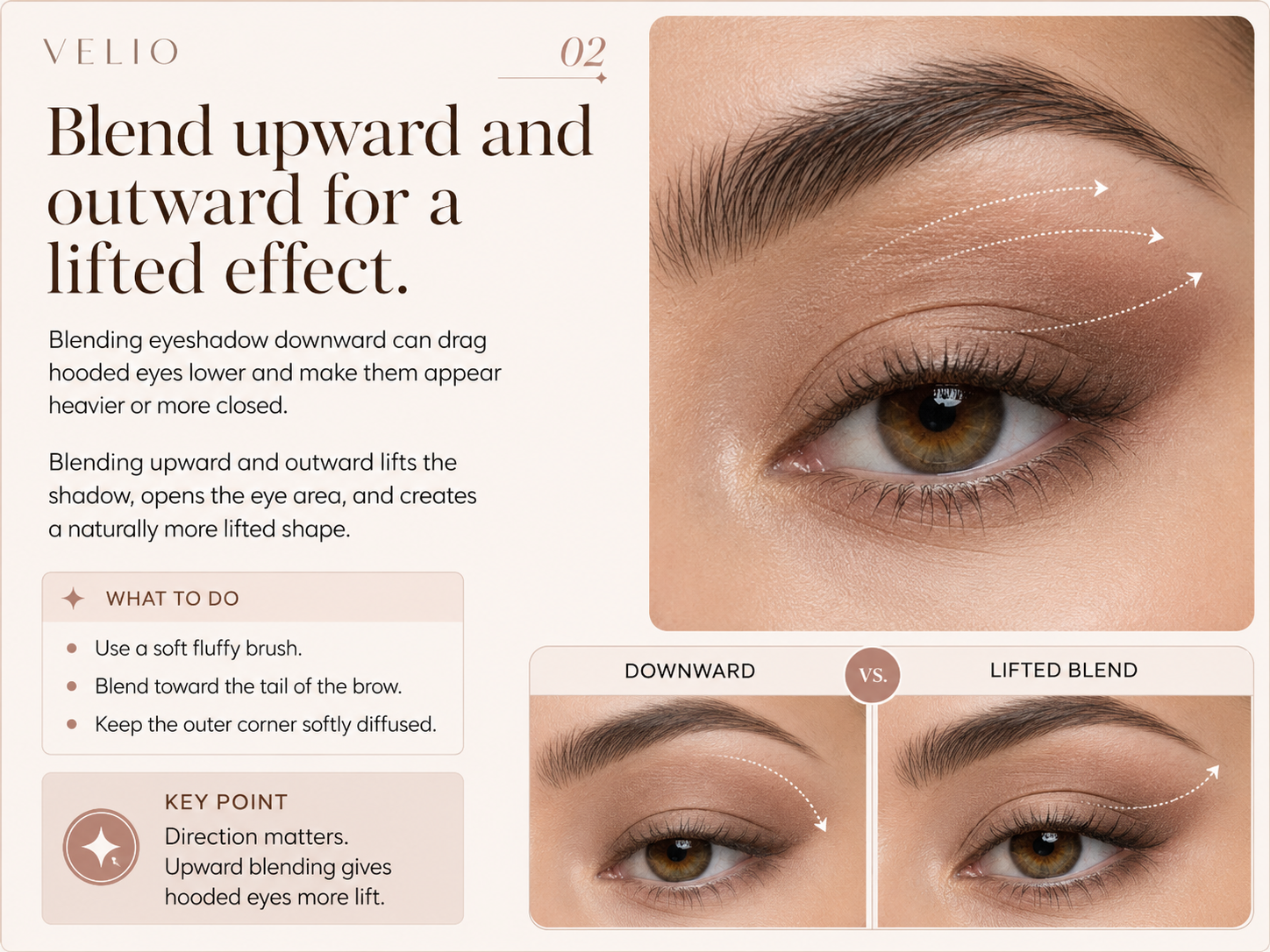
Downward blending can make the eye look heavier. Upward blending opens the outer eye and keeps the shape lifted.
Blending direction changes the whole eye shape. If the shadow is pulled downward at the outer corner, hooded eyes can look heavier or more closed.
Use a soft fluffy brush and blend toward the tail of the brow. Keep the outer edge diffused and lifted rather than round and low. This gives the eye a naturally more open look without adding harsh lines.
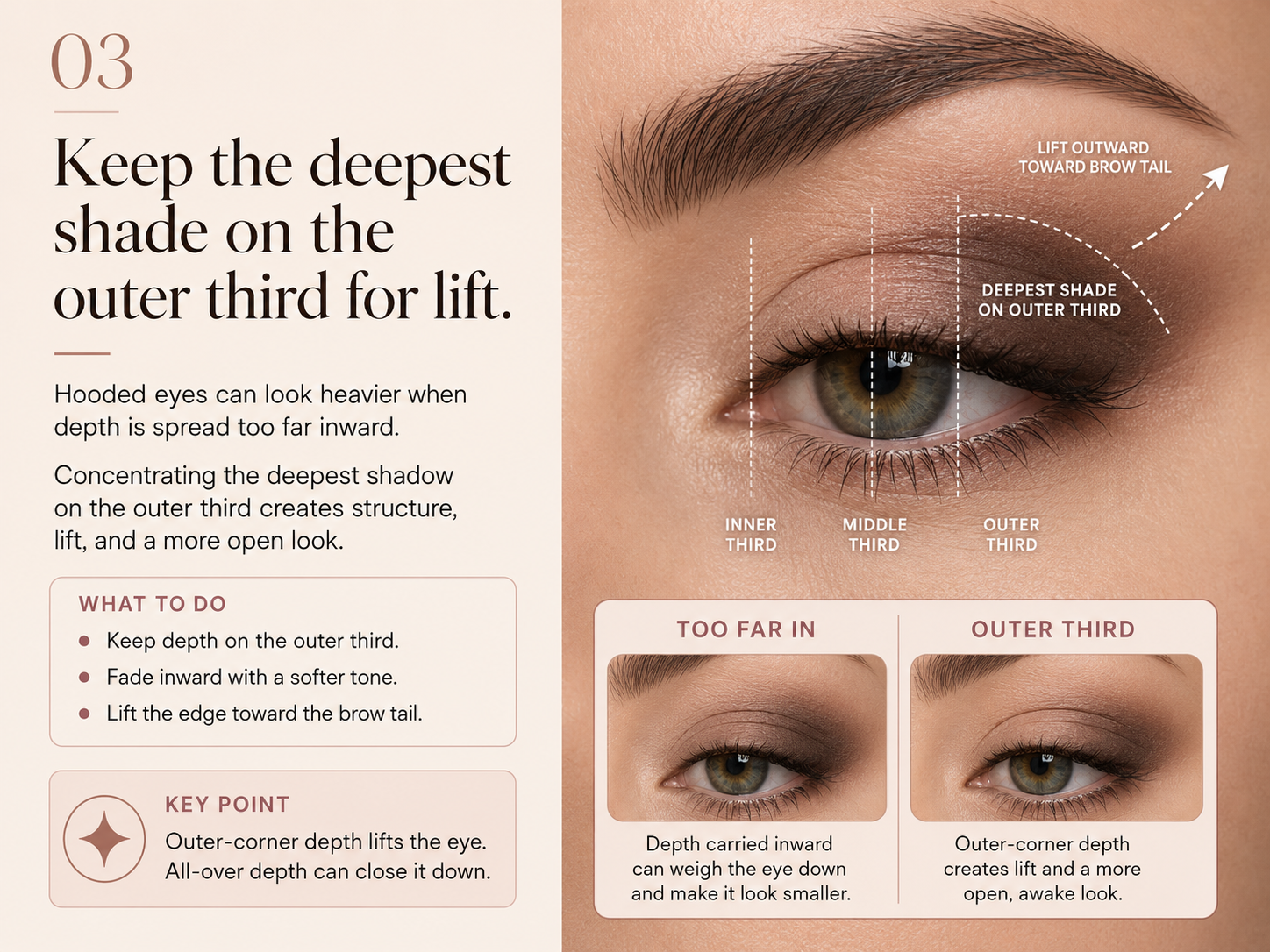
Depth carried too far inward can close the eye down. Outer-third depth gives structure without shrinking the lid.
Depth creates structure, but too much depth in the middle or inner lid can pull the eye inward and make the lid look smaller. Hooded eyes usually need structure at the edge, not weight everywhere.
Concentrate the deepest shade on the outer third, then fade inward with a softer tone. Lift the outer edge toward the brow tail so the eye looks more awake and less compressed.
Identify the changed area, choose the smallest correction, and stop as soon as the surface looks clear again.
Following a standard crease map. Fix it by looking straight ahead and placing the transition shade slightly above the fold.
Blending shadow downward at the outer corner. Fix it by pulling the edge toward the brow tail.
Using a thick liner to create drama. Fix it with a thin line close to the lashes and a small lifted tail.
On hooded eyes, the natural fold can cover the lid area where shadow is usually placed.
Blending downward or bringing depth too far inward can make the eye look more closed.
A thick line can occupy the small visible lid space, leaving less room for lift and dimension.
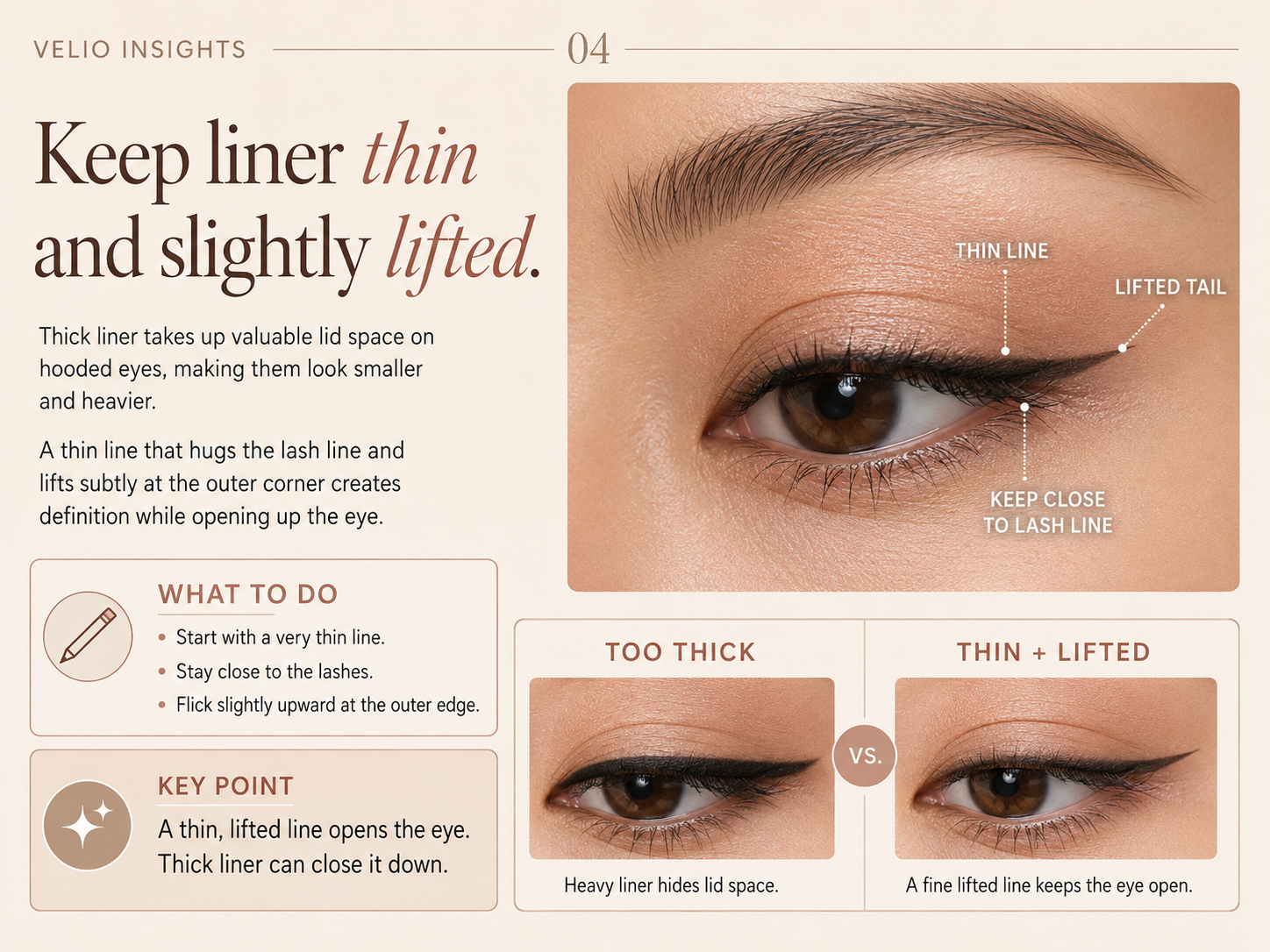
Thick liner can take up the visible lid space. A thin lifted line defines the eye while leaving room for shadow.
Thick liner can use up the visible lid space on hooded eyes. Instead of opening the eye, it can make the lid look darker, smaller, and more hidden.
Start with a very thin line close to the lashes. If you want lift, flick only the outer edge slightly upward and keep the inner line minimal. This gives definition without covering the eye shape you just built.
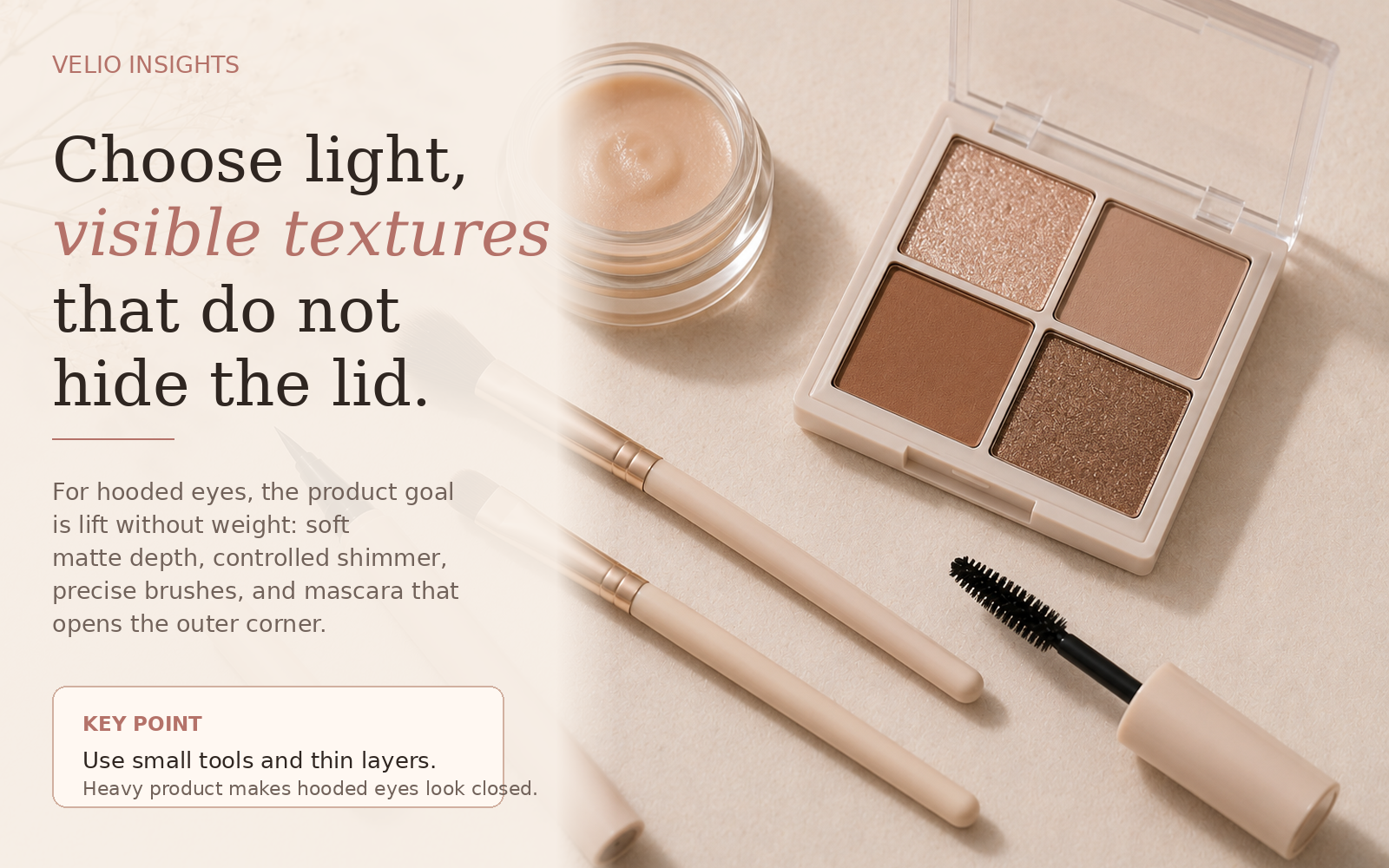
The product goal is lift without weight: soft matte depth, controlled shimmer, precise brushes, and light layers.
The best hooded-eye products are usually not the heaviest or most dramatic ones. Heavy cream, thick shimmer, or bulky brushes can place too much product where the lid folds.
Use a matte transition shade for structure, a controlled deeper shade for the outer third, a precise brush for placement, and mascara that lifts the outer lashes. Product choice should create visible lift, not product weight.
Look straight into the mirror and mark the visible lifted crease area before applying color.
Use a transition shade above the fold, deepen only the outer third, and blend upward and outward.
Use thin liner, curl lashes, and place mascara lift at the outer lashes instead of covering the whole lid with product.
“Hooded eyes do not need more makeup everywhere. They need visible placement, upward direction, outer-third depth, thin liner, and products that create lift without weight.”
Professional makeup education
Artists often map hooded eyes while the client looks straight ahead, because closed-eye placement may disappear when the eye opens.
Cosmetic formulation education
Light, flexible textures and controlled application can reduce visible heaviness on small or hidden lid areas.
Keep the visible structure slightly above the natural fold and direct the outer edge upward. Check the placement with the eyes open so the shape stays visible in a relaxed expression.
It can when the line covers most of the visible lid. A thinner inner line with more definition at the outer corner usually preserves more open space.
Use shimmer deliberately on the visible mobile lid or a small light-catching point. Keeping the fold structure softer and more matte can make the lift easier to read.
A small tapered brush, fine liner, and controlled lash definition help keep placement precise. Large fluffy tools can spread color lower than intended.
VELIO keeps the lesson attached to the mirror experience, then returns one face-aware Color Story and one practical route. It remains non-diagnostic.
Free first read · Non-diagnostic · Use what you own first
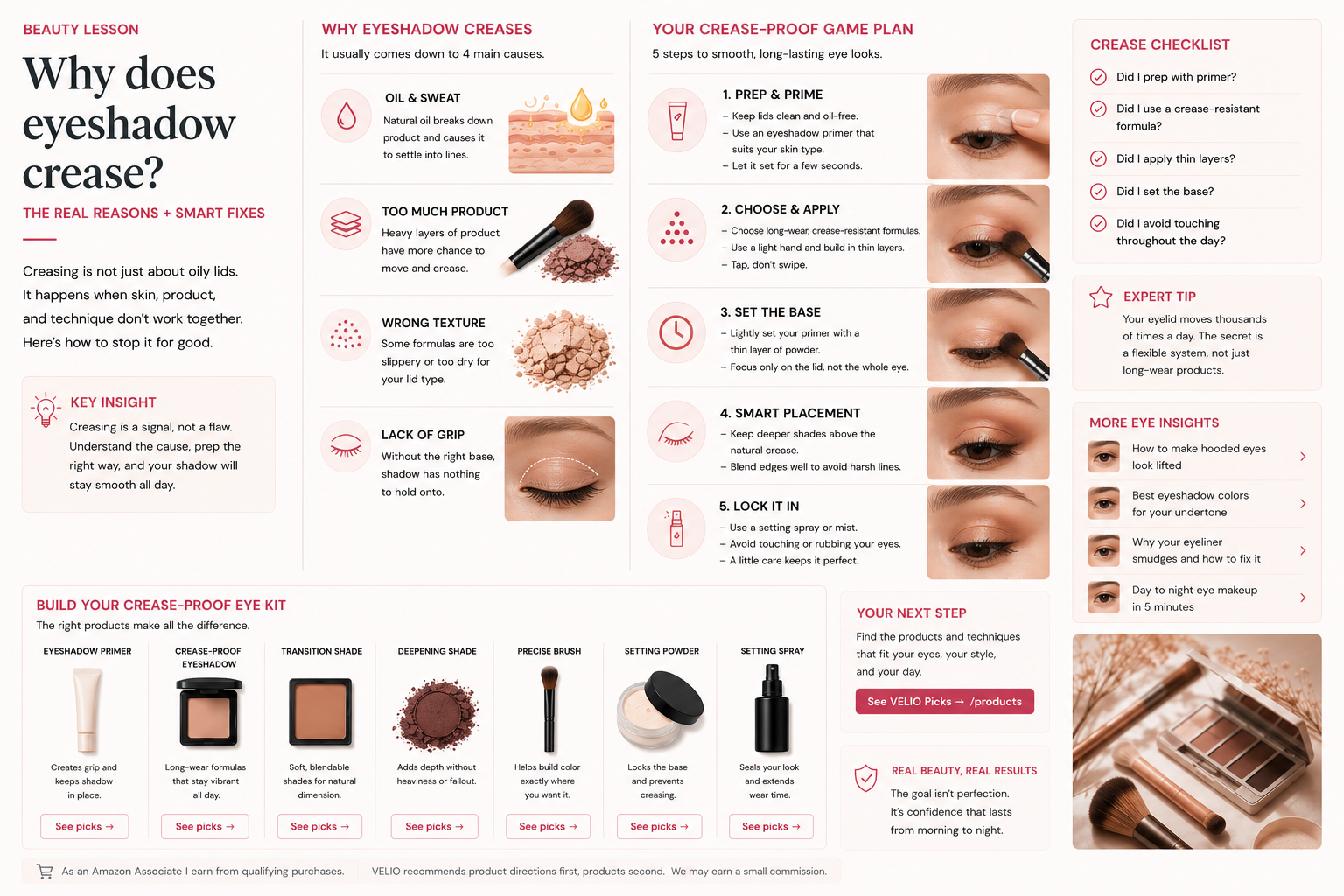
Eyeshadow creasing is usually not one problem. It happens when oil, sweat, product amount, texture, and grip do not work together on a moving eyelid.
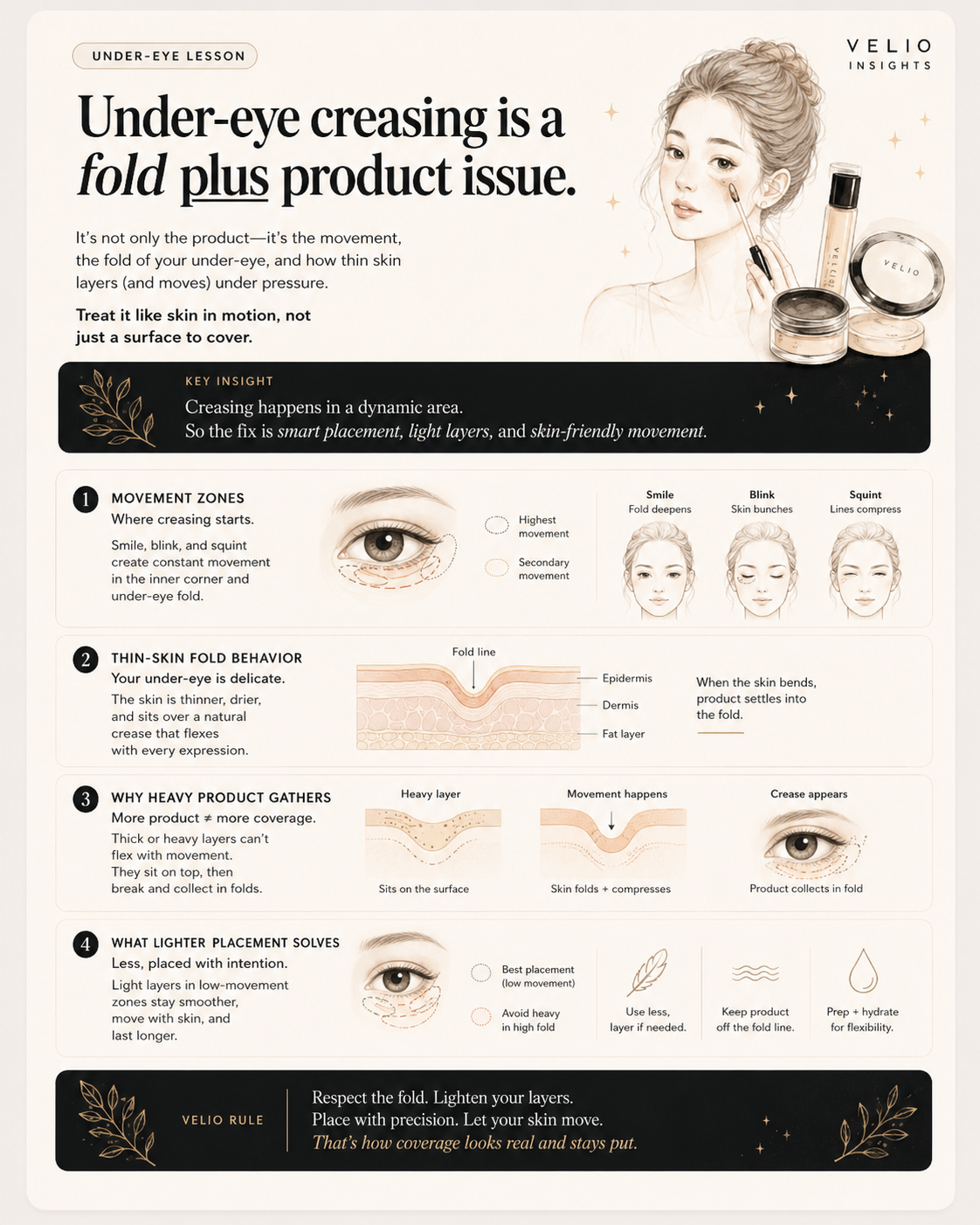
Under-eye creasing is usually a fold, movement, and product-load problem. The better fix is lighter prep, micro-correction, and setting only the fold.
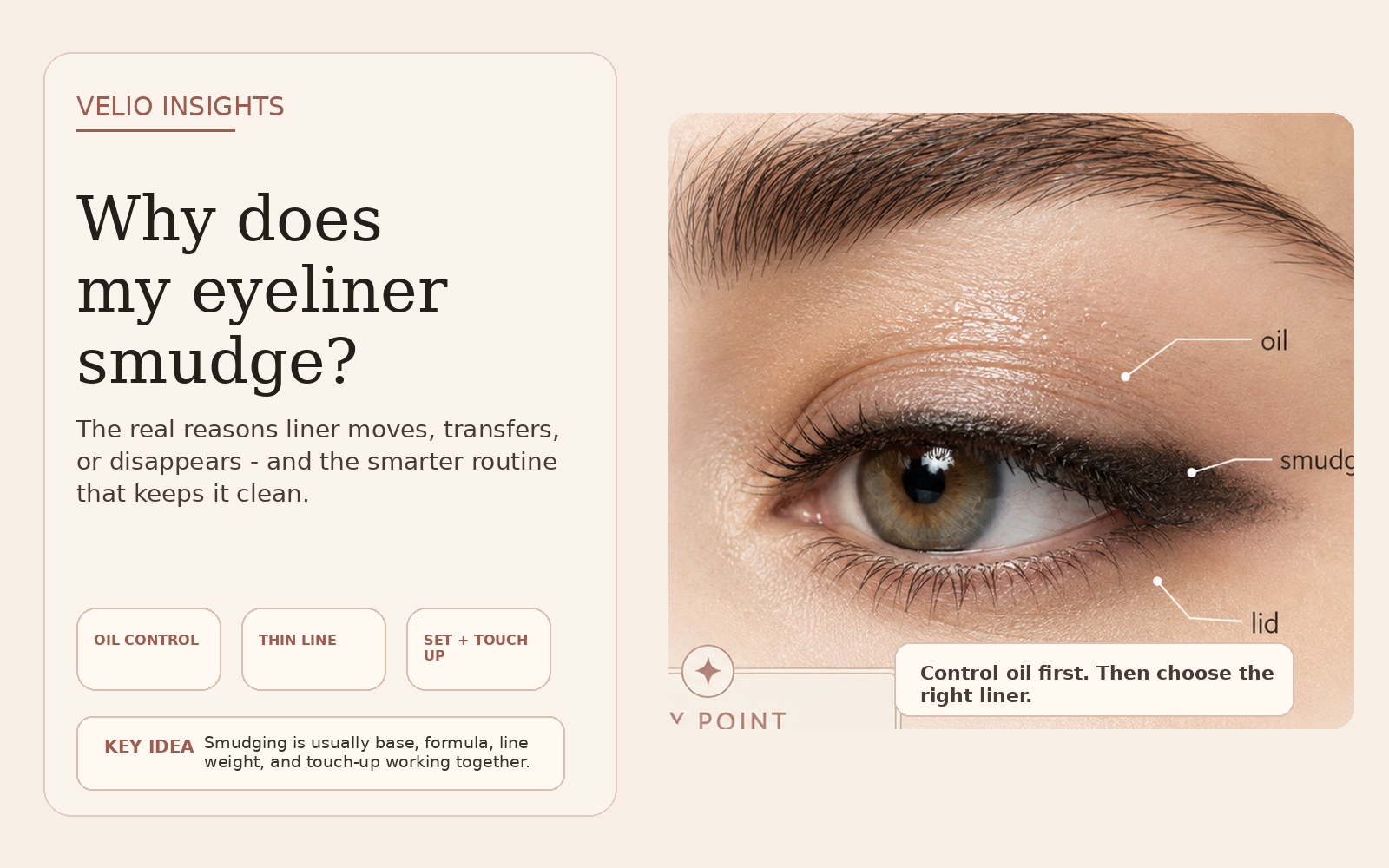
Eyeliner smudging is usually not one mistake. It is oil, formula, line weight, setting, and touch-up habits working together.