Why does eyeshadow crease after only a few hours?
Shadow usually creases when oil, moisture, movement, and too many soft layers collect in the lid fold. Creamy products that have not set can make the movement happen faster.
Creasing is a signal that the lid system needs more grip, less weight, or a better texture match.
“Long-wear eyeshadow is built with clean lids, flexible grip, thin layers, balanced texture, and a soft lock - not with more pigment.”
VELIO keeps the lesson attached to the mirror experience, then returns one face-aware Color Story and one practical route. It remains non-diagnostic.
Free first read · Non-diagnostic · Use what you own first
Eyeshadow looks smooth at first, then collects in the fold after a few hours.
The lid gets shiny or oily before the shadow starts to separate.
Adding more color makes the eye look heavier but does not stop creasing.
Cream, shimmer, or powder formulas crease differently depending on lid texture and prep.
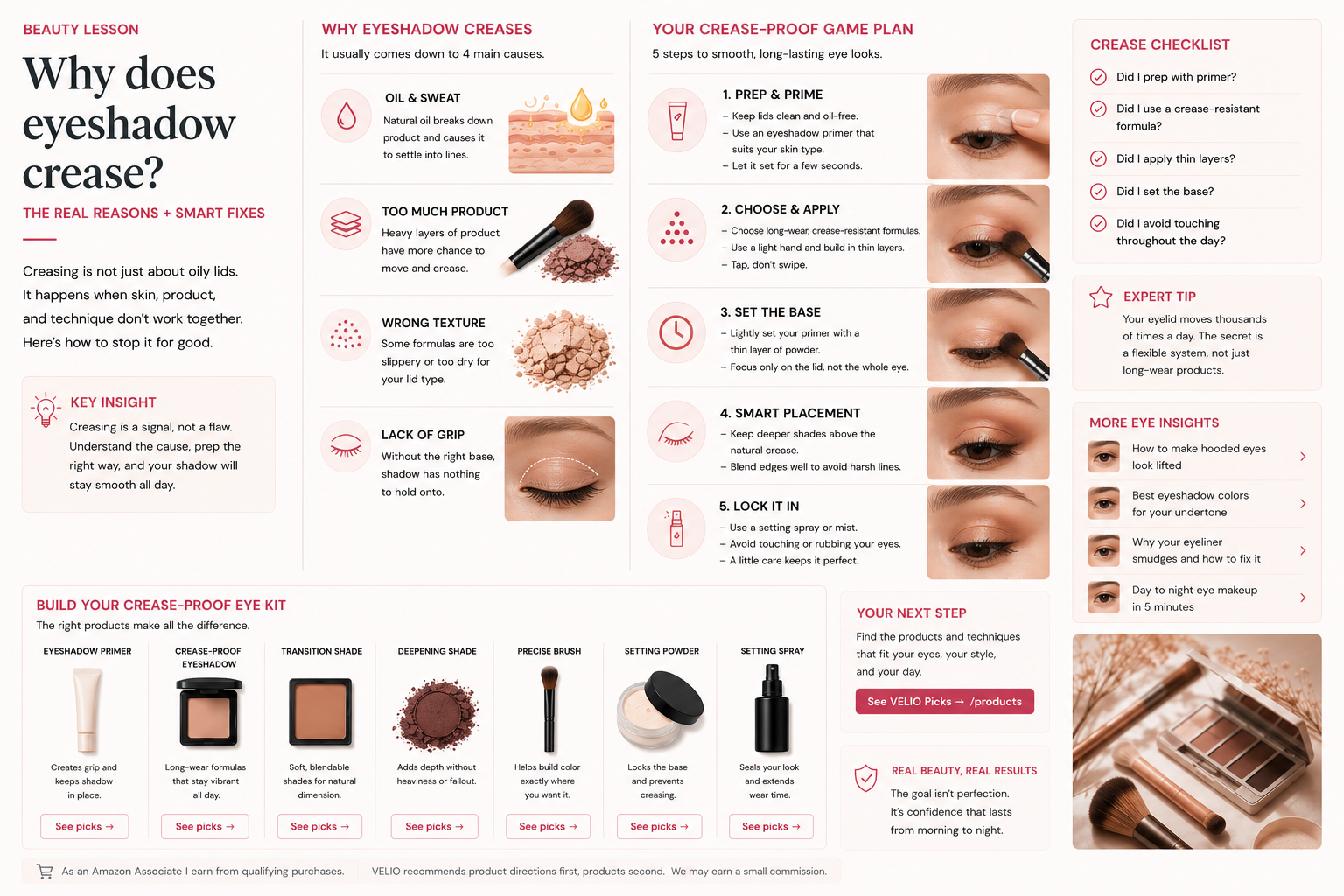
Crease-proof eye makeup is not one magic product. It is a system: clean lids, primer, thin color, balanced texture, and a controlled lock.
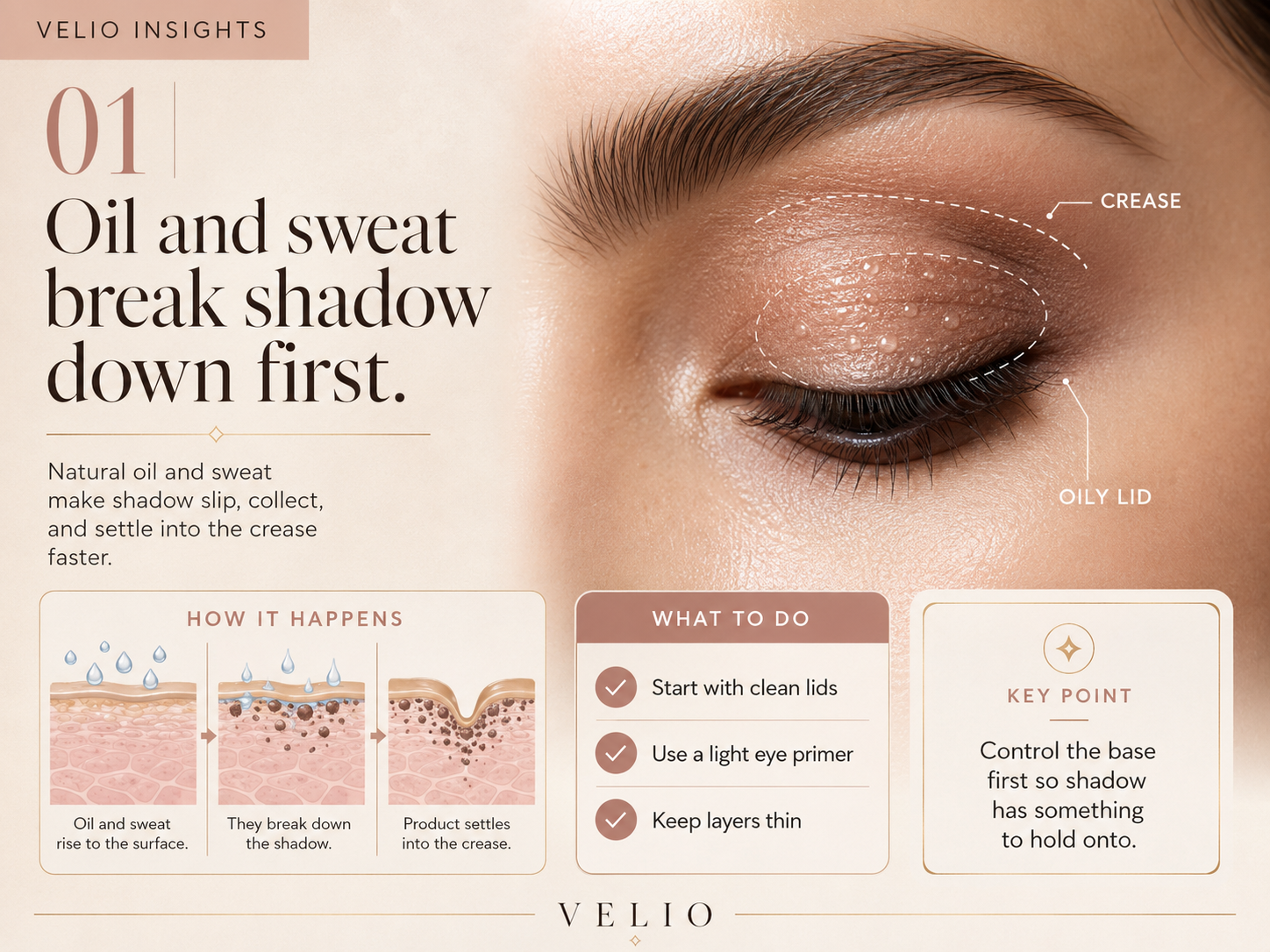
When oil and sweat rise through the lid, shadow can slip, collect, and settle into the fold faster.
The eyelid moves constantly, and it also produces oil. When sweat, oil, or heavy skincare reaches the lid surface, eyeshadow can lose grip and slide into the crease line.
The first fix is not darker shadow. Start with clean lids, keep eye prep thin, and use a light primer that gives pigment something to hold onto. This gives the color a stable base before you think about intensity.
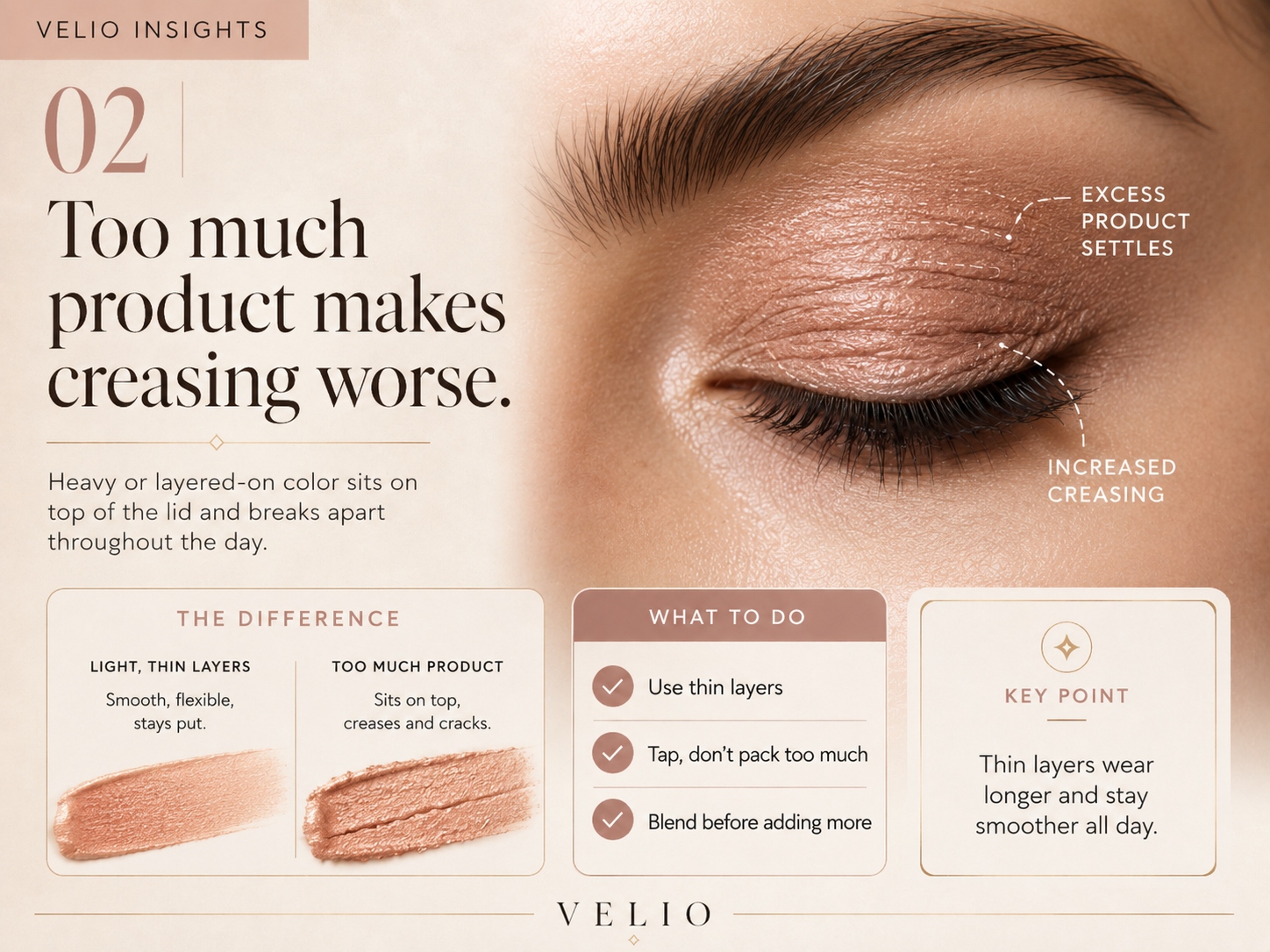
More product is not always more wear. Heavy layers sit on top of the lid and break apart as the eye moves.
Heavy shadow layers look strong at first, but they often have less flexibility. As the eyelid folds and blinks, excess product can compress into the crease and create a line of buildup.
Use thin layers and build gradually. Tap shadow on, blend before adding more, and avoid packing shimmer or cream directly into the deepest fold unless the base is already controlled.
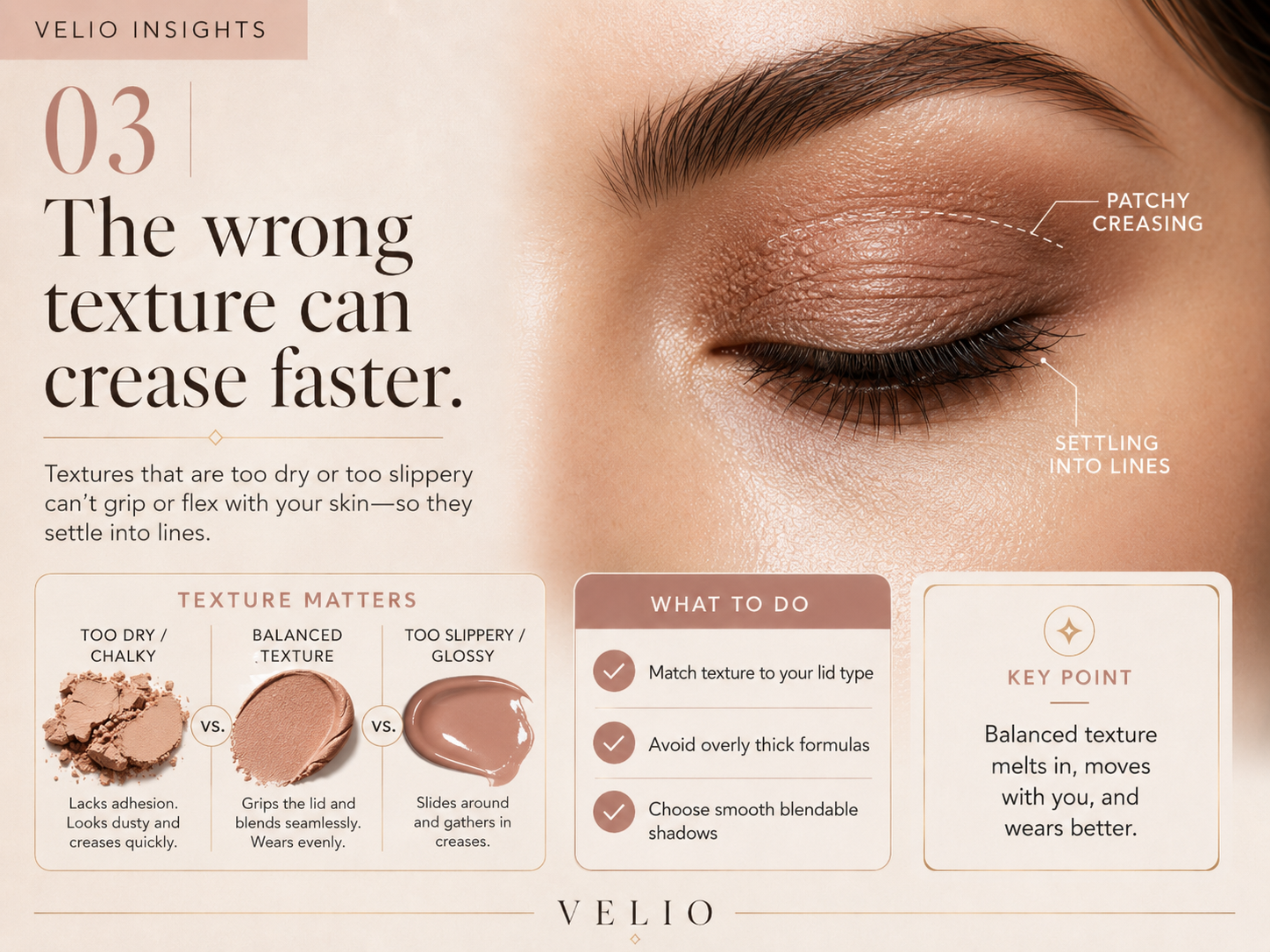
A formula that is too dry may crack. A formula that is too slippery may gather. Balanced texture grips and flexes better.
A dry powder can look dusty and crack when the lid moves. A glossy or slippery cream can slide too quickly on oily lids. Creasing often means the texture is not matching the lid condition.
Choose a balanced, blendable formula for the main lid color. If your lids are oily, use crease-resistant powder or cream-to-powder textures. If your lids are dry, avoid overly chalky shadows that catch on texture.
Identify the changed area, choose the smallest correction, and stop as soon as the surface looks clear again.
Packing more shadow onto a creased lid. Fix it by removing excess oil first, then rebuilding with a thin layer.
Using a slippery cream texture on oily lids without primer. Fix it with a grip base and a light set before color.
Powdering the whole eye heavily. Fix it by setting strategically so the lid stays smooth, not chalky.
Natural oil and sweat can break the bond between shadow and skin, especially on a moving lid.
A thick layer has more chance to sit on top, crack, and gather in the crease line.
Without primer or a set base, shadow may not have enough structure to hold through blinking and humidity.
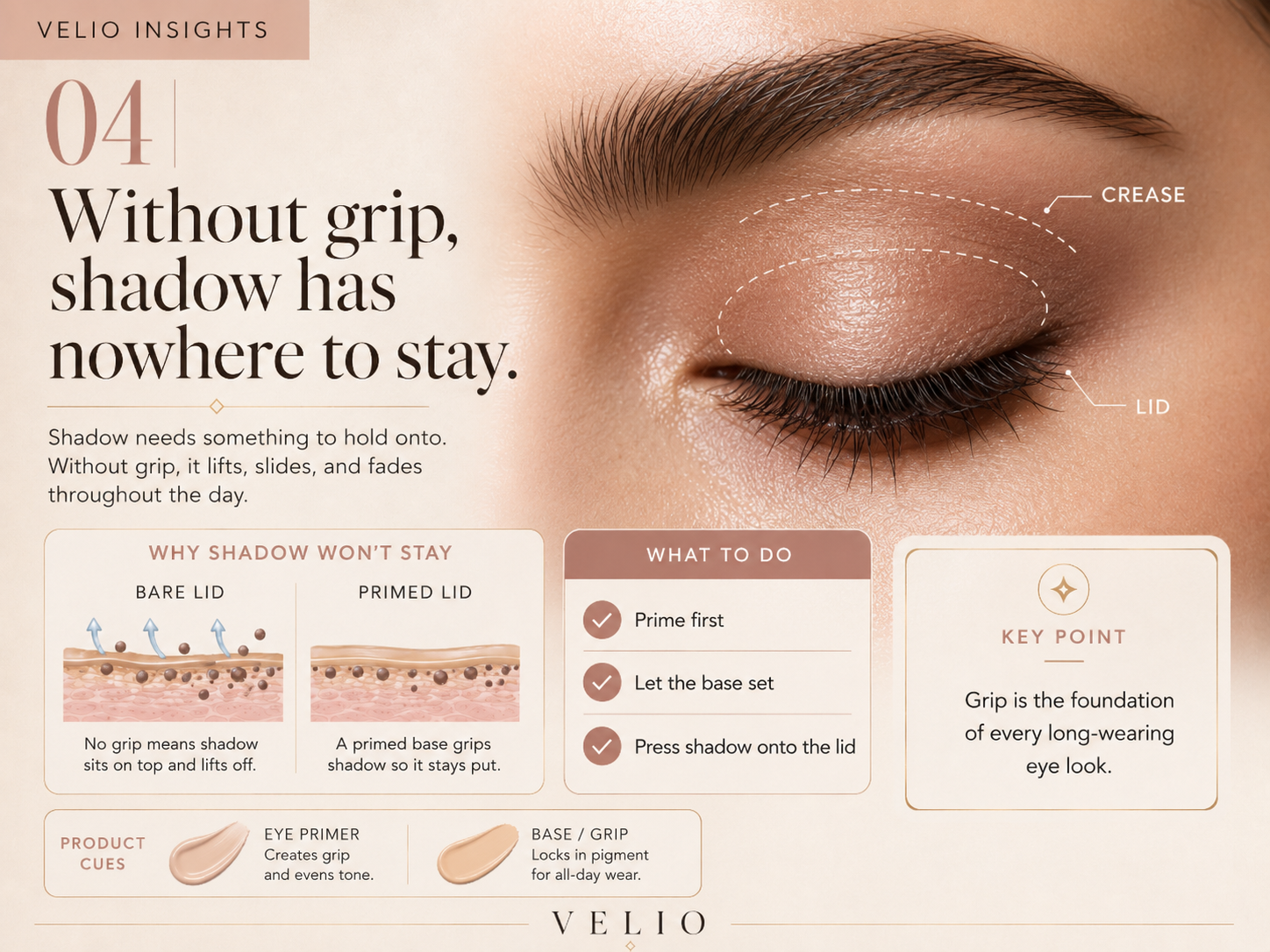
Primer is not just an extra step. It gives pigment a controlled surface to hold onto instead of floating on oil or bare skin.
Bare lid can feel clean, but it may not be a stable surface for pigment. If oil appears quickly, shadow can float on the lid rather than binding to it.
Use eye primer as a grip layer, then let it settle before adding color. For extra oily lids, a trace of setting powder over primer can help absorb slip without making the eye look dry.
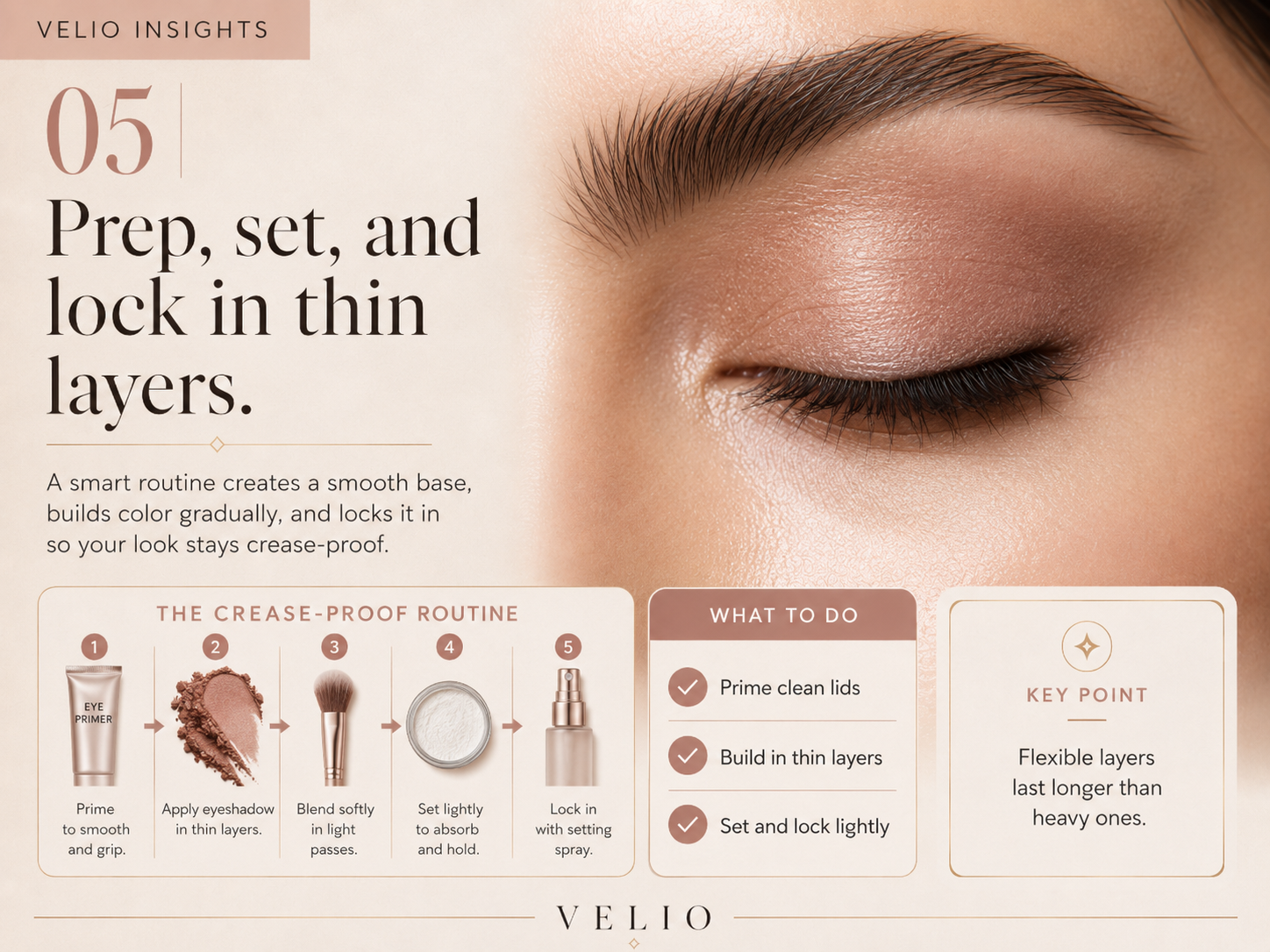
Thin flexible layers last longer than one thick layer because they can move with the eyelid without collecting in the crease.
A crease-proof routine is a sequence: prime, apply thin color, blend softly, set lightly, and lock if needed. Each layer should be thin enough to move with the lid instead of sitting on top.
For long days, keep a small precise brush and a soft neutral shade nearby. Touch up by smoothing the crease first, then adding a trace of color only where it has faded. Do not stack product over a thick crease line.
Clean the lid area, remove excess skincare, and apply a thin layer of eye primer or grip base.
Use small amounts, tap color on, blend edges, and keep deeper shades slightly above the natural crease if the fold is active.
Set only where the lid creases fastest and avoid touching or rubbing the eye throughout the day.
“Eyeshadow creasing is not a failure of your eye shape. It is usually a signal to control oil, reduce product weight, choose a better texture, and give shadow a real grip layer.”
Cosmetic formulation education
Long-wear eye makeup depends on how formulas grip, set, and move with skin. This supports teaching creasing as a layer-system problem.
Professional makeup education
Artists often control creasing with prep, placement, texture choice, and small amounts rather than one thick shadow layer.
Shadow usually creases when oil, moisture, movement, and too many soft layers collect in the lid fold. Creamy products that have not set can make the movement happen faster.
Primer can help, but the layer should stay thin. Removing excess skincare, using less cream product, and pressing shadow in light layers can matter just as much.
A very light setting layer can help an oily lid, but too much powder may make color patchy or dull. Set only enough to remove tack where the fold usually moves.
VELIO connects creasing to light lid prep, thin primer, pressed powder shadow, and a small detail tool that keeps extra product out of the fold.
VELIO keeps the lesson attached to the mirror experience, then returns one face-aware Color Story and one practical route. It remains non-diagnostic.
Free first read · Non-diagnostic · Use what you own first
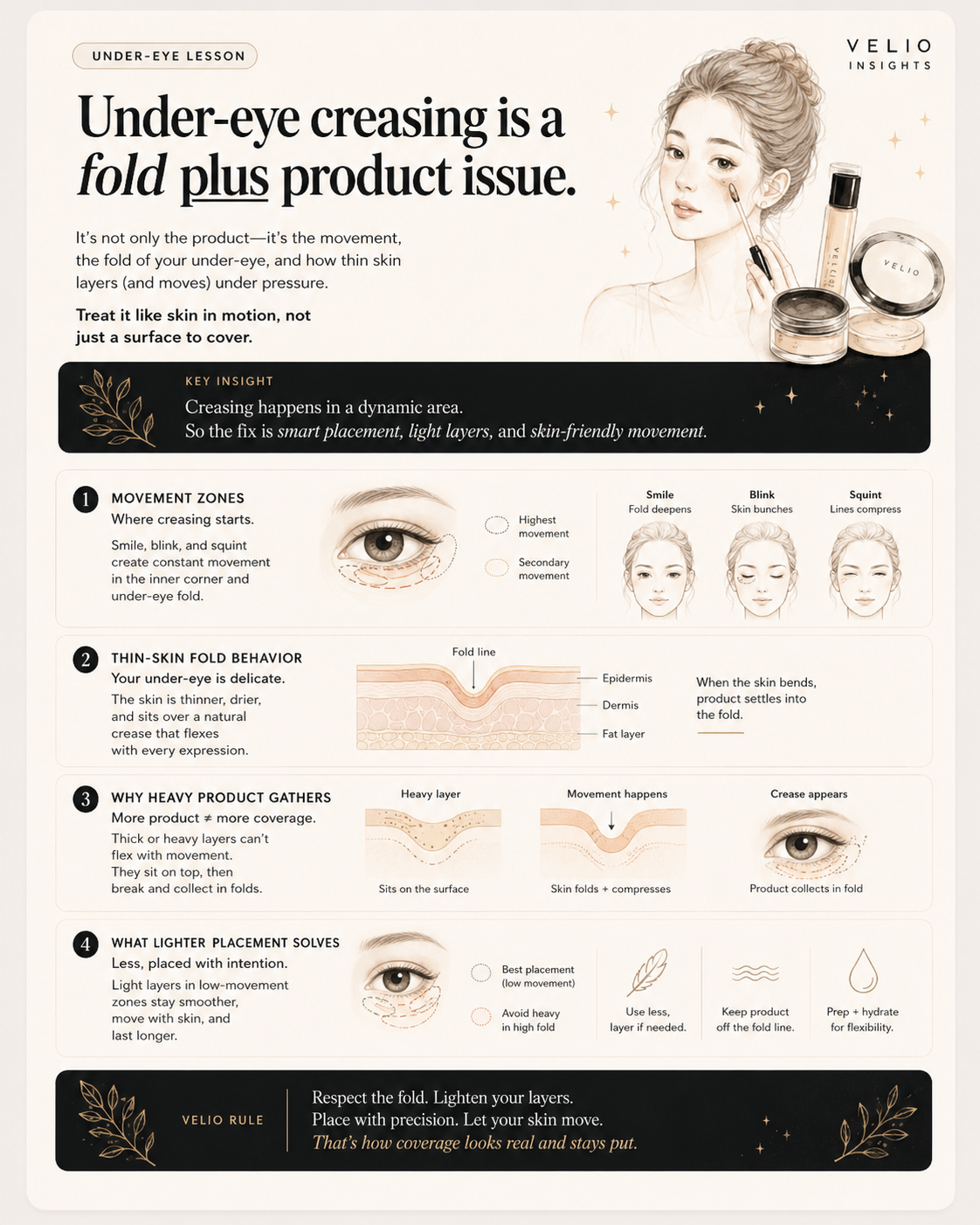
Under-eye creasing is usually a fold, movement, and product-load problem. The better fix is lighter prep, micro-correction, and setting only the fold.
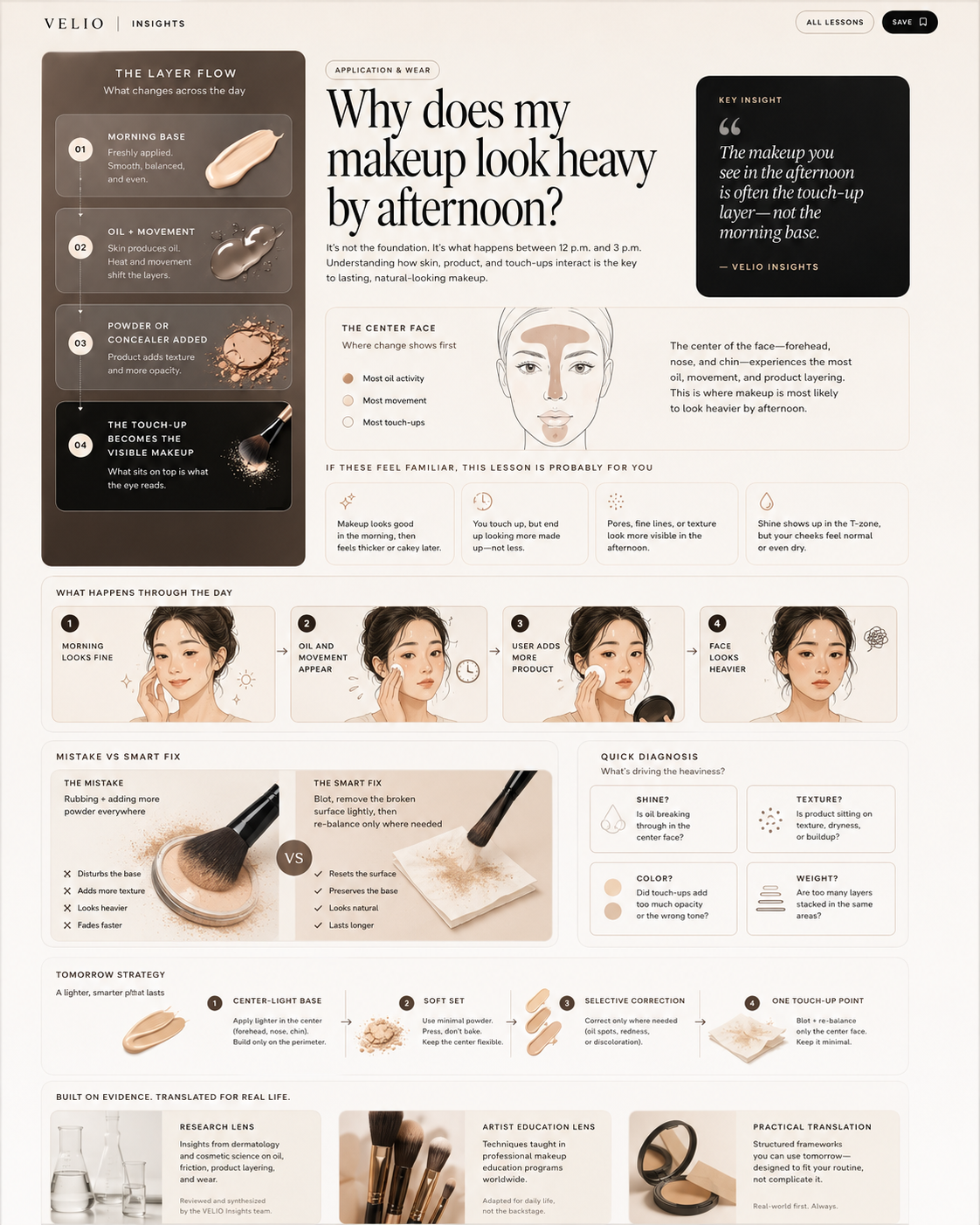
The makeup you see at 3 p.m. is often not the morning base. It is the new top layer created by oil, movement, powder, concealer, and repeated touch-ups.
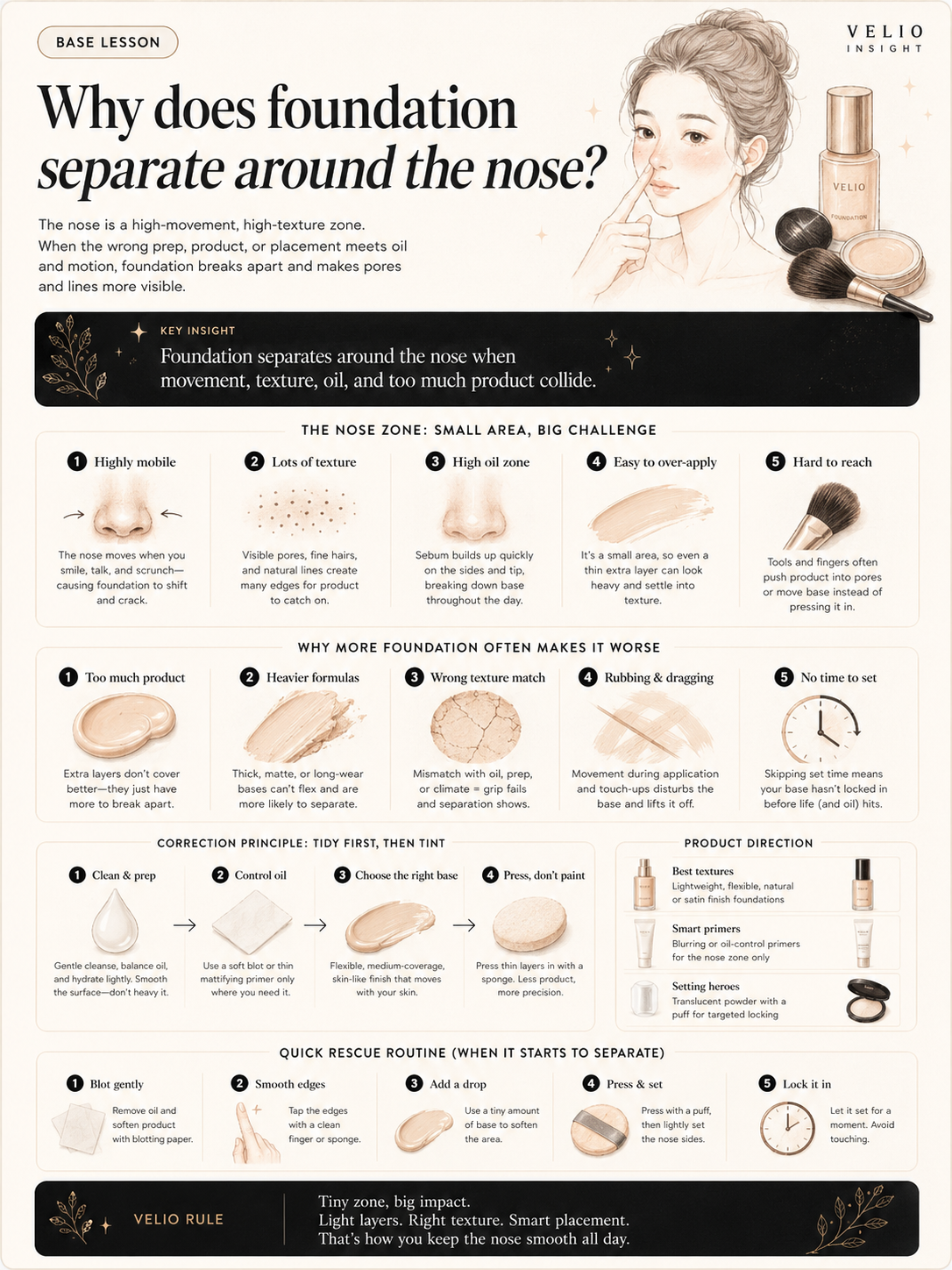
The nose zone is small, warm, and high-movement. Lift the loose layer, flatten the seam, and replace only the coverage that is missing.