Why does blush disappear so fast?
Blush can fade quickly when the base underneath moves, when oil breaks down the color, when powder blocks grip, or when the placement route is over-blended.
Blush fading is not always a pigment problem. It is often a layer, texture, placement, and wear-support problem.
“Longer blush wear comes from support under the color, not just stronger color on top.”
VELIO keeps the lesson attached to the mirror experience, then returns one face-aware Color Story and one practical route. It remains non-diagnostic.
Free first read · Non-diagnostic · Use what you own first
Blush looks fresh right after application but disappears by lunch.
Adding more color looks too strong at first but still fades unevenly.
The cheek looks muddy or flat after the base starts moving.
Powder blush sits on top but does not seem to hold on the skin.
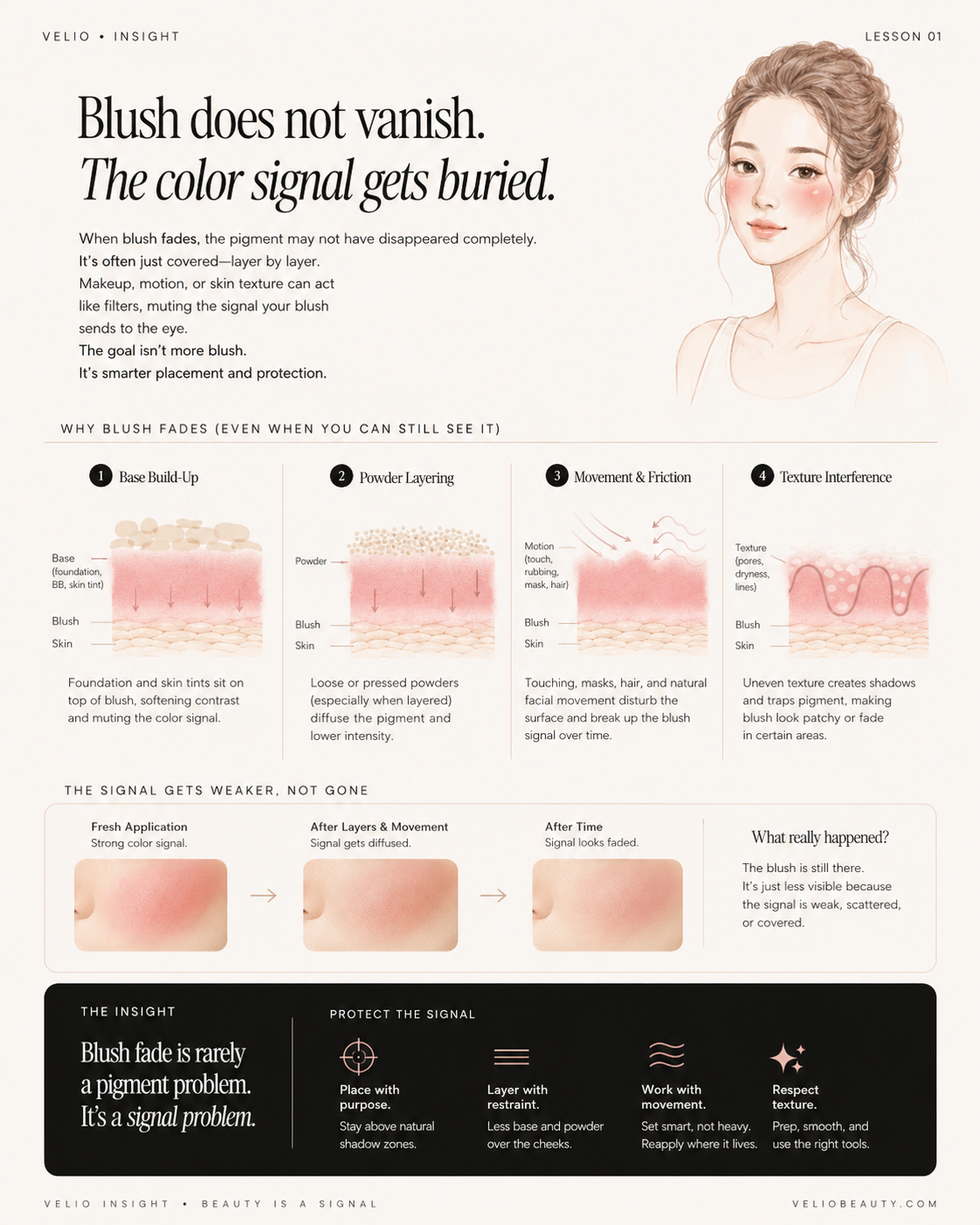
Blush lasts longer when the color has support under it and a controlled route across the cheek.
When blush fades, the pigment may not have disappeared completely. The base underneath may have shifted, the powder layer may have muted the edge, or the strongest color point may have been over-blended until the cheek no longer reads fresh.
That is why the better question is not only which blush is strongest. It is what the blush is sitting on, where the color starts, and whether the placement route is still visible after the face moves.
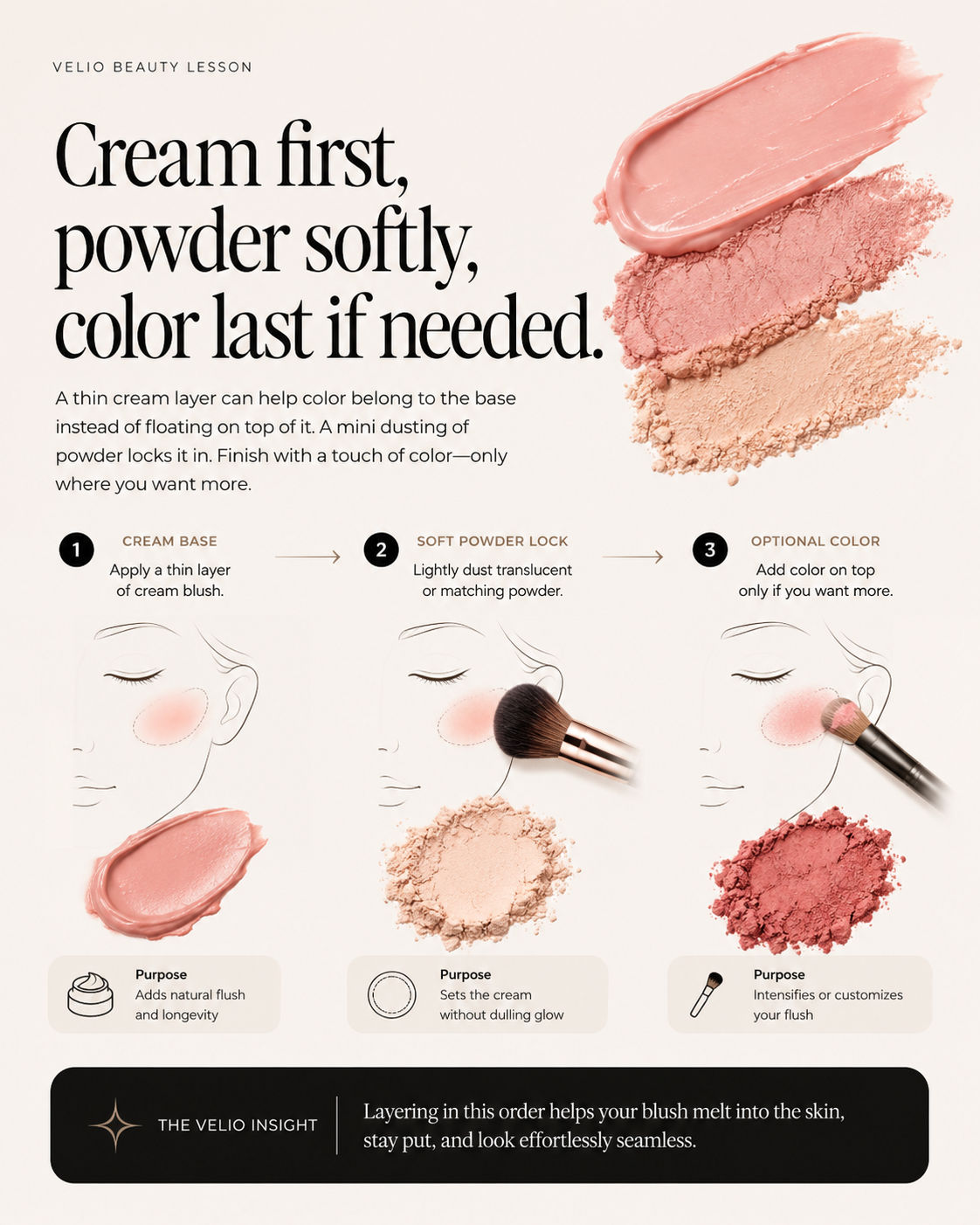
Blush lasts longer when the color has support under it and a controlled route across the cheek.
A thin cream layer can help color belong to the base instead of floating on top of it. A small soft veil can protect the area if the cheek gets oily. A tiny powder blush touch can add wear without turning the whole cheek heavy.
This layered route is not about using more. It is about giving each product a job: grip, color, support, and small refresh.
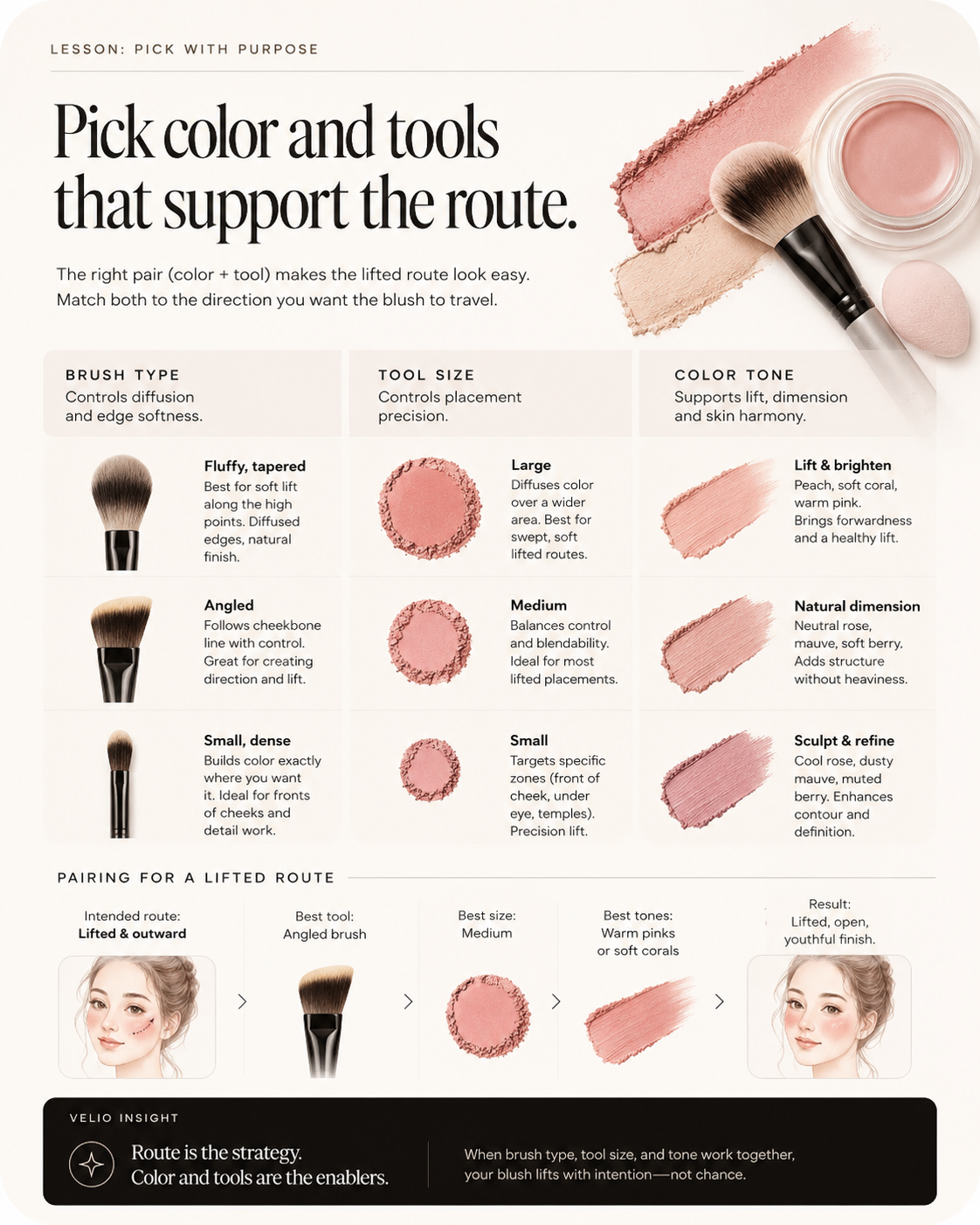
Blush lasts longer when the color has support under it and a controlled route across the cheek.
A blush placed too low or too wide can fade into the base faster because it travels through more movement and product. A higher, more controlled point stays easier to read as the face changes through the day.
The goal is not a harsh stripe. The goal is a clear color route with a soft edge. When that route stays visible, the blush looks fresher for longer.
Identify the changed area, choose the smallest correction, and stop as soon as the surface looks clear again.
Use more pigment because blush fades quickly.
Support the color route with cream color and controlled placement.
Blend until the blush disappears into the base.
Keep the strongest point clear and soften only the edge.
If the base slips first, blush can move or fade with it.
Blending too much can erase the highest color point.
Too much powder underneath can make blush sit on top and dust away.
Anchor color with flexible texture, controlled placement, and thin support layers.
Keep the cheek base flexible and not too powdery.
Press color where the lifted route begins.
Add a light powder layer only if your cheek gets oily.
At midday, restore the route before adding more pigment.
“Longer blush wear comes from support under the color, not just stronger color on top.”
Arai & Nittono, Scientific Reports, 2022
Research on makeup and facial perception supports VELIO's focus on visible placement and color signals.
Porcheron et al., PLOS ONE, 2013
Facial contrast research helps explain why color visibility, placement, and fading can change how fresh makeup feels.
Professional blush layering principle
Artists often use texture and placement to make color last rather than relying only on stronger pigment.
VELIO editorial translation
The consumer action is simple: flexible cheek base, cream color, controlled placement, and a light support layer when needed.
Blush can fade quickly when the base underneath moves, when oil breaks down the color, when powder blocks grip, or when the placement route is over-blended.
Use a flexible cheek base, press cream color where the route begins, add a light support layer only if needed, and keep the strongest color point clear.
Neither is automatically better. Cream can help color belong to the base, while a tiny powder blush touch can add wear. The best route depends on skin, base, and placement.
VELIO connects fast-fading blush to cream color, soft detail tools, light powder veil, and placement that protects the color route.
VELIO keeps the lesson attached to the mirror experience, then returns one face-aware Color Story and one practical route. It remains non-diagnostic.
Free first read · Non-diagnostic · Use what you own first
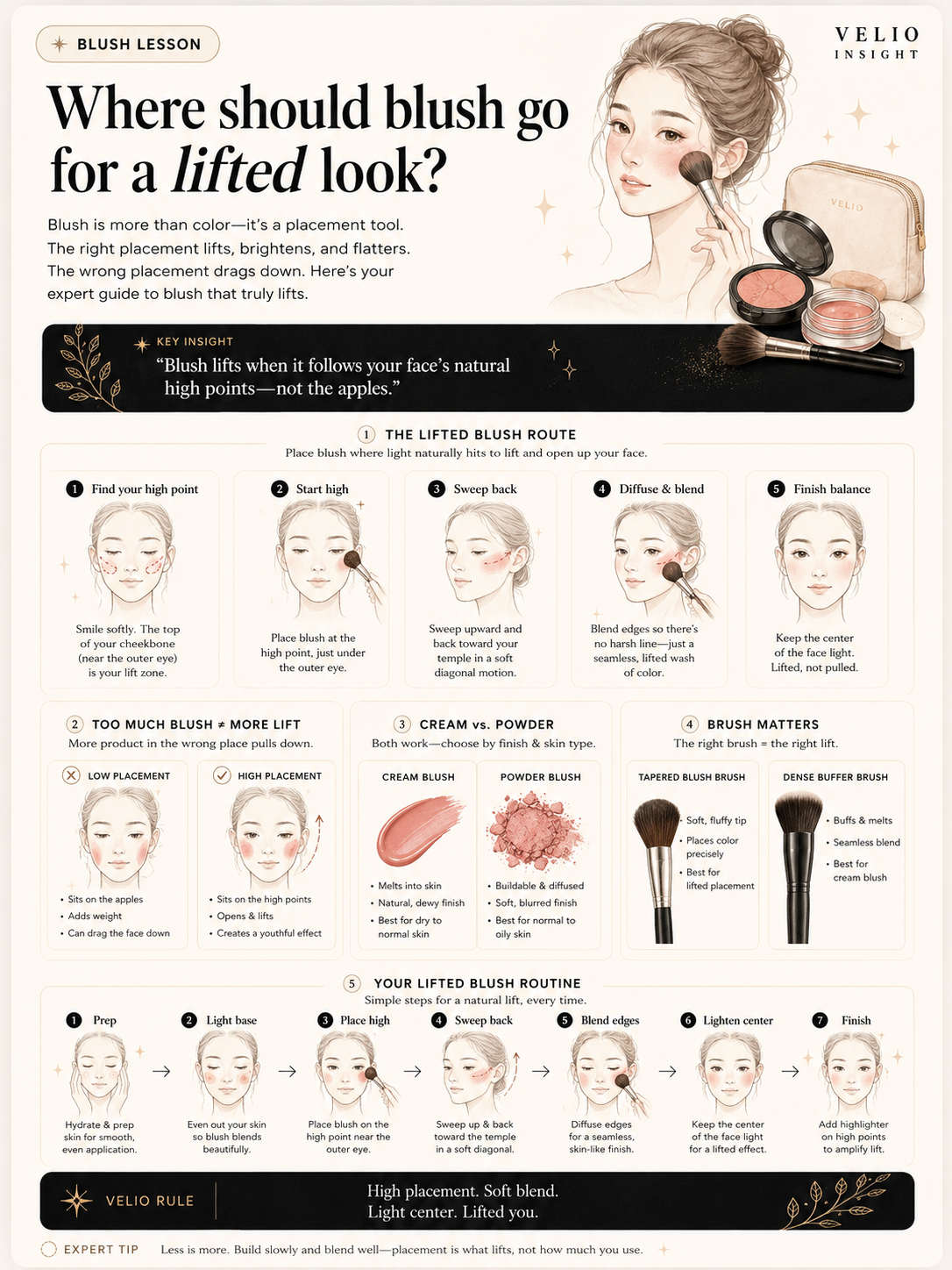
Lift usually comes from direction and placement, not from making the blush stronger or wider.
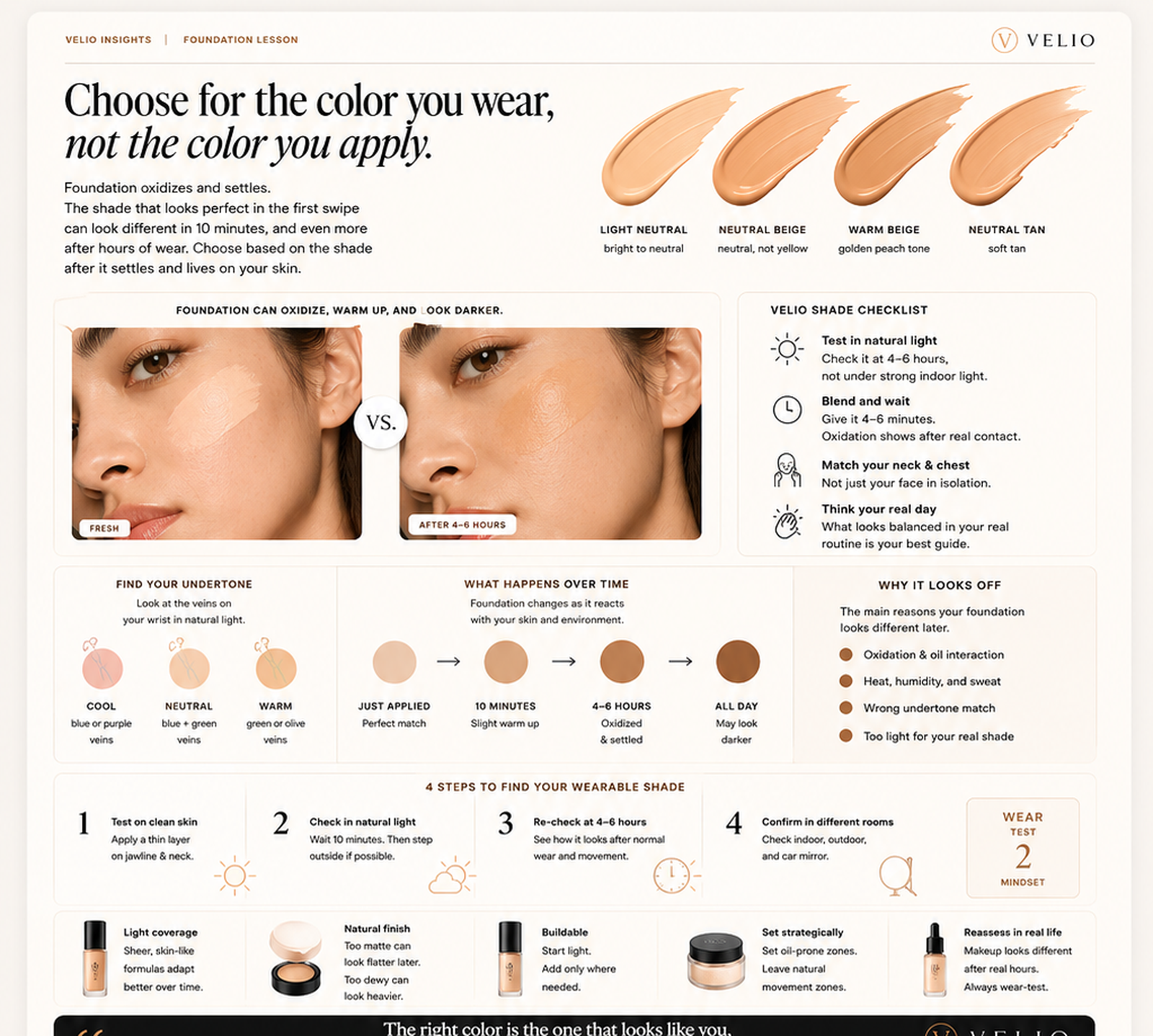
Oxidation is not always a bad shade at first swipe. It is often a wear-time color shift caused by formula, oil, pigment, and time.
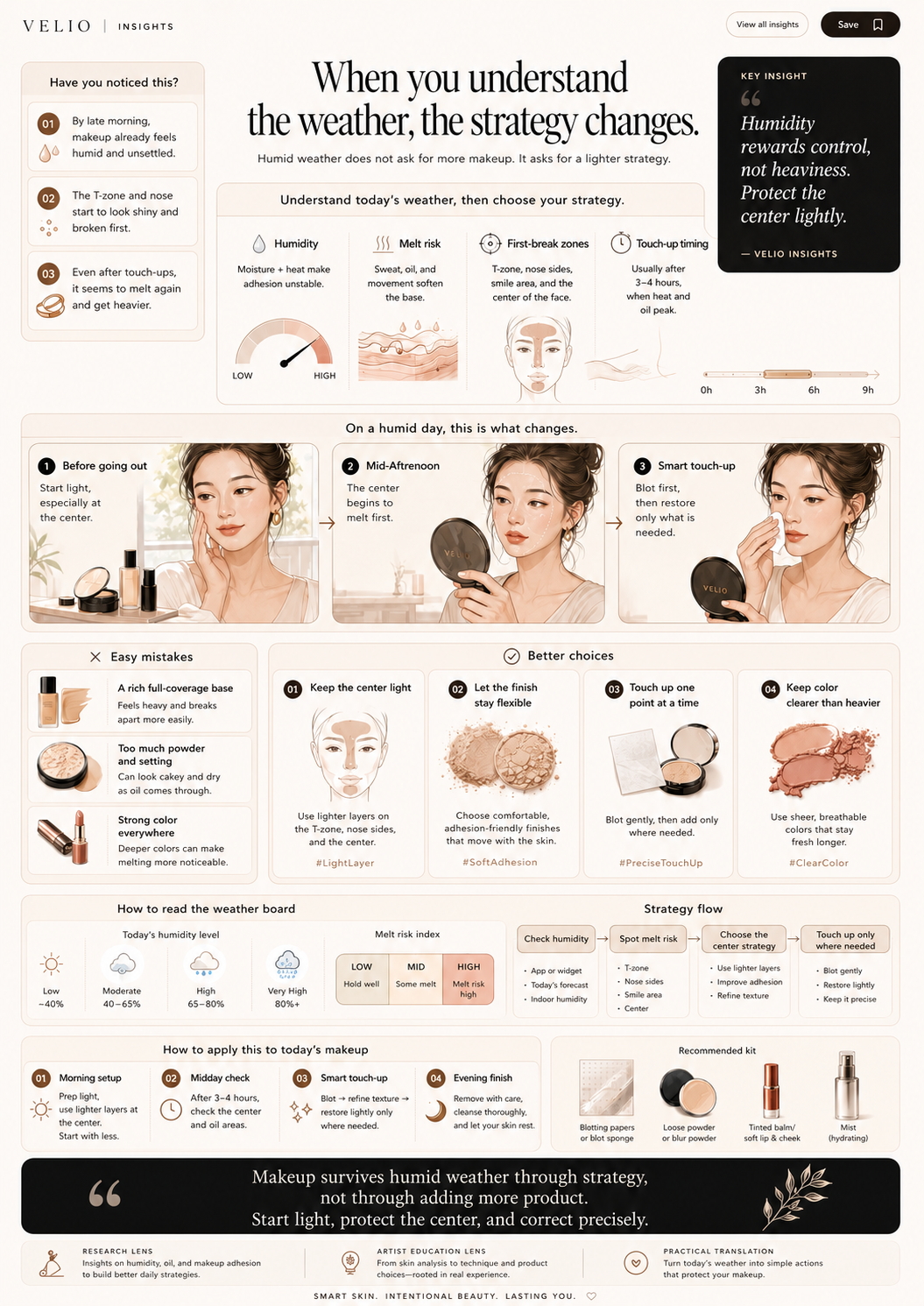
Humidity does not always mean stronger makeup. Often it means fewer layers, clearer finish control, and one planned touch-up point.