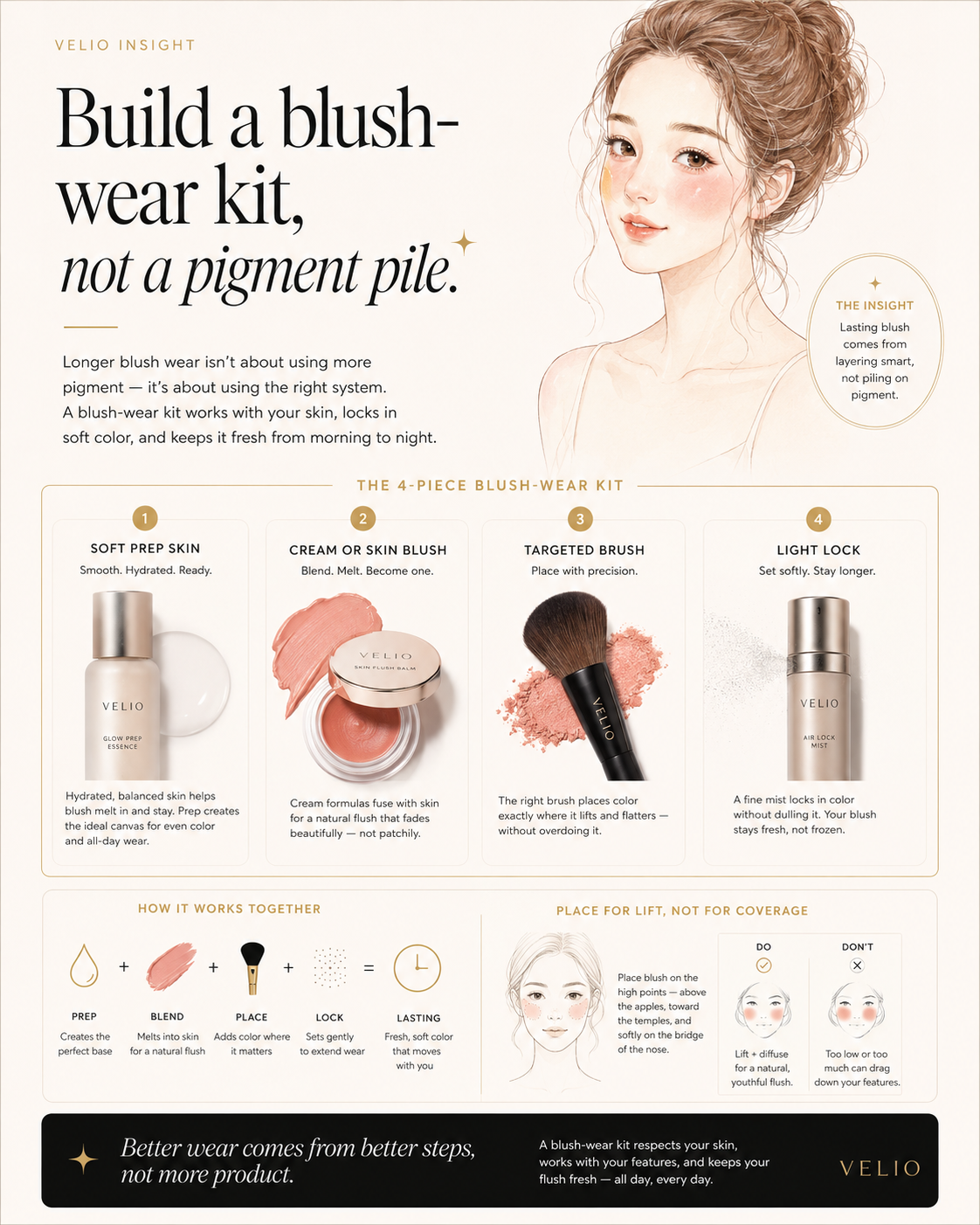
How do I make blush last in hot, humid weather?
Keep the base beneath it thin, press color into a stable cheek zone, and use a small support layer only where fading begins. Heavy powder under blush can make the color slide or disappear unevenly.
In heat, blush usually fails from the base before the color fails.
“Long-lasting blush is a layer strategy: grip first, color thinly, lock softly, and refresh without rebuilding.”
VELIO keeps the lesson attached to the mirror experience, then returns one face-aware Color Story and one practical route. It remains non-diagnostic.
Free first read · Non-diagnostic · Use what you own first
Blush looks vibrant when applied, then disappears after heat, sweat, or a commute.
Adding more blush at midday makes the cheeks look heavier instead of fresher.
Cream blush starts pretty but slides, separates, or looks uneven after a few hours.
Powder helps at first, but too much powder makes the cheek look dry or flat.
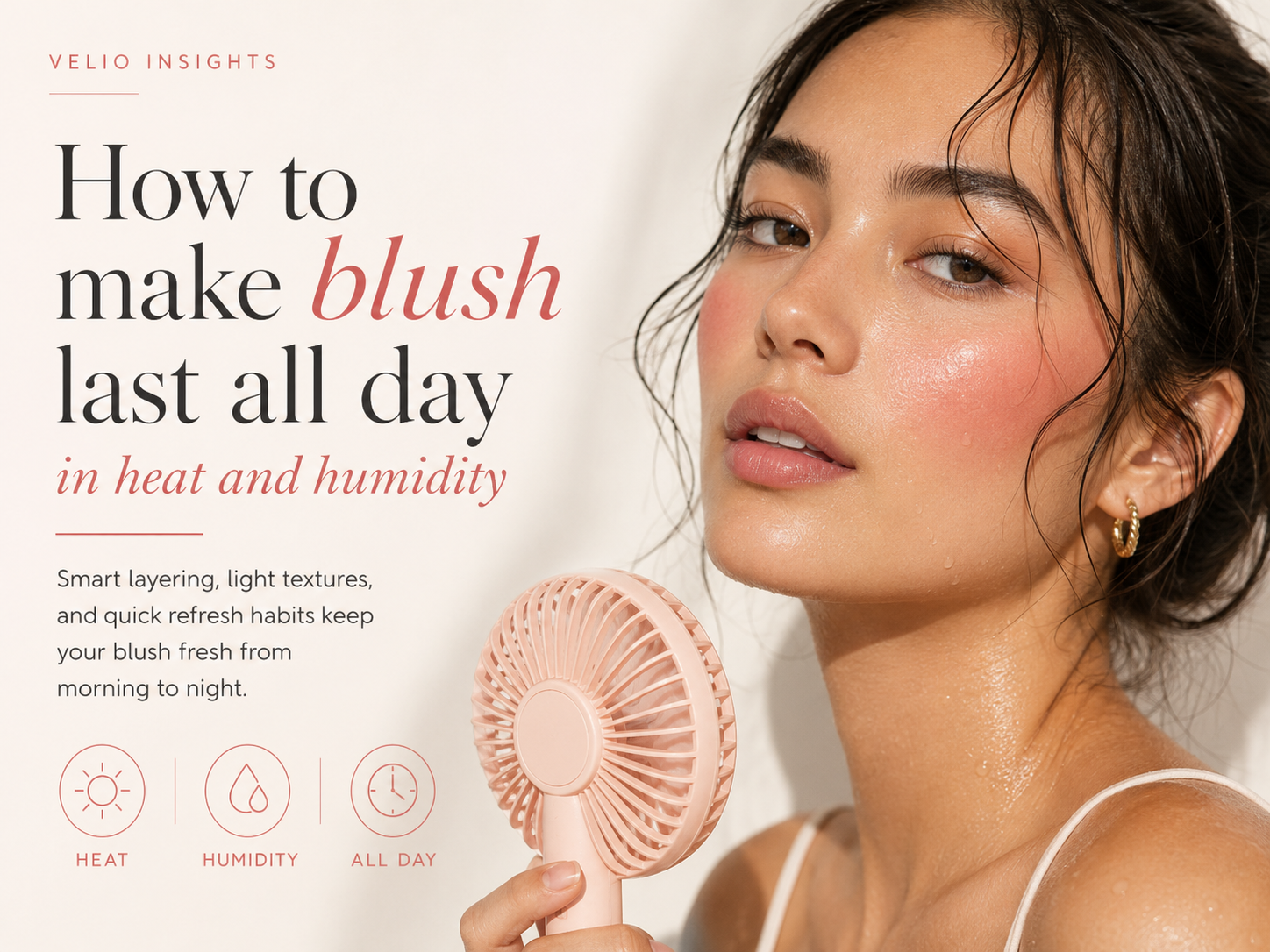
Heat-proof blush is not just a stronger blush. It is a breathable base, thin color, soft lock, and a planned refresh route.
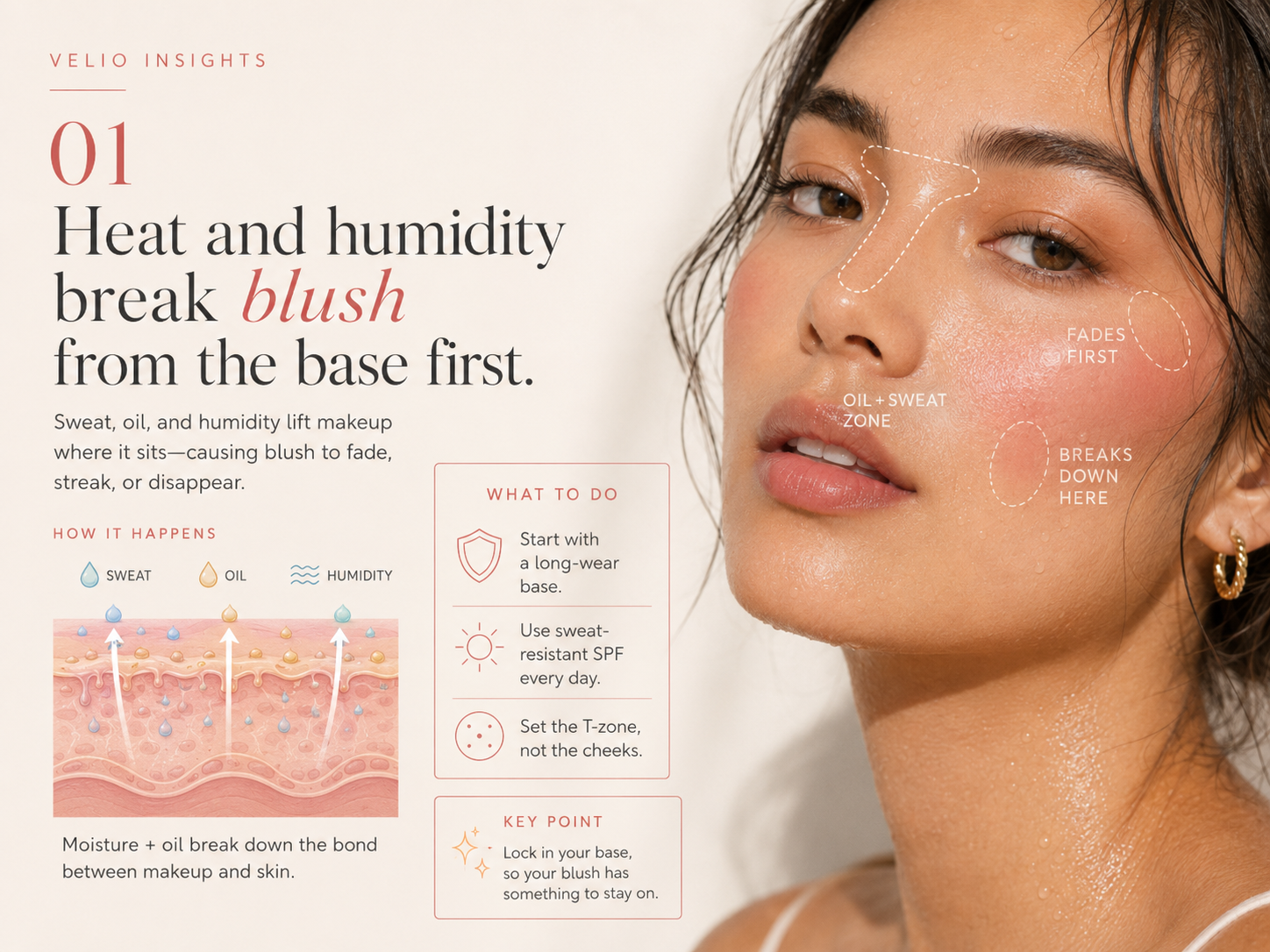
When sweat and oil soften the base, blush fades from the cheek high points and outer cheek before the color itself is the real problem.
When blush fades in humid weather, the first failure is often underneath the color. Sweat, oil, SPF, primer, and foundation soften the surface, so the blush loses its grip even if the shade looked perfect in the morning.
Start by protecting the base. Keep skincare thin, choose a base that does not feel slippery, and avoid setting the cheek so heavily that it turns dry. Your goal is a flexible cheek surface that can hold color without trapping heat.
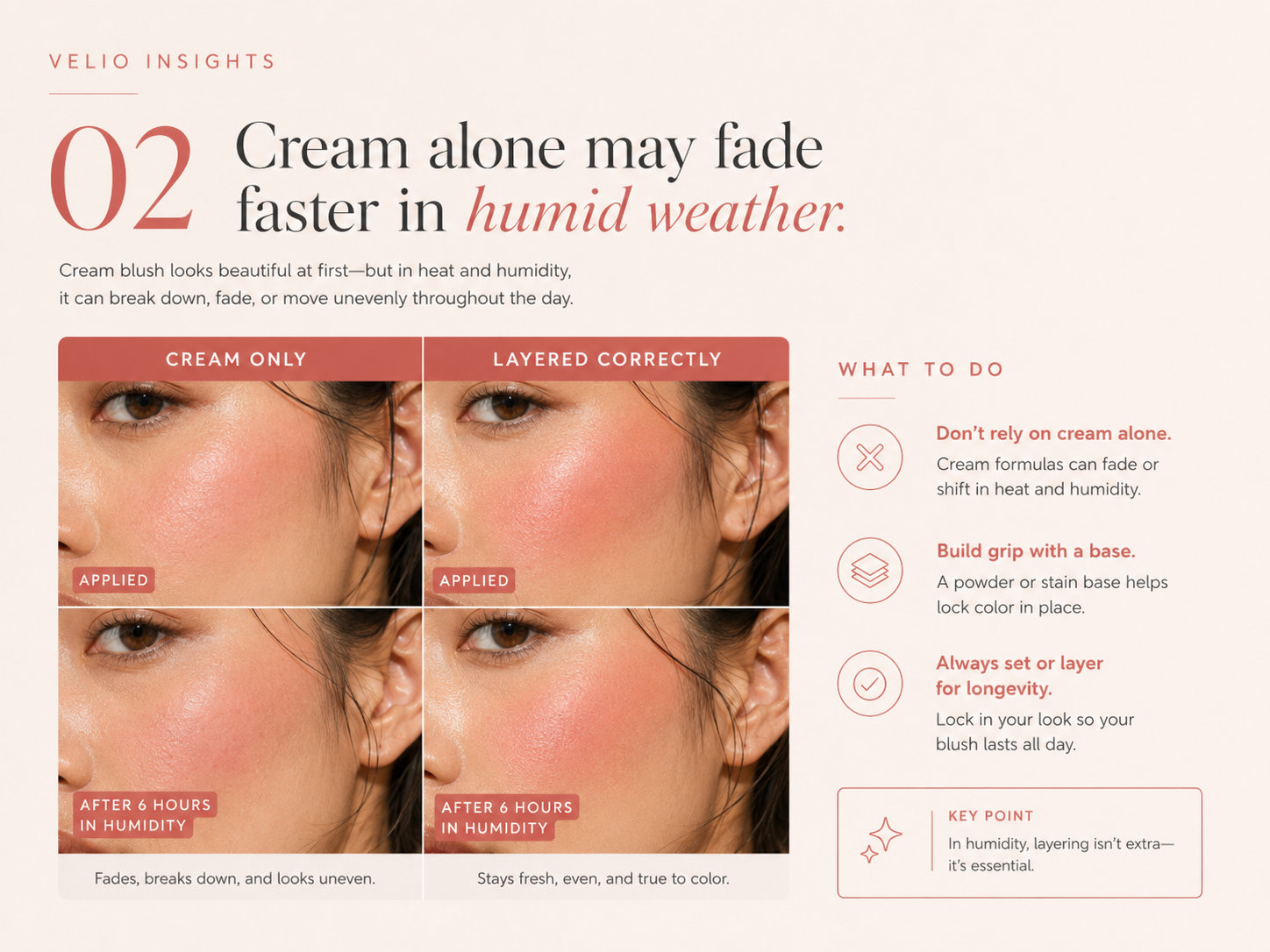
Cream gives life, but humidity asks for a grip layer and a soft set so the color does not slide away too early.
Cream blush looks fresh because it melts into the skin, but that same movement can work against it in heat. If oil and humidity are active, a cream-only cheek may slide, blur, or fade faster than expected.
The answer is not to avoid cream. Use cream or cheek tint as the life layer, then give it support. A gripping base, a thin application, and a small powder veil help the color stay true without losing the natural finish.
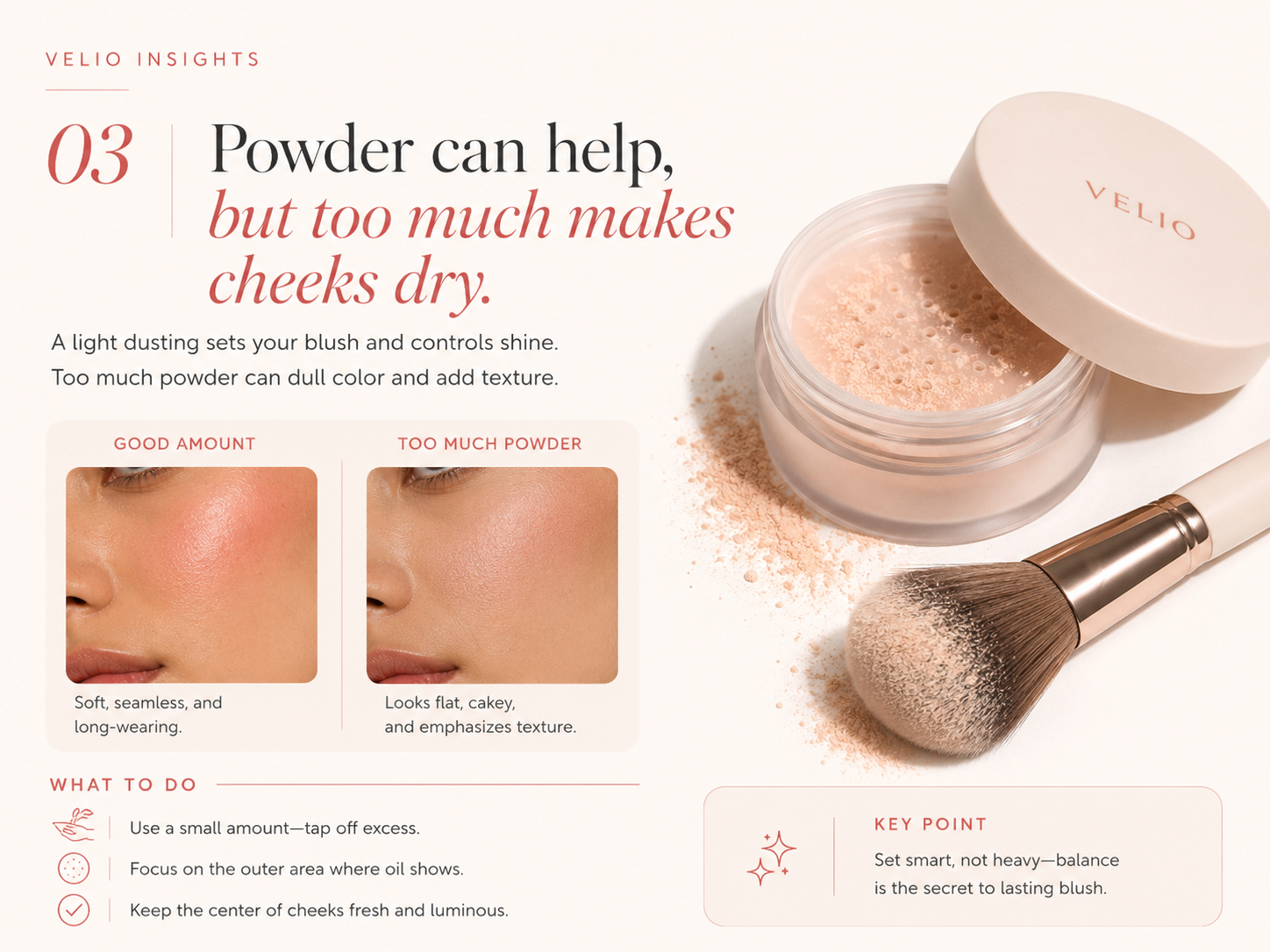
Powder can extend wear, but a blanket layer can make cheeks look dry, flat, and textured. The useful move is a targeted veil.
Powder can extend blush wear because it reduces slip and adds a soft lock. But if powder is used like a blanket, the cheek can look flat, textured, or older than the rest of the makeup.
Use a small amount and a soft brush. Focus powder on the outer cheek, lower edge, or high-movement area where color fades first. Leave the center of the cheek fresher so the blush still looks alive.
Identify the changed area, choose the smallest correction, and stop as soon as the surface looks clear again.
Repainting blush directly on a sweaty cheek. Fix it by blotting first, then tapping a thin layer only where color disappeared.
Setting the whole cheek heavily. Fix it by powdering only the outer cheek or high-movement edge that needs grip.
Using cream blush as the only layer on a long humid day. Fix it by pairing sheer cream or tint with a soft powder veil.
If foundation, SPF, or primer starts moving, blush loses grip even when the blush formula itself is good.
Cream alone may feel fresh but needs support in humidity. Powder alone may last longer but can look flat if the cheek is over-set.
Color added on top of sweat and oil usually turns patchy. Blotting must happen before refresh color.
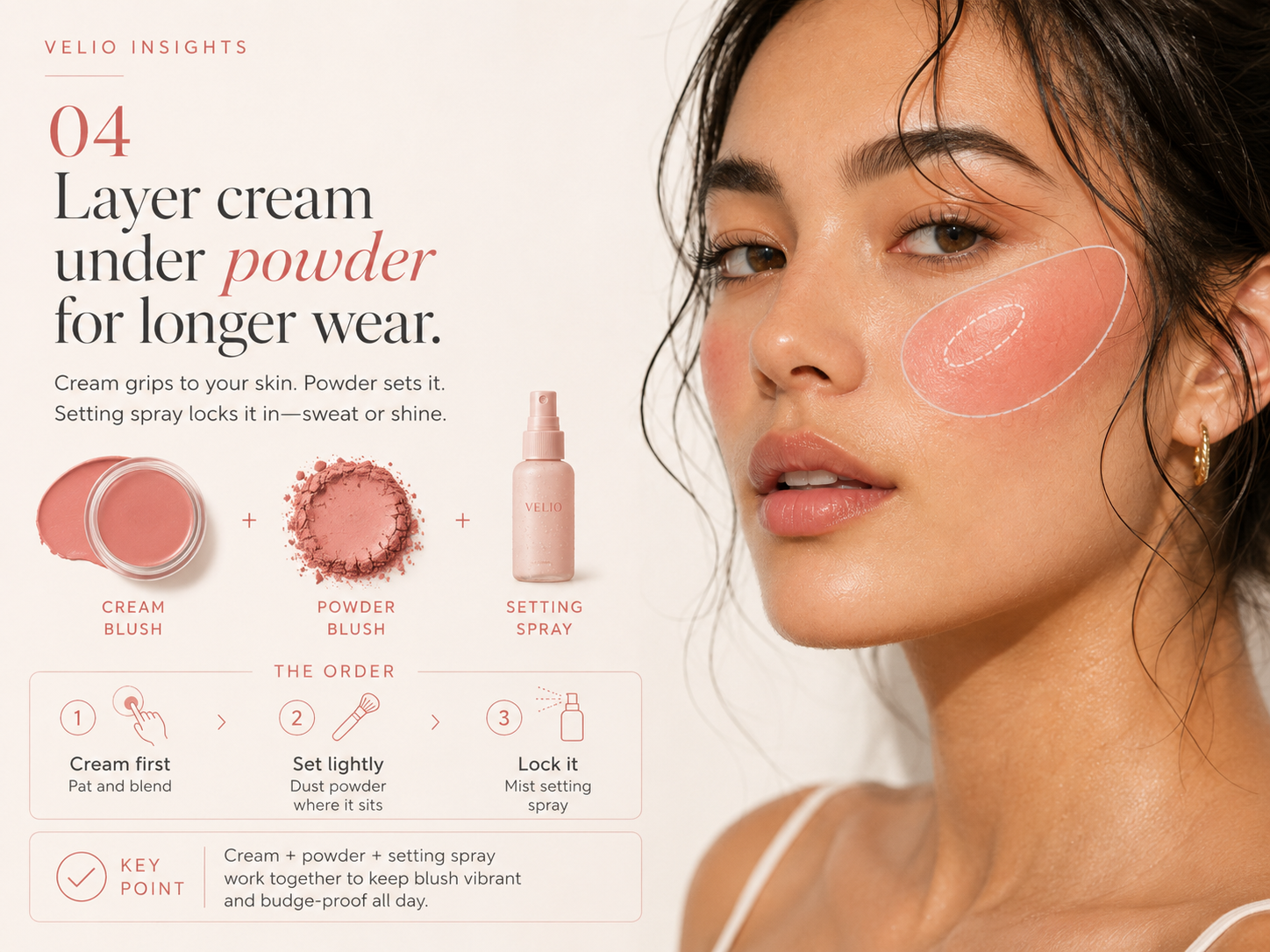
Cream supplies color and life. Powder adds staying power. Mist helps the layers read as one skin-like cheek instead of separate product blocks.
The most useful humidity route is not cream versus powder. It is cream plus powder in the right order. Cream or tint gives the cheek color and life; powder locks the shape and slows fading.
Apply cream blush thinly, tap it into the cheek, then dust powder blush or translucent powder lightly over the area that needs help. Finish with a setting spray so the layers melt together instead of sitting like separate makeup stripes.
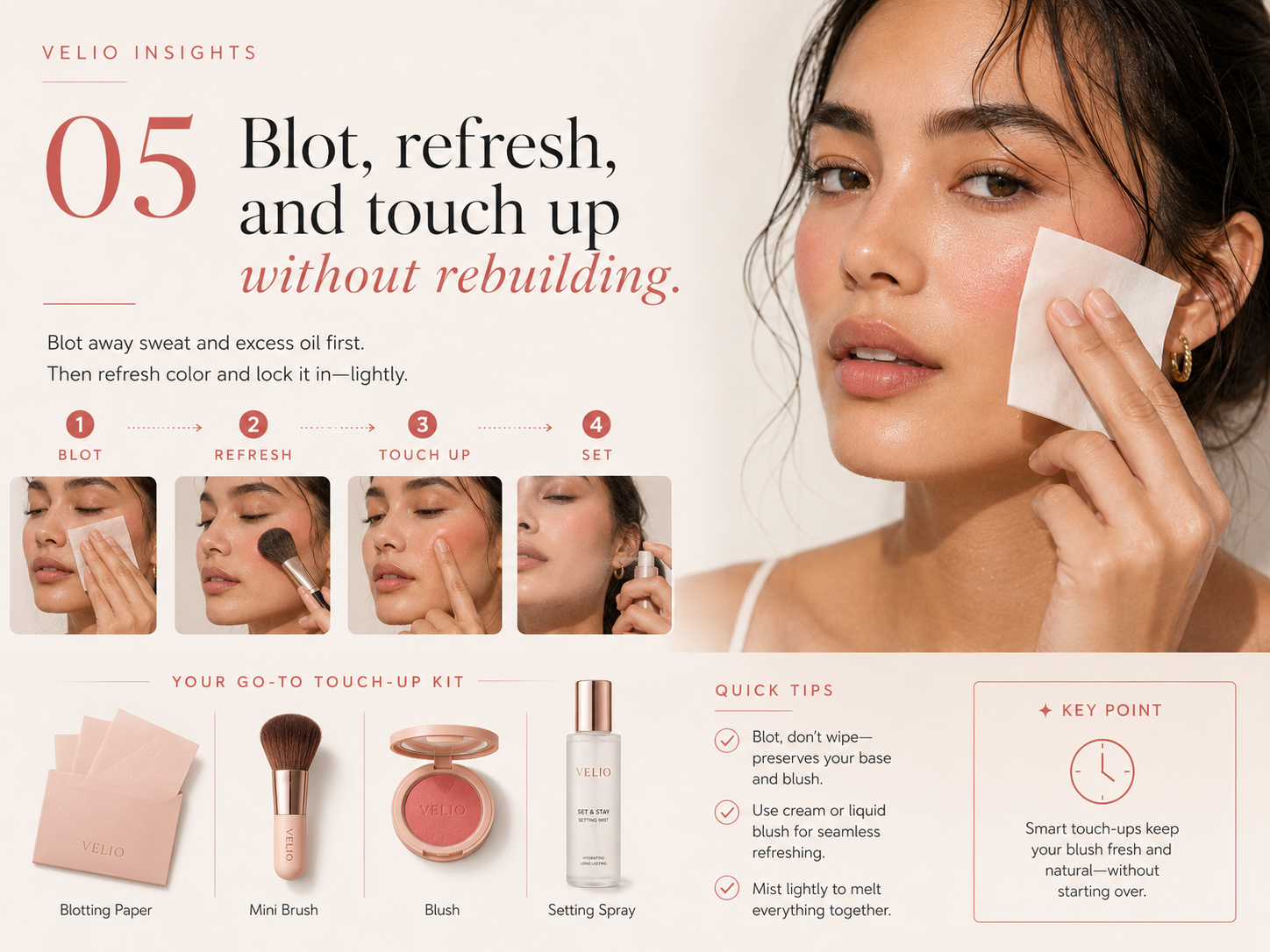
A humidity touch-up should remove sweat and oil first, then add only the smallest color layer needed to bring the cheek back.
In heat, the best touch-up is usually subtraction before addition. If you add blush on top of sweat, oil, and lifted base, the cheek can become patchy or heavy very quickly.
Press blotting paper first, then tap a thin color layer only where the blush disappeared. If needed, sweep a small amount of powder around the edge and mist lightly. Do not rebuild the whole cheek unless the whole base has truly failed.
Keep skin prep thin and flexible. A heavy skincare or SPF stack can make blush slide faster in heat.
Apply cream or tint first, blend thinly, then set the edge with powder rather than burying the entire cheek.
Carry blotting paper, a mini soft brush, and one blush texture that can be tapped in lightly without rebuilding the base.
“For heat and humidity, long-lasting blush is a routine, not a stronger cheek. Grip the base, layer color thinly, set strategically, and refresh without rebuilding.”
Cosmetic formulation education
Long-wear makeup depends on how layers grip, move, and set on the skin. That supports teaching blush as a system, not a single product.
Professional makeup education
Artists often build longevity through thin layers, controlled setting, and targeted touch-up rather than one heavy layer.
Keep the base beneath it thin, press color into a stable cheek zone, and use a small support layer only where fading begins. Heavy powder under blush can make the color slide or disappear unevenly.
Either can work. A thin cream layer can belong to the base, while a small powder touch can support wear. The most durable route is often controlled layering rather than choosing one texture in isolation.
Keep the strongest color point clear and slightly higher, then soften the edge without blending the whole cheek away. A precise route leaves more color after heat and movement.
Blotting paper, a small cream or balm color, and a compact detail tool are usually enough. Remove moisture or oil first, then press a small amount back onto the original focal point.
VELIO keeps the lesson attached to the mirror experience, then returns one face-aware Color Story and one practical route. It remains non-diagnostic.
Free first read · Non-diagnostic · Use what you own first